The Samurai Who Would Not Yield: Aizu-Wakamatsu and the Boshin War
- Sleepy Tales of Japan
- 9 min read
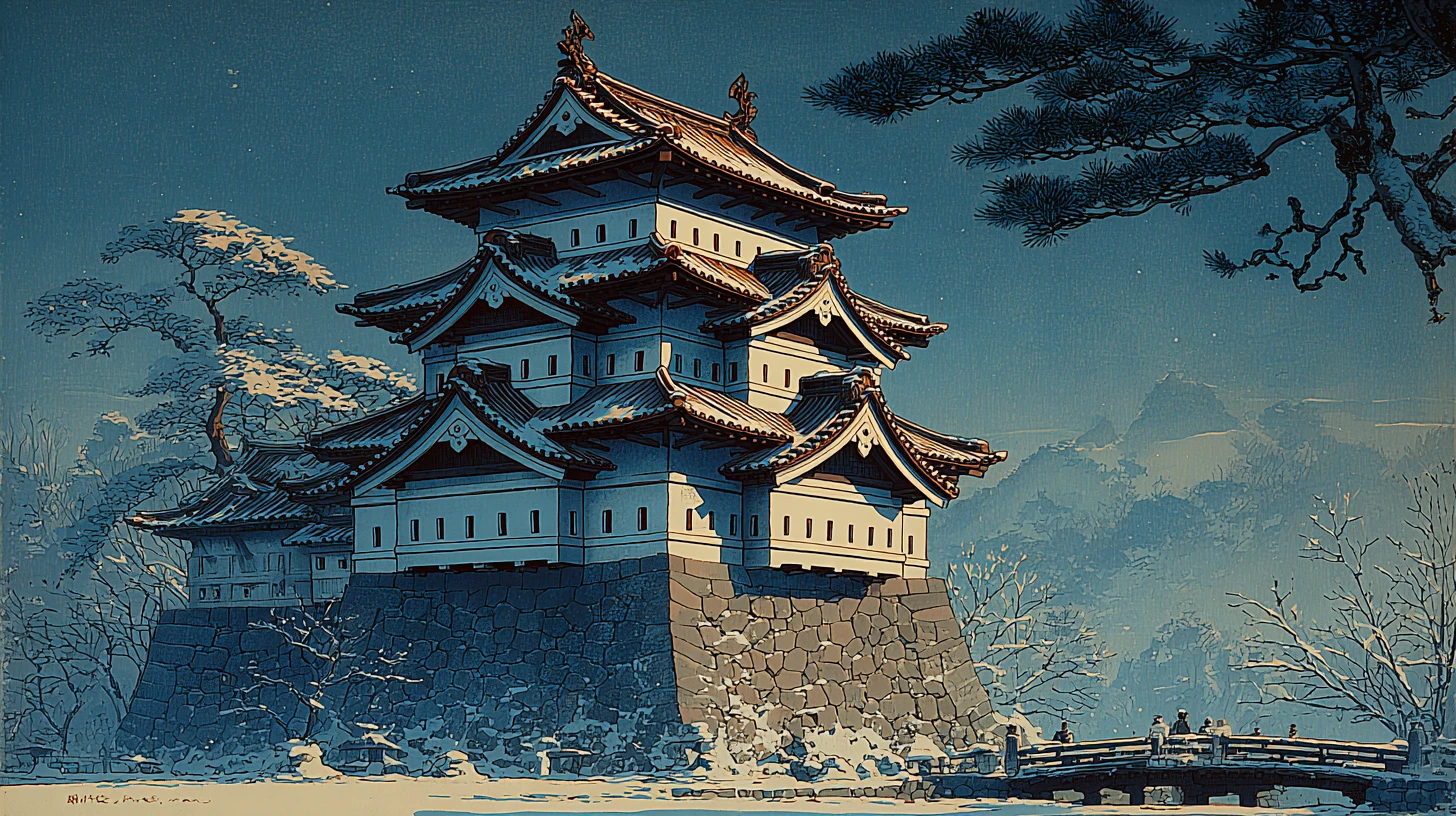
Table of Contents
Open Table of Contents
The Domain That Would Not Bend
The Aizu domain was founded in 1643 on a single written instruction from its first lord: support the Tokugawa shogunate. Always. Without exception. For 225 years — longer than the United States has existed as a nation — the Matsudaira clan kept that promise. Every generation. Every political crisis. Every temptation to switch sides.
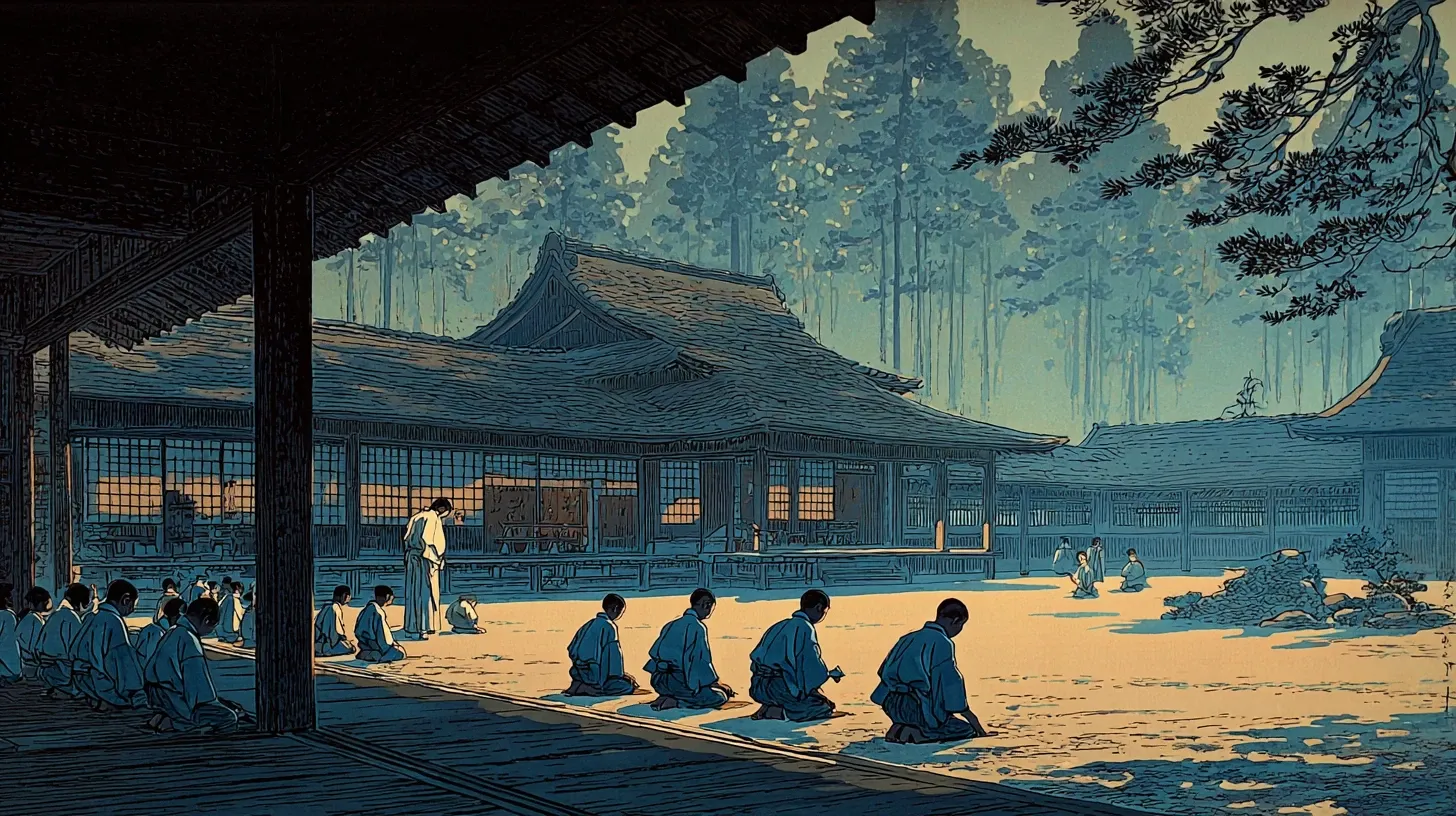
The Nisshinkan, the domain school operating within the castle grounds, built this loyalty into something close to a nervous system. Boys from samurai families entered at ten. Over the next decade they learned Chinese classics, arithmetic, medicine, and artillery — and they absorbed the ju no okite, the code governing behavior within the small age-group cohorts called ju. The harshest punishment for any violation was not a beating or a fine. It was temporary exclusion from the group.
In a culture that treated collective identity as the basic unit of existence, exclusion was designed to feel worse than dying. That is not a metaphor. That is the mechanism. The boys who climbed Iimori Hill had spent their entire lives in a system that made isolation feel worse than death — and on that hillside in October 1868, they acted on what they had been taught.
The Guardian of Kyoto
In 1862, the shogunate appointed Matsudaira Katamori, the ninth lord of Aizu, as military governor of Kyoto. The appointment looked like an honor. It was more nearly a trap.
Kyoto in the early 1860s was a city in crisis. Japan had been forced to open to Western trade in 1853 after more than two centuries of near-total isolation, and the country had split into two broad camps. One supported the shogunate and the existing order. The other, gathering under the slogan “revere the emperor, expel the barbarians,” wanted the emperor restored to real political power and Western influence driven back out.
Katamori’s job was to hold the line between these factions in the imperial capital. For six years, at considerable personal cost, he managed it — organizing the Shinsengumi, the pro-shogunate police corps that became famous in Japanese popular culture, to suppress anti-shogunate activity across the city. His effectiveness made him indispensable to the shogunate. It also made him the target of every anti-shogunate faction in the country.
When the imperial forces moved against the shogunate in January 1868, Aizu was among the first domains they came for.
The War Moves North
The Boshin War lasted from January 1868 until May 1869 — sixteen months, brief and largely one-sided. Imperial troops carried modern rifles and cannon purchased from Europe. Aizu and its allies fought with a mix of weapons and faced a more fundamental problem: their confederates kept switching sides.
By autumn 1868, Aizu had been abandoned by every neighboring domain. Some switched to the imperial side. Others simply declined to fight. Aizu stood essentially alone.
On October 6, 1868, imperial forces surrounded Tsuruga Castle in Aizu-Wakamatsu. Inside the walls were approximately 5,000 people — military personnel, administrators, women, children, and elderly residents who had taken shelter. The siege would last one month.
The Women Who Fought
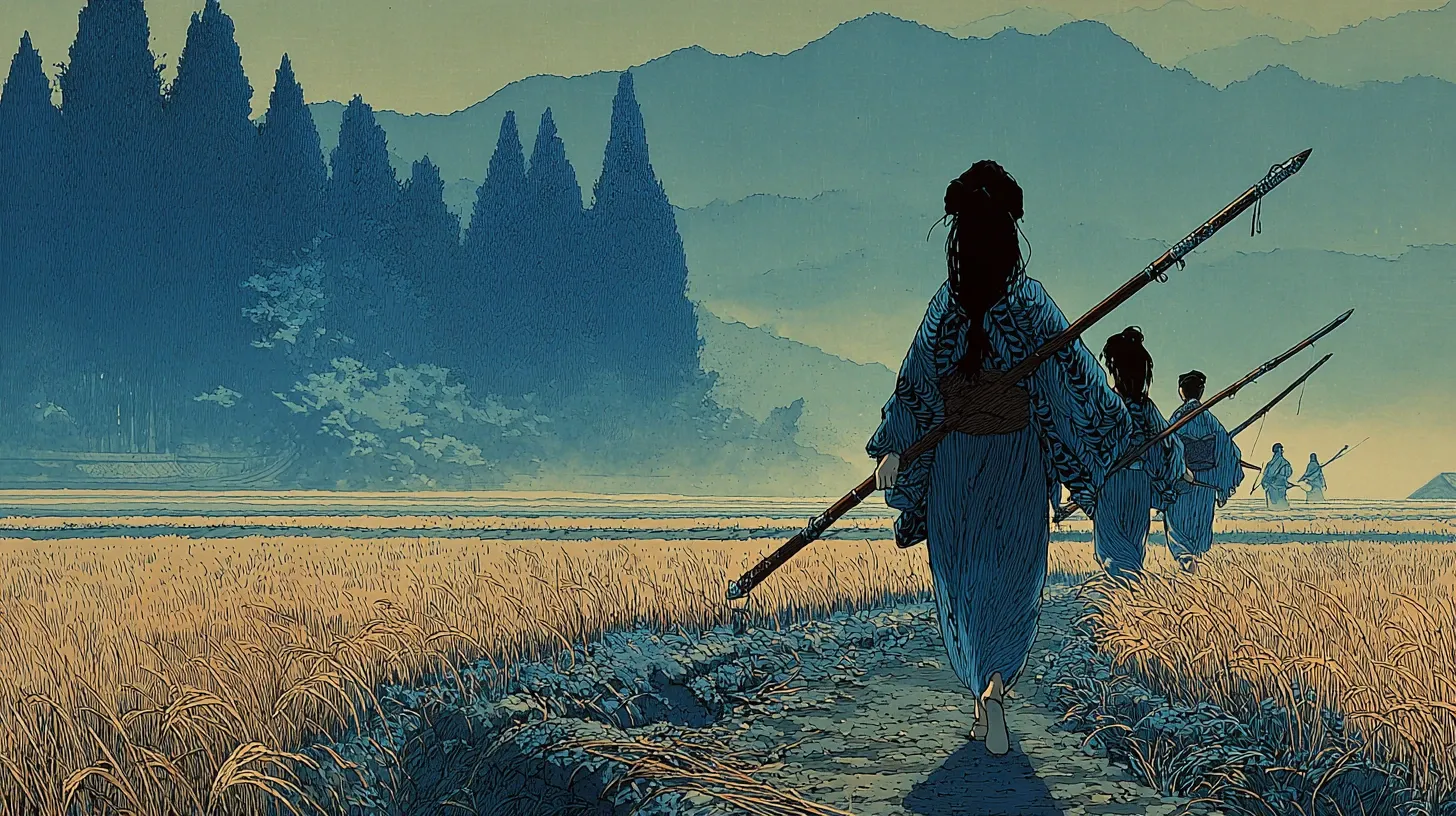
Nakano Takeko held a formal instructor’s license in the naginata — a curved-blade polearm — before the war began. She was twenty-one. When Aizu’s commanders declined to formally enlist women, she organized her own unit without authorization. Her mother and sister fought beside her. The force she assembled was eventually named the Joshitai — the Women’s Army — though the name came after the fighting, not before.
On October 10, 1868, four days into the siege, Nakano was shot in the chest during close fighting near the castle. She knew she was dying. She asked her sister to cut off her head so that enemy soldiers could not take it as a battlefield trophy — a recognized military practice of the period. Her sister did as she asked. Her head was carried to Hōkai temple nearby and buried beneath a pine tree. A monument stands there today.
She was twenty-one years old.
The Boys on the Hill
The Byakkotai — White Tiger Brigade — was a reserve military unit formed in April 1868, composed of young men aged fifteen to seventeen. They were the sons of Aizu samurai, trained at the Nisshinkan, and they were meant to be exactly what the word “reserve” implies: held back, kept safe where possible, deployed only in emergencies.
The emergency arrived.
As the imperial forces closed in, a unit of twenty Byakkotai boys was separated from the main force during fighting in a village northeast of the castle town. They fought their way clear, waded through a flooded ravine in the dark up to their chests, and climbed the forested slope of Mount Iimori to regroup.
From the top of the hill, the castle was visible. So was smoke, rising thick across the city below. They concluded — wrongly — that the castle had fallen and the battle was lost.
What they could not see, from that angle and distance, was that the smoke was coming from houses outside the castle walls. Tsuruga Castle was still standing.
Nineteen of the twenty boys committed suicide on the hillside. The twentieth — Iinuma Sadakichi, age fourteen — was found alive by a local woman who passed through the area. She saved his life.
Iinuma Sadakichi lived until 1931. He spent decades carrying the weight of what had happened on that hill, and eventually built a career in Japan’s emerging telecommunications industry. He outlived, by more than six decades, the entire world that had produced him.
The Aftermath
Tsuruga Castle surrendered on November 6, 1868, one month after the siege began. The Aizu domain, which had existed for 225 years, was abolished within weeks. Aizu’s samurai were sent as prisoners to camps on the Shimokita Peninsula, far to the north. Many did not survive the conditions there.
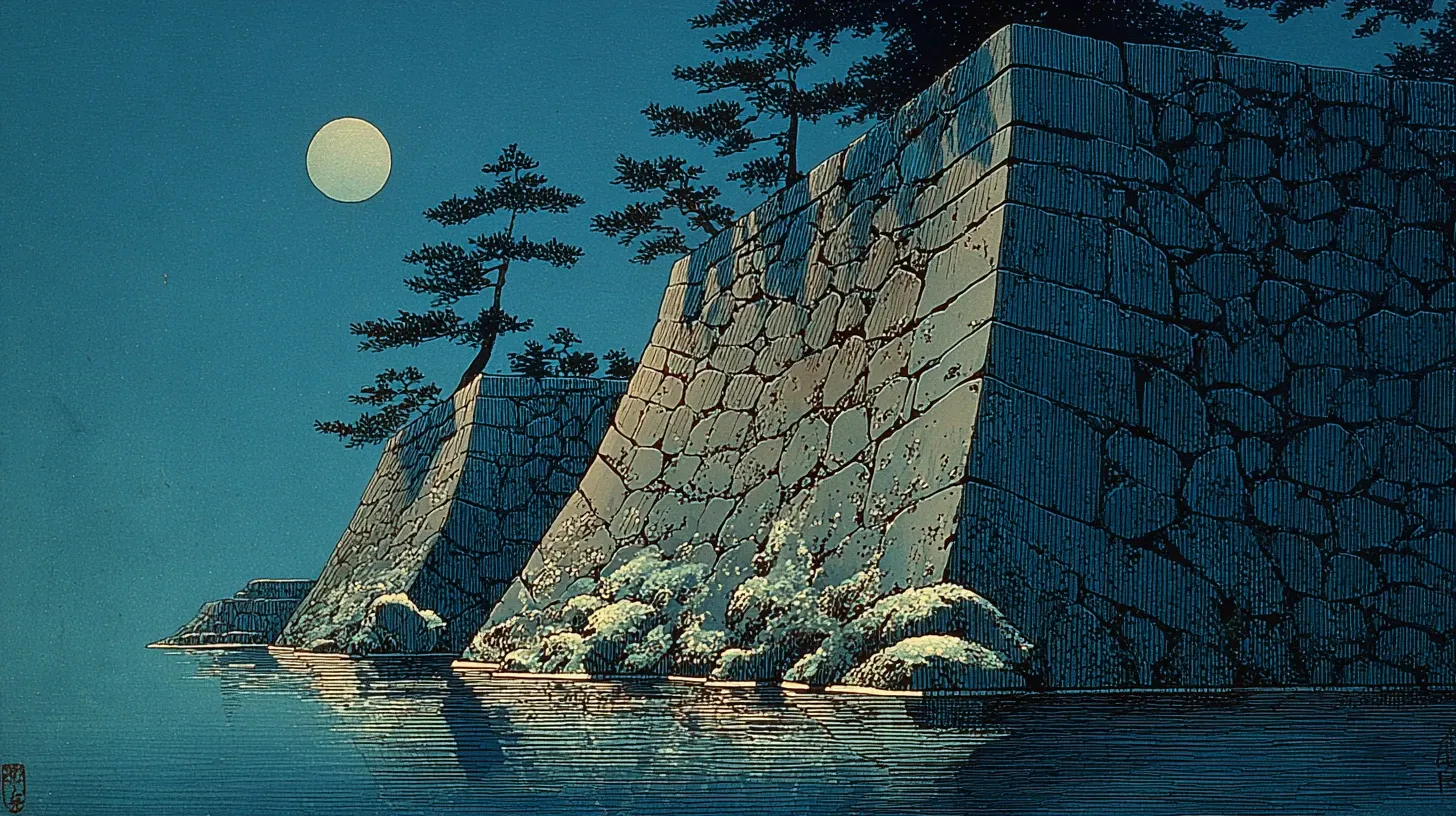
The castle itself was demolished in 1874 by the new Meiji government, which viewed it as a symbol of the old order. A reconstruction was built in 1965. In 2011, after historical research confirmed that the original structure had featured red-glazed roof tiles rather than standard grey, the reconstruction was modified accordingly. Tsuruga Castle is now the only major Japanese castle with a red tile roof.
One detail about Iimori Hill bears noting. In 1928, Benito Mussolini ordered a memorial erected at the site, consisting of an ancient column salvaged from the ash fields of Pompeii. Mussolini had publicly held up the Byakkotai as an example of loyalty and sacrifice worthy of commemoration. The column still stands at Iimori Hill today — an awkward and difficult footnote to an already complicated story.
What Remains in Aizu-Wakamatsu
The city markets itself as Japan’s “samurai city,” and for visitors interested in samurai history, the infrastructure is genuinely good. The major sites connect via a hop-on-hop-off bus, entry fees are reasonable, and the castle museum is among the more honest in the country about what actually happened here.
The “Aizu spirit” that saturates the city’s signage and souvenir shops is largely a twentieth-century construction. The Boshin War appears in Japanese school curricula as a footnote to the Meiji Restoration; outside Fukushima, few people could describe what actually happened here. The history is real. The branding arrived a hundred years later.
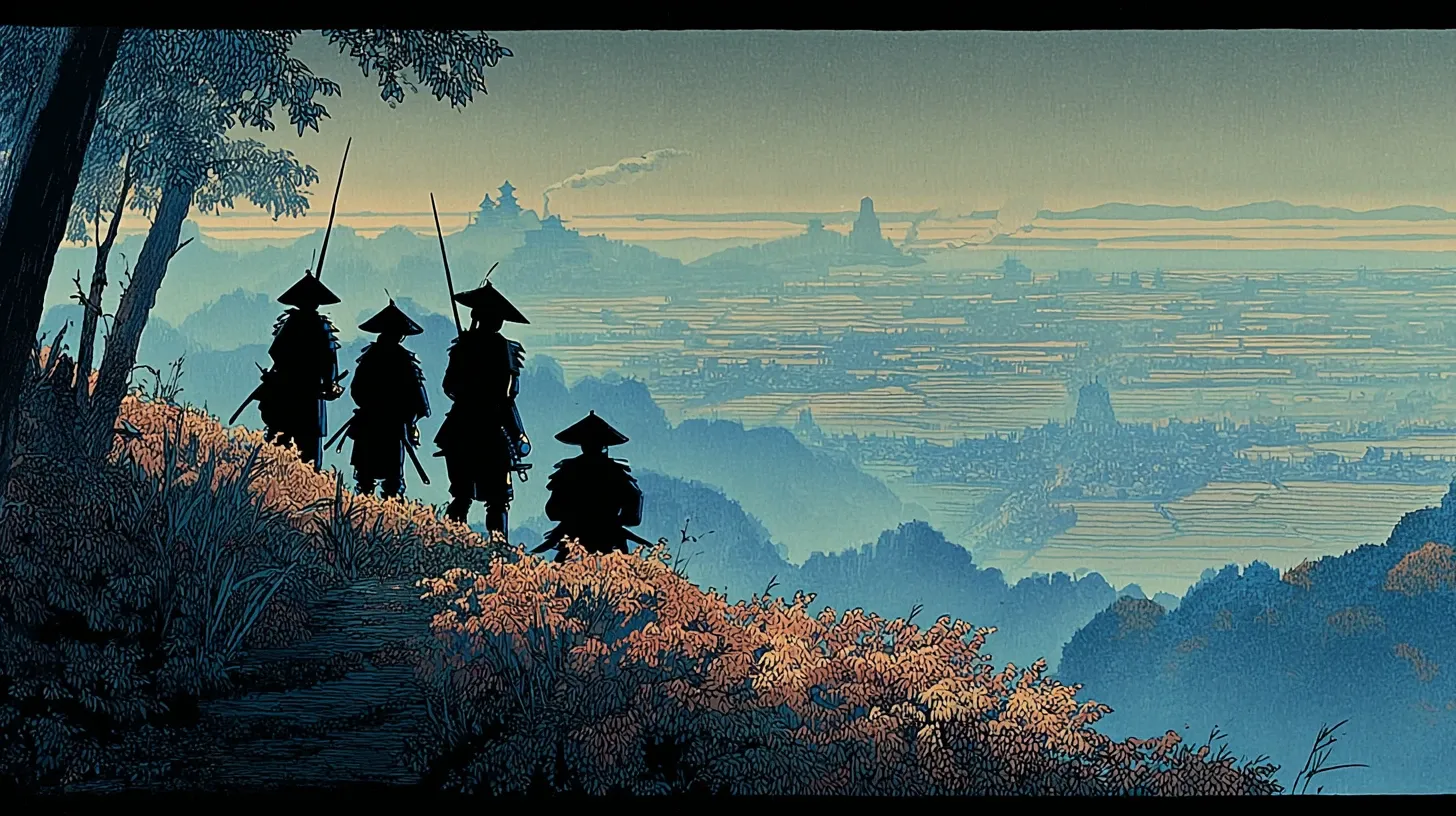
The landscape, at least, is honest. From the top of Iimori Hill, you can still see Tsuruga Castle in the distance — red-roofed, reconstructed, standing where it has always stood. The view is the same the boys had in October 1868, smoke rising below, the wrong conclusion forming. The castle was there then. It is there now.
Continue Reading
- Life in Edo: What It Was Really Like Inside Japan’s Greatest City — The shogunate capital that Aizu spent 225 years defending, and the daily world its samurai were trained to protect
- Arashiyama: Bamboo Grove, River, and Temple Guide — Kyoto’s landscapes as they stood during the era the Boshin War dismantled
- Kiyomizu-dera: Kyoto’s Temple of Pure Water — The imperial capital that Matsudaira Katamori was appointed to protect in 1862
FAQ
Is Aizu-Wakamatsu worth visiting for someone interested in samurai history?
Yes — and more specifically, it offers something most samurai-branded destinations in Japan don’t: a coherent, documented historical narrative rather than a general aesthetic. The Byakkotai graves on Iimori Hill are real. The castle the boys looked down at is visible from that same hillside today. The samurai school can be walked through. The main practical limitation is transportation: Aizu-Wakamatsu is not on the Shinkansen line. You transfer to a local train at Koriyama (from Tokyo) or take a bus from Niigata. Budget roughly an extra hour each way.
Is it safe to visit Fukushima?
Aizu-Wakamatsu is in western Fukushima prefecture, approximately 100 kilometers from the coast where the 2011 nuclear incident occurred. Background radiation levels here have been comparable to Tokyo for years. The safety question has a clear factual answer: Aizu-Wakamatsu is safe to visit.
Who were the Byakkotai, and why is their memorial still visited today?
The Byakkotai were the teenage sons of Aizu samurai, aged fifteen to seventeen, trained at the Nisshinkan school and deployed as a reserve military unit during the Boshin War. A group of twenty was separated from the main force, climbed Mount Iimori, and concluded from the smoke they saw that the castle had fallen. Nineteen committed suicide. One survived, found by a local woman. The memorial draws visitors because the story is specific and genuinely tragic: these were not soldiers who died in battle. They died because of what they believed they saw — and what they believed was wrong.
Sources
- The Boshin War and the Battle of Aizu — Samurai City Aizuwakamatsu
- Mt. Iimori and the Boys of the Byakkotai — Samurai City Aizuwakamatsu
- Women in the Boshin War — Samurai City Aizuwakamatsu
- Matsudaira Katamori — National Diet Library, Japan
- The Aizu War and Wakamatsu Castle — National Diet Library, Japan
- Nisshinkan — School of the Aizu Domain — Nisshinkan Official Site
- Mt. Iimori — Tohoku Tourism Promotion Organization
- Aizu-Wakamatsu — Japan National Tourism Organization
About Sleepy Tales of Japan
Sleepy Tales of Japan tells the deep, quiet, ancient stories of Japan — the histories and cultural threads that other tourist guides skip. Our YouTube channel narrates similar deep dives as 30–60 minute sleep stories, with thousands of listeners falling asleep to Japan’s past each week. All articles are researched against primary sources and reviewed for factual accuracy before publication.