Arashiyama, Kyoto: The Truth About the Bamboo Grove (And the 1,200-Year-Old District Hidden Around It)
- Sleepy Tales of Japan
- 18 min read In-depth
You have probably seen the photograph. A narrow stone path runs between two impossibly tall walls of green bamboo, sunlight filtering down through the canopy in pale stripes. It is one of the most photographed places in Japan — and one of the most misunderstood.
The bamboo grove is real, and it is genuinely beautiful. But the path itself is shorter than you might expect — about 400 meters end to end — and on most days it is shoulder-to-shoulder with other people taking the same picture. The good news is that the bamboo is only one small piece of a district that has been drawing visitors for more than a thousand years. Long before tourists arrived with cameras, the aristocrats of Kyoto’s imperial court — the Heian-era nobility of a thousand years ago — came here to escape the formality of palace life. Emperors built villas in the foothills. Zen monks designed gardens that have outlived dynasties. A merchant once blasted his way through a gorge so that timber rafts could float down to the city below — and that same river now carries tourists through what may be the most scenic two hours of train and boat travel in Japan.
In practical terms, Arashiyama is a small district worth about half a day of slow walking: a bridge with a name borrowed from the moon, a temple founded to appease a vengeful ghost, and a boat ride that has been making the same journey since 1606.
Table of Contents
Open Table of Contents
- A 1,200-Year-Old Retreat
- The Bridge to the Moon
- The Bamboo Grove (Chikurin no Komichi)
- Tenryū-ji: The Temple Born from a Dragon’s Dream
- The Other Path: Nonomiya Shrine
- The Hozu River Boat Ride
- Take the Trolley, Float Back: Sagano Romantic Train
- Beyond the Bamboo: The Monkey Park and Quieter Alternatives
- Practical Tips for Visiting Arashiyama
- How to Get to Arashiyama from Kyoto Station
- The Photograph, Reconsidered
- Continue Reading
- FAQ
A 1,200-Year-Old Retreat
Arashiyama means “Storm Mountain,” and the area takes its name from a peak that rises from the western bank of the Katsura River. People have been coming here for as long as Kyoto itself has existed.
Emperor Saga, who reigned from 809 to 823, built one of the first imperial villas in the area. By the late ninth century, Sagano — the broader region of which Arashiyama forms the southeastern corner — had become a fashionable retreat for the Heian aristocracy, who came to view the cherry blossoms in spring and the maples in autumn. The combination of mountains, river, and forest gave the city’s elite a place to step away from the rigid ceremonies of the court without leaving Kyoto entirely.
In the thirteenth century, Emperor Go-Saga had hundreds of cherry trees transplanted from the famed Yoshino mountains and replanted along the riverbanks. The original trees are gone, but their descendants — and centuries of subsequent plantings — still bloom every April.
When you walk through Arashiyama today, you are not exploring an undiscovered corner of Kyoto. You are walking through the country’s longest-running garden retreat. (For the bigger story of how Kyoto became and survived as Japan’s imperial capital for over a thousand years, see our history of the imperial capital.)
The Bridge to the Moon
The first thing most visitors see in Arashiyama is the Togetsukyō Bridge — a long, low wooden-looking span that crosses the Katsura River with the mountain rising directly behind it.
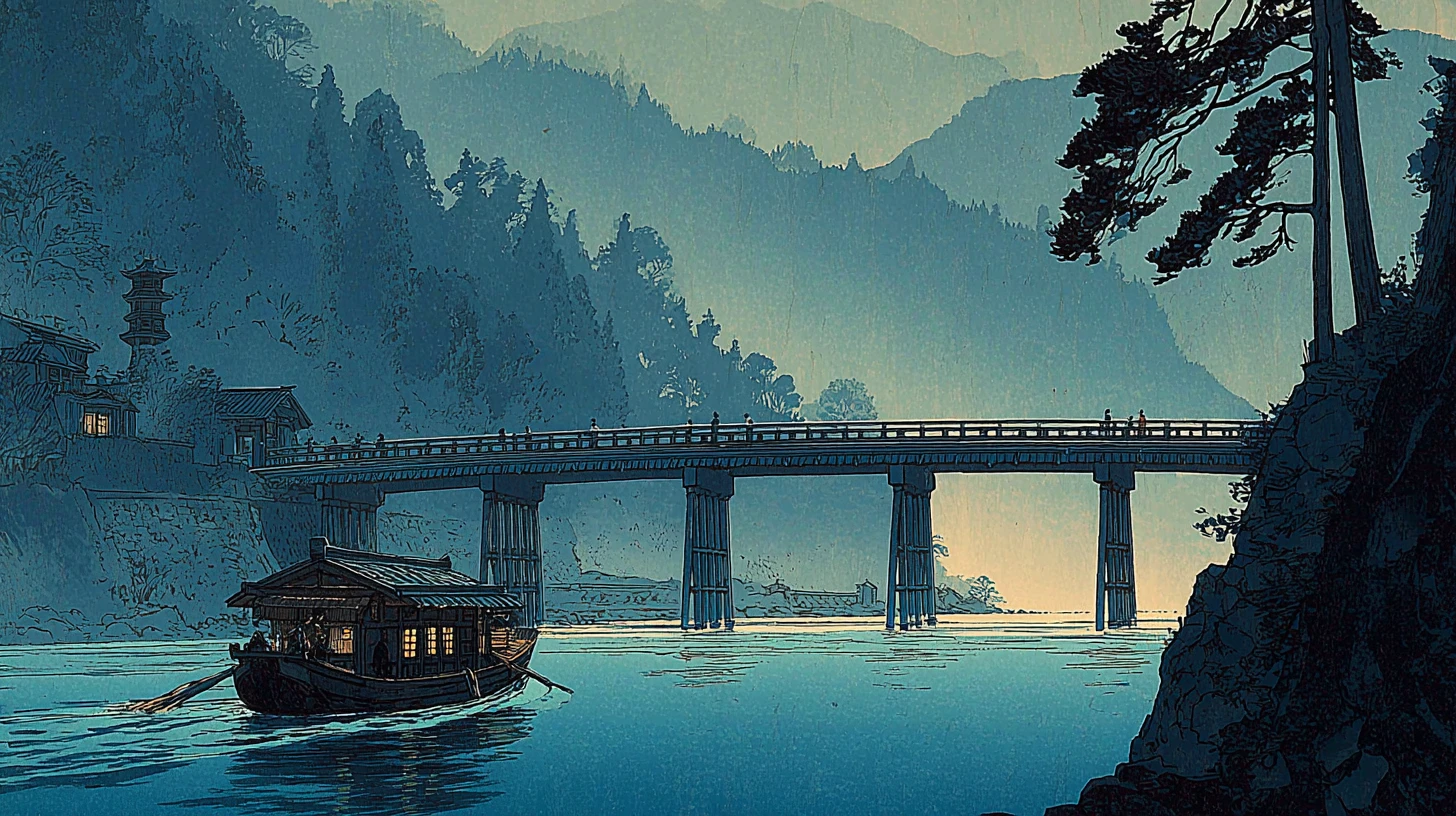
The original bridge was built here in 836 by a monk named Dōshō, who needed a way for pilgrims to reach Hōrin-ji Temple on the southern bank. That first bridge stood, was destroyed by floods, was rebuilt, was destroyed again — a cycle that repeated for nearly eight centuries. The current location dates from a 1606 reconstruction. The structure you see today was completed in 1934, and despite appearances, its beams and pillars are reinforced concrete; only the parapets are made of cypress.
The bridge owes its poetic name to a thirteenth-century moment. Emperor Kameyama, walking near the bridge on a clear night during the Kamakura period, looked up and remarked that the moon appeared to be crossing the bridge itself. The phrase he used — togetsu, “moon-crossing” — became the bridge’s name. Generations of poets have written about it since.
If you arrive at Arashiyama by train, you will almost certainly walk across this bridge first. Take a moment in the middle, look upstream toward the mountain, and you will understand why a thousand years of visitors decided this view was worth coming back for.
The Bamboo Grove (Chikurin no Komichi)
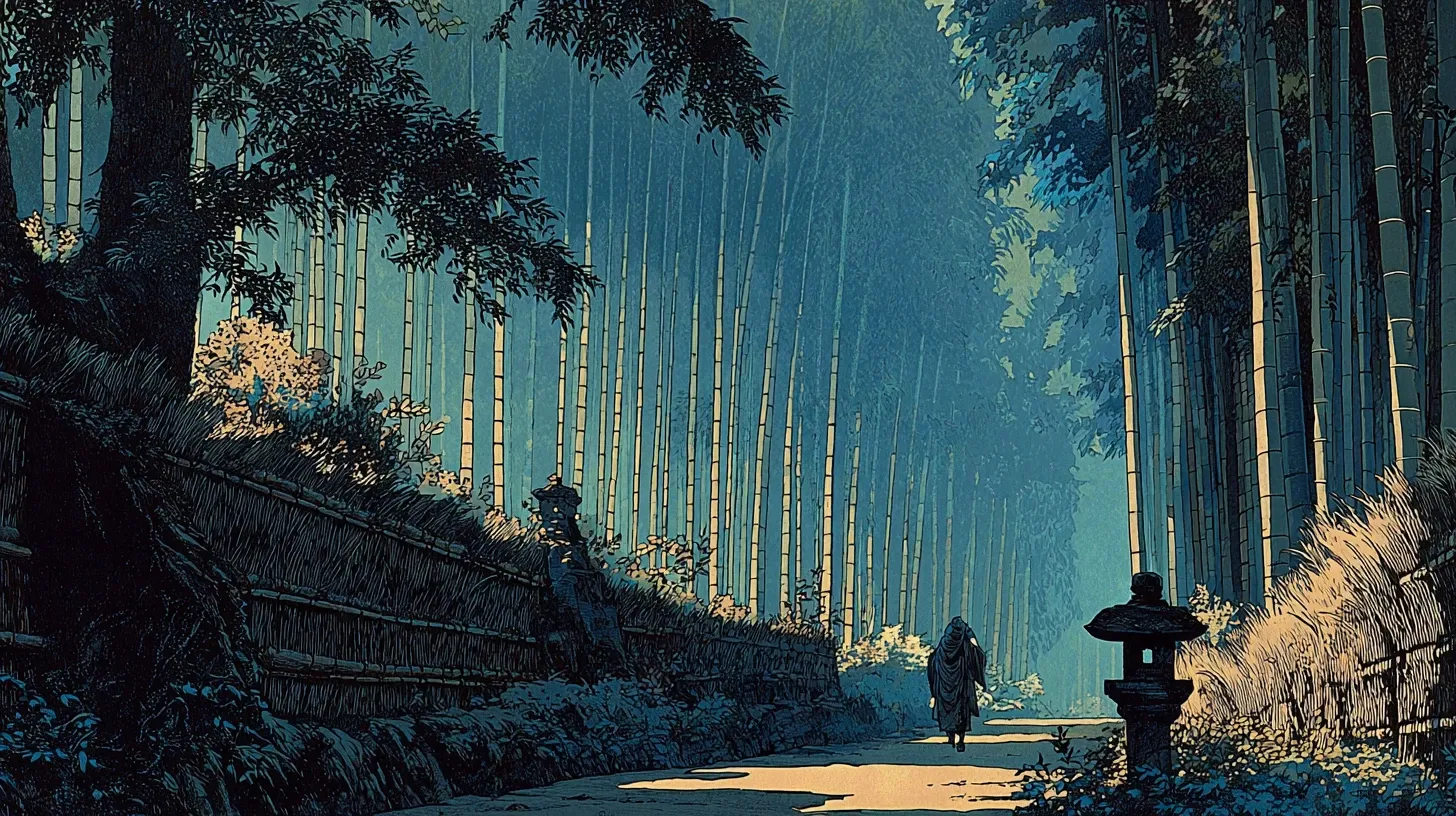
The Bamboo Grove Path — Chikurin no Komichi in Japanese — runs for roughly 400 meters between Tenryū-ji Temple and Nonomiya Shrine, in the Sagano district just north of central Arashiyama. Most visitors expect it to take longer to walk than it does. End to end, it is a fifteen- to twenty-minute stroll if you stop to take photographs along the way.
What makes the grove distinctive is not its length but its sound. In 1996, the Japanese Ministry of the Environment included the Sagano bamboo forest in its official list of “100 Soundscapes of Japan” — a designation reserved for places whose acoustic character is considered worth preserving. The grove was selected not for what it looks like, but for what it sounds like when wind moves through the densely planted Moso and Madake bamboo. The leaves rustle, the hollow culms knock gently against one another, and the result is a sustained, almost percussive whisper that fills the path.
This is one of the few places in Japan that has been formally protected for its sound rather than its appearance. If you come early enough that other visitors are not talking around you, you can hear it clearly.
The bamboo itself has a long working history. For centuries it supplied the raw material for baskets, scaffolding, water dippers, tea utensils, and tatami mat edging. Zen Buddhism, which took root in Kyoto from the thirteenth century onward, found particular meaning in the rustle of bamboo leaves — Zen masters described it as the sound of “ancient wisdom whispering,” and several monasteries are said to have been founded near bamboo groves precisely for this reason.
Tenryū-ji: The Temple Born from a Dragon’s Dream
At the southern entrance to the bamboo grove sits Tenryū-ji, the head temple of the Rinzai school’s Tenryū-ji branch and one of the most important Zen temples in Kyoto. It was founded in 1339 by Ashikaga Takauji, the first shōgun of the Ashikaga shōgunate.
Takauji’s reasons for building the temple were complicated. He had originally fought alongside Emperor Go-Daigo to overthrow the Kamakura shōgunate, but the alliance fell apart, and Takauji eventually drove Go-Daigo into exile. When the emperor died in 1339, Takauji was reportedly haunted by guilt. He converted Go-Daigo’s former villa, the Kameyama Detached Palace, into a Zen temple dedicated to praying for the late emperor’s soul.
The name Tenryū-ji — “Temple of the Heavenly Dragon” — came from a dream. Takauji’s brother Tadayoshi reportedly dreamed of a golden dragon rising from the Ōi River just south of the site, and the temple was renamed accordingly.
Funding the construction was a project in itself. To raise money, the shōgunate dispatched two trading missions to Yuan-dynasty China around 1342. These so-called “Tenryū-ji Ships” returned with goods that were sold to finance the temple — one of the earliest examples of state-sponsored Japanese trade with China.
The most enduring feature of the temple is its garden. The first chief abbot, the Zen master Musō Soseki (1275–1351), designed the Sōgenchi — a circular pond garden that uses the slopes of Arashiyama and the surrounding hills as borrowed scenery, a technique called shakkei. More than 670 years later, the garden is still considered one of the most influential examples of Japanese landscape design and is designated a Special Place of Scenic Beauty by the national government.
In 1994, Tenryū-ji was inscribed as part of the UNESCO World Heritage Site “Historic Monuments of Ancient Kyoto.” It is one of seventeen properties included in that listing.
The Other Path: Nonomiya Shrine
Most visitors walk through the bamboo grove without noticing the small shrine half-hidden in the trees just to the north. This is Nonomiya Shrine, and it is one of the oldest sacred sites in Arashiyama.
In the Heian period, the imperial family selected an unmarried princess — the Saiō — to serve as the emperor’s representative at the Grand Shrine of Ise. Before traveling east to take up the role, the princess was required to spend a full year of ritual purification at Nonomiya. This continued for centuries; dozens of imperial princesses passed through this shrine before beginning the journey to Ise.
The site appears in The Tale of Genji, the eleventh-century novel by Murasaki Shikibu often considered the world’s first long-form work of fiction. In the Sakaki chapter, the protagonist Hikaru Genji visits Nonomiya to take leave of his lover Lady Rokujō, whose daughter is about to depart for Ise as the next Saiō. The scene is one of the most quietly devastating in classical Japanese literature, and the shrine has been associated with parting and longing ever since.
The torii gate at the entrance is unusual: it is made of kuroki — black wood with the bark left on. This style of gate is one of the oldest in Japan, predating the more familiar painted-vermillion style by several centuries.
The Hozu River Boat Ride
The Katsura River flows past Arashiyama from the northwest, and upstream from the Togetsukyō Bridge it changes its name. There it is called the Hozu River, and for the past four centuries, boats have been making the trip down the gorge between the town of Kameoka and the bridge.
The river was unnavigable until 1606, when a Kyoto merchant named Suminokura Ryōi funded a major engineering project to clear the gorge of boulders and widen the channel. His goal was commercial: he wanted to move timber, rice, charcoal, and other goods from the inland Tamba region down to Kyoto. After his canalization work, cargo boats began running daily.
The boats stopped carrying freight long ago. Tourist riverboats — Hozugawa Kudari — began operating in 1895, and the trip remains one of Kyoto’s most popular outdoor experiences. About 300,000 people make the journey every year.
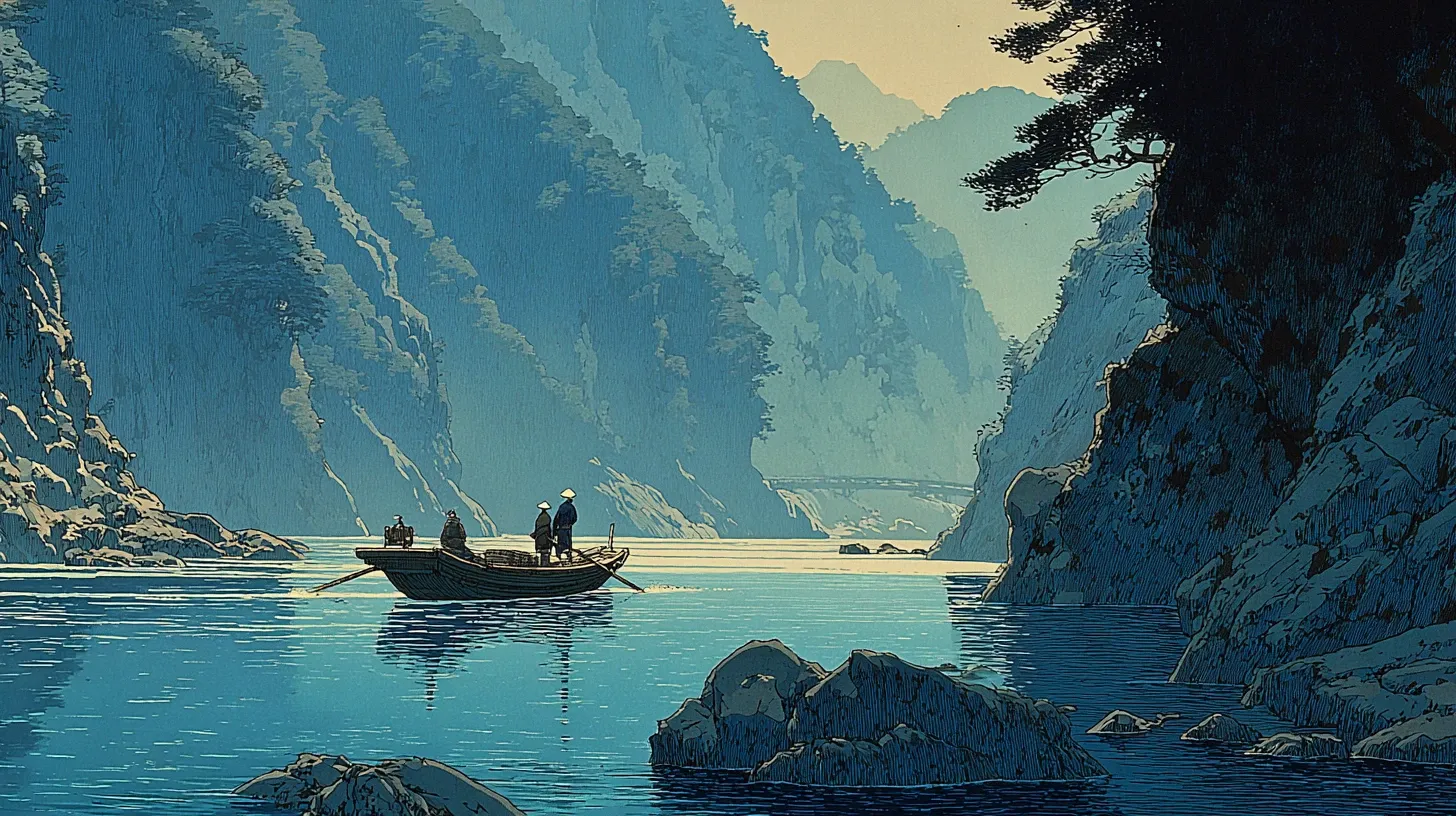
The route is roughly 16 kilometers and takes around two hours. When the river is high after rainfall, the trip can compress to ninety minutes; the water moves faster and the rapids are more dramatic. There are no safety harnesses or whitewater rafting helmets — just a flat-bottomed wooden boat, three boatmen working oars and bamboo poles, and the steep walls of the gorge rising on either side.
The boats run from March through November in regular service, with a smaller heated-boat operation continuing through the winter. Autumn is the most striking season; the gorge fills with red maples, and the boats are usually fully booked weeks in advance.
Take the Trolley, Float Back: Sagano Romantic Train
If you want to make the river trip without driving up to Kameoka, there is a particularly elegant solution: take the Sagano Romantic Train (also called the Sagano Scenic Railway, or Torokko) up to Kameoka, then float back down to Arashiyama on the Hozugawa Kudari boat.
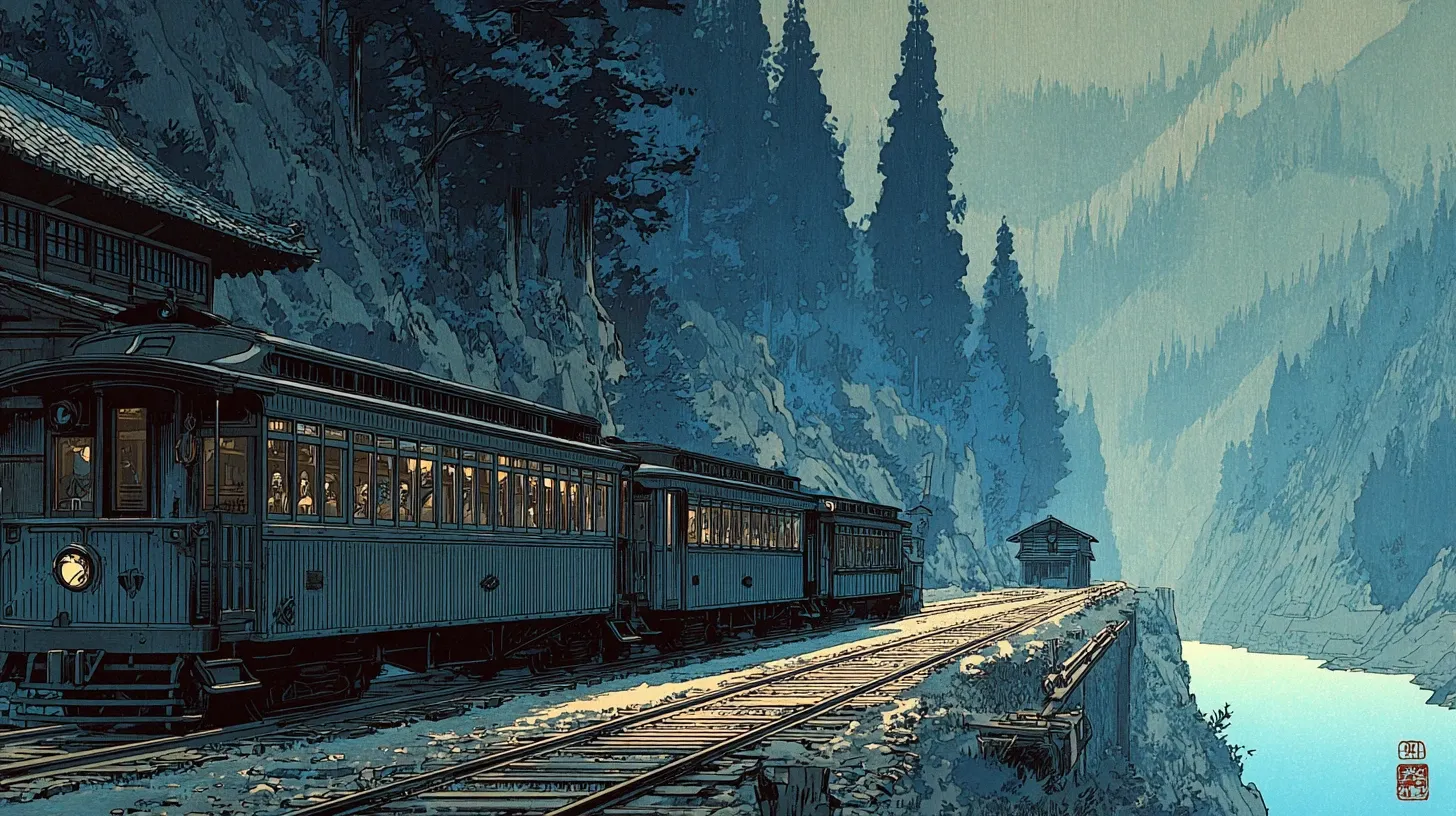
The trolley line is a piece of preserved railway history. It runs along an old section of the San’in Main Line that was abandoned in 1989, when JR West built a new and faster route through tunnels. Rather than tear up the old tracks, a subsidiary of JR West reopened the route in 1991 as a tourist train, fitted with vintage open-window cars and wooden benches. The line follows the Hozu River gorge for 7.3 kilometers between Saga-Arashiyama and Kameoka, with one trip taking about 25 minutes.
By 1991 expectations, the project was a gamble. It exceeded them almost immediately, and the train has been one of the most popular seasonal attractions in western Kyoto ever since. Tickets for autumn weekends can sell out a month in advance.
If you have the time and the timing works out, the trolley-and-boat round trip is widely considered one of the best half-day experiences anywhere in the Kansai region. Locals tend to recommend the boat for travelers who want a slower, more meditative pace, especially during the autumn foliage season; the trolley is the faster option for travelers on tighter schedules.
Beyond the Bamboo: The Monkey Park and Quieter Alternatives
A question that comes up constantly among first-time visitors is whether the bamboo grove is overrated. The honest answer is that the path itself is short and almost always crowded by mid-morning, and many travelers walk away wondering if it lived up to the photographs they came for. The more useful framing is that the bamboo grove is one of several things worth visiting in Arashiyama — and the surrounding district has options that frequently surprise people more than the grove itself.
Iwatayama Monkey Park. A 20-to-30-minute uphill hike from near the Togetsukyō Bridge leads to a small mountaintop park that is home to roughly 120 wild Japanese macaques. The trail is steep in places but mostly paved, and the view from the summit takes in central Kyoto, the Katsura River, and the wider basin to the east. Many visitors report that the monkey park ends up being the most memorable part of their day in Arashiyama — partly because of the macaques themselves, and partly because the climb earns a quieter, less staged experience than anything you can have on the valley floor.
Adashino Nenbutsu-ji. A 30-minute walk north of the main grove, deeper into the Sagano hills, this small temple maintains its own dense bamboo path running uphill from the main grounds. The path is narrower and far less crowded than the famous Chikurin no Komichi, and the temple precincts contain roughly 8,000 small stone Buddhas — most of them weatherworn and moss-covered, marking forgotten graves from centuries past. For travelers who want the bamboo experience without the crowds, this is the alternative most often recommended by people who have done both.
Otagi Nenbutsu-ji. Just past Adashino Nenbutsu-ji, this smaller temple is known for its 1,200 rakan — moss-covered stone arhat statues, each carved with a different expression. Many of them were sculpted by amateur stonemasons during a community restoration project in the 1980s, and the variety is the point: serious, comic, drunk, sleeping, laughing. It is one of the strangest and most charming sights anywhere in Kyoto.
Practical Tips for Visiting Arashiyama
When to come. The two famous seasons are spring (early April for cherry blossoms) and autumn (mid- to late November for maple foliage). Both are stunning. Both are crowded. If you can only visit during peak season, come early — by 7:30 or 8:00 AM, the bamboo grove and the bridge are noticeably quieter than they will be by ten. The difference is real, though even at dawn you will not have the place entirely to yourself; locals jog along the riverbank year-round.
How long to stay. A relaxed half-day is enough for the bamboo grove, Tenryū-ji, the bridge, and a meal. Plan a full day if you want to add the Iwatayama Monkey Park, the Hozugawa boat ride, or the quieter temples deeper in the Sagano hills. One scheduling detail to know: most restaurants and shops in Arashiyama close by around 5:00 to 6:00 PM, so plan to eat dinner early here or head back to central Kyoto for a later meal.
Boat or trolley? Many visitors do both — trolley up, boat down. If you have to choose, locals tend to recommend the Hozugawa boat ride for travelers who want to feel the river itself, especially during autumn. The trolley is the better choice if you are short on time or traveling with people who would prefer to stay dry.
Where to eat. Arashiyama is famous for yudōfu — silken tofu simmered in a light kelp broth, served as a kaiseki-style meal at temple-affiliated restaurants. Several long-established yudōfu restaurants line the path between the bridge and Tenryū-ji. For something simpler, the streets near the bridge are full of small cafés serving matcha desserts, soba, and seasonal sweets like sakura mochi in spring.
Travel essentials. A few practical considerations apply across most of the Kyoto region. Mobile data is far cheaper than international roaming if you arrange a Japan eSIM before arrival; a transit IC card (ICOCA or Suica) lets you tap onto the bus and train without buying paper tickets each time; and travel insurance with overseas medical coverage is strongly recommended given how quickly Japanese hospital bills can add up for visitors without coverage.
How to Get to Arashiyama from Kyoto Station
The fastest route is the JR Sagano Line (also called the San’in Main Line) from Kyoto Station to Saga-Arashiyama Station. The trip takes about 15 minutes and costs ¥240. From the station, the Togetsukyō Bridge is a 12-minute walk south, and the bamboo grove is a 10-minute walk west.
Alternatively, the Keifuku (Randen) tram line runs from central Kyoto to Arashiyama Station, ending closer to the bridge but taking longer overall. The Randen is more atmospheric than fast — many visitors enjoy taking the JR line out and the Randen back, or vice versa.
The Photograph, Reconsidered
The picture you may have come for — the empty bamboo path, the striped sunlight — is real. So is everything around it. The bridge that the moon once crossed. The temple founded by a guilty shōgun and designed by a Zen master who is still being studied seven centuries later. The river that a merchant blasted open with chisels and gunpowder so that timber could float down to the city. The shrine where a thousand years of imperial princesses prepared themselves for a journey east. The mountain park where a hundred and twenty wild macaques outnumber the photographers. The smaller temples, half an hour further into the hills, where the bamboo is quieter and the stone Buddhas are older than most of the world’s grandparents.
Spend a quiet morning in Arashiyama, walk slowly enough to hear the bamboo, and you will find that the photograph was only the entrance. The story behind it is older, and it goes much further into the mountains.
Continue Reading
- Kyoto Travel Guide — the complete hub article on Kyoto and its districts.
- Kiyomizu-dera: The 13-Meter Wooden Stage — another temple that earns its crowds.
- Fushimi Inari Shrine: 10,000 Gates — the other Kyoto place every visitor wants to see.
- Why Kyoto Was Japan’s Capital for 1,074 Years — the city’s full historical context.
FAQ
Is Arashiyama worth visiting?
Yes, especially if you have at least three days in Kyoto. Arashiyama is one of the city’s most distinctive districts — the only major sightseeing area where mountains, river, bamboo forest, and a UNESCO-listed Zen temple all sit within a fifteen-minute walk of each other. Even visitors who skip most of Kyoto’s western temples tend to make time for Arashiyama.
What is the best time to visit Arashiyama?
Early morning, year-round. The bamboo grove and the Togetsukyō Bridge are noticeably quieter before about 9:00 AM, and the soundscape of the bamboo is easier to appreciate without a constant wave of conversation. Cherry blossom season (early April) and the autumn foliage period (mid- to late November) are the most spectacular times to visit, but they are also the most crowded; morning visits become essential.
How much time do I need in Arashiyama?
A comfortable half-day — about four to five hours — is enough to see the bamboo grove, Tenryū-ji, the Togetsukyō Bridge, and have a leisurely lunch. If you want to add the Hozugawa river boat ride and the Sagano Romantic Train, plan a full day; the round trip up to Kameoka and back takes about three hours on its own.
Should I take the Hozugawa River boat or the Sagano Romantic Train?
Many visitors do both — taking the trolley up to Kameoka and floating back down on the boat. If you have to choose, the boat is generally recommended for travelers who want to slow down and experience the river itself, especially during autumn foliage. The trolley is the better choice if you are short on time, traveling in cooler weather, or with people who would rather not be near moving water.
How do I get to Arashiyama from Kyoto Station?
Take the JR Sagano Line (also called the San’in Main Line) to Saga-Arashiyama Station. The trip takes about 15 minutes and costs ¥240 one way. The Togetsukyō Bridge is roughly a 12-minute walk south of the station, and the bamboo grove is reachable by walking through the area behind Tenryū-ji.
Is the Arashiyama Bamboo Grove overrated?
It depends entirely on your timing and your expectations. The path is short — about 400 meters, walkable in 15 to 20 minutes — and from late morning onward it is consistently crowded. Many visitors who arrive after 9:30 AM, or who expect a long uninterrupted forest walk, leave underwhelmed and post about it online. Visit before 8:00 AM, treat the grove as one stop in a wider day rather than the main event, and the experience tends to land much closer to the photograph that brought you there.
Should I visit the bamboo grove or the Iwatayama Monkey Park?
Both, if you have the time. Iwatayama Monkey Park requires a 20-to-30-minute uphill hike but rewards you with close interaction with roughly 120 wild Japanese macaques and one of the best panoramic views of central Kyoto. Many travelers report finding it more memorable than the bamboo grove itself. The two attractions are about a 15-minute walk apart and pair naturally into a single half-day. If you only have time for one and you have already seen bamboo elsewhere in Japan, the monkey park is often the better choice.
Where can I find a quieter bamboo grove in Kyoto?
Adashino Nenbutsu-ji, a 20-to-30-minute walk north of the famous grove into the Sagano hills, has its own dense bamboo path that is significantly less crowded. The temple grounds also contain roughly 8,000 small stone Buddhas marking forgotten graves — making it one of the more atmospheric and less-visited corners of the district. A few minutes further uphill, Otagi Nenbutsu-ji adds 1,200 stone rakan statues with individually carved expressions.
Sources
- Tenryū-ji — Wikipedia
- About Tenryū-ji — Tenryū-ji Temple official site
- Togetsukyo Bridge — Japan National Tourism Organization
- Hozugawa Kudari History — Hozugawa River Boat Cooperative
- Sagano Scenic Railway — Wikipedia
- Nonomiya Shrine — Nonomiya Shrine official site
- Bamboo Forest (Kyoto) — Wikipedia
- Arashiyama and Sagano — Japan Guide