Tokyo: The Complete Travel Guide — Built on a Swamp 430 Years Ago, Now Home to 37 Million
- Sleepy Tales of Japan
- 20 min read In-depth
In 1590, an exiled samurai named Tokugawa Ieyasu was ordered by his rival to abandon his ancestral lands and take over a worthless tidal swamp on the wrong side of Japan. It looked like a punishment. He accepted without complaint.
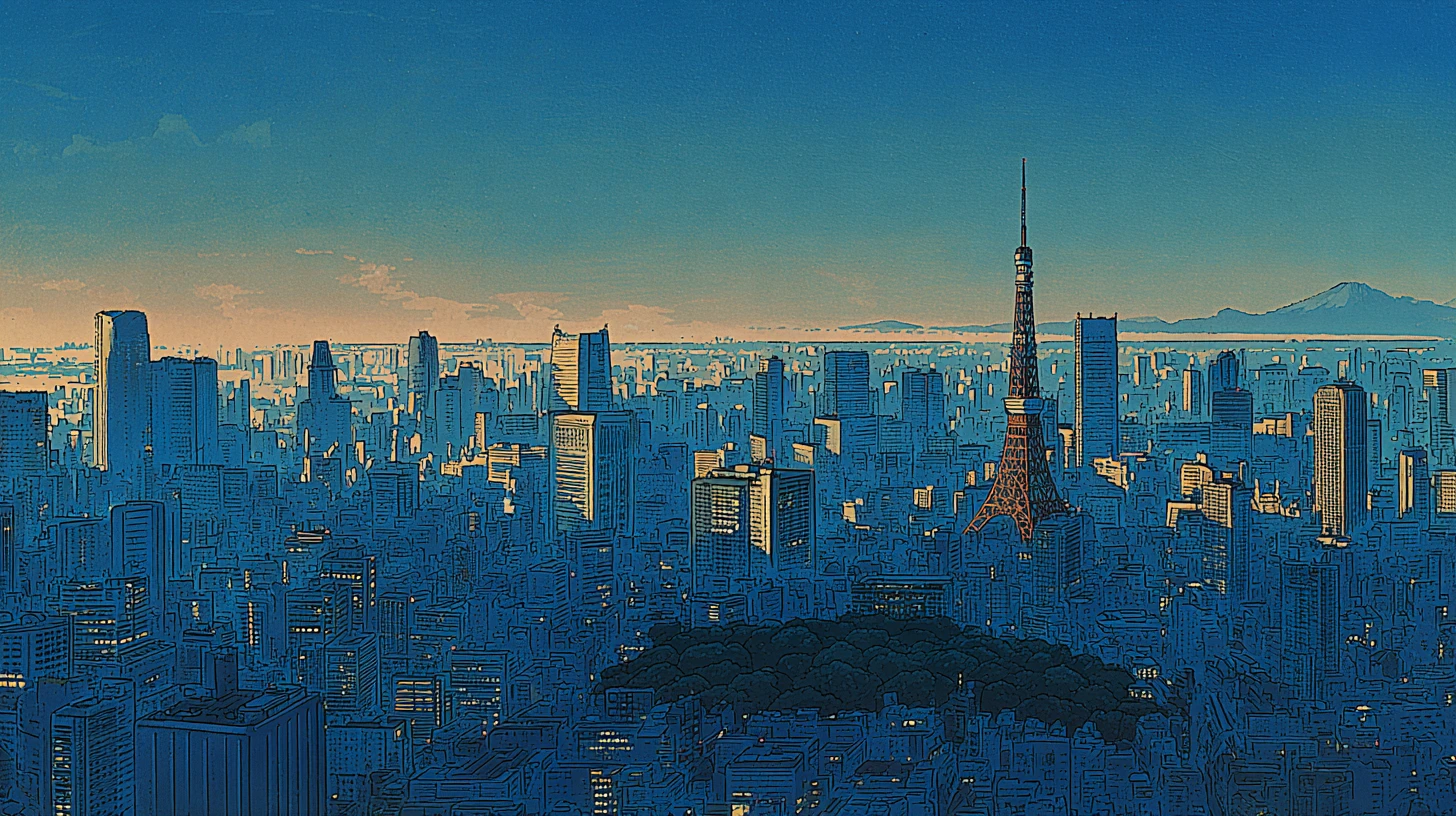
By 1700, when London held about 575,000 people and Paris was comparable, Ieyasu’s swamp city had already passed one million. Four hundred and thirty years later, that same footprint is Tokyo — home to 37 million people, the world’s busiest train station, the most expensive real estate on Earth, and six distinct historical layers stacked on top of one another. Every era is still visible if you know where to look. The Imperial Palace at the city’s center is the surviving outer wall of what was once the largest castle ever built. A temple in Asakusa, founded in 628, predates the city around it by nearly a thousand years. A train tunnel under Marunouchi runs through what used to be a tidal flat. The neon of Shibuya stands on land that was rice paddy in living memory.
Tokyo rewards visitors who treat it as a city to read, not a tour to complete. The famous spots — Shibuya Crossing, Tokyo Tower, the Imperial Palace plaza — appear on every itinerary and deserve to. But three to four days is the minimum that does the city any justice; the visible eras are layered densely on top of one another, and the train system that connects them is the most complex on Earth. The six historical layers, the district-by-district structure locals actually use, and the practical decisions about timing, neighborhood, and length — these are what separate a Tokyo trip from a Tokyo tour.
Table of Contents
Open Table of Contents
- How to Think About Tokyo: A City of Six Layers
- Layer 1 — Edo Castle and the Imperial Palace
- Layer 2 — Asakusa and the Pre-Tokugawa Temple Town
- Layer 3 — Edo Daily Life and the Million-Person City
- Layer 4 — The Meiji and Twentieth-Century Tokyos
- Layer 5 — The Modern Tokyo of Glass and Speed
- Layer 6 — Hidden Tokyo: Museums, Lanes, and the Quiet Corners
- How Many Days — The 3 / 5 / 7 Framework
- Where to Stay — The Right Neighborhood for Your Trip
- When to Visit — The Best Months for Tokyo
- Practical Tips for Visiting
- How to Get There
- Continue Reading
- FAQ
How to Think About Tokyo: A City of Six Layers
Tokyo is not one city. It is technically 23 wards (each one larger than most European cities), connected by the most complex train network on Earth, and arranged across what was, four centuries ago, a tidal marsh. The Tokyo most travelers come to see — the Shibuya scramble, the neon, the order-amid-chaos — is the most recent of six historical layers that all remain visible if you know where to look.
The six layers, briefly:
- Edo Castle and shogun rule (1603–1868) — The Tokugawa seat. The 16-kilometer outer wall enclosed what is now the entire commercial heart of the city.
- Pre-Tokugawa temple town (628–) — Sensō-ji and Asakusa predate Edo by nearly a thousand years. This is the layer that existed before the samurai arrived.
- Edo daily life (1700s) — When London held 600,000 people, Edo held more than a million. Wood and paper, fire and water, an entire urban culture invented from scratch.
- Meiji modernization (1868–1912) and the twentieth century — When the emperor moved in and renamed Edo “Tokyo,” the city remade itself again. Then the 1923 earthquake and the 1945 firebombing forced two more rebuildings.
- The contemporary city of speed — Glass towers, sub-second train timing, vertical neighborhoods. The Tokyo of the present sits on top of all four earlier Tokyos.
- Hidden Tokyo — The quiet corners that survived all the rebuildings. Yanaka. Nezu. The small museums most visitors never find.
The key idea: Every traveler experiences modern Tokyo. The traveler who knows about the other five sees a different city.
Layer 1 — Edo Castle and the Imperial Palace
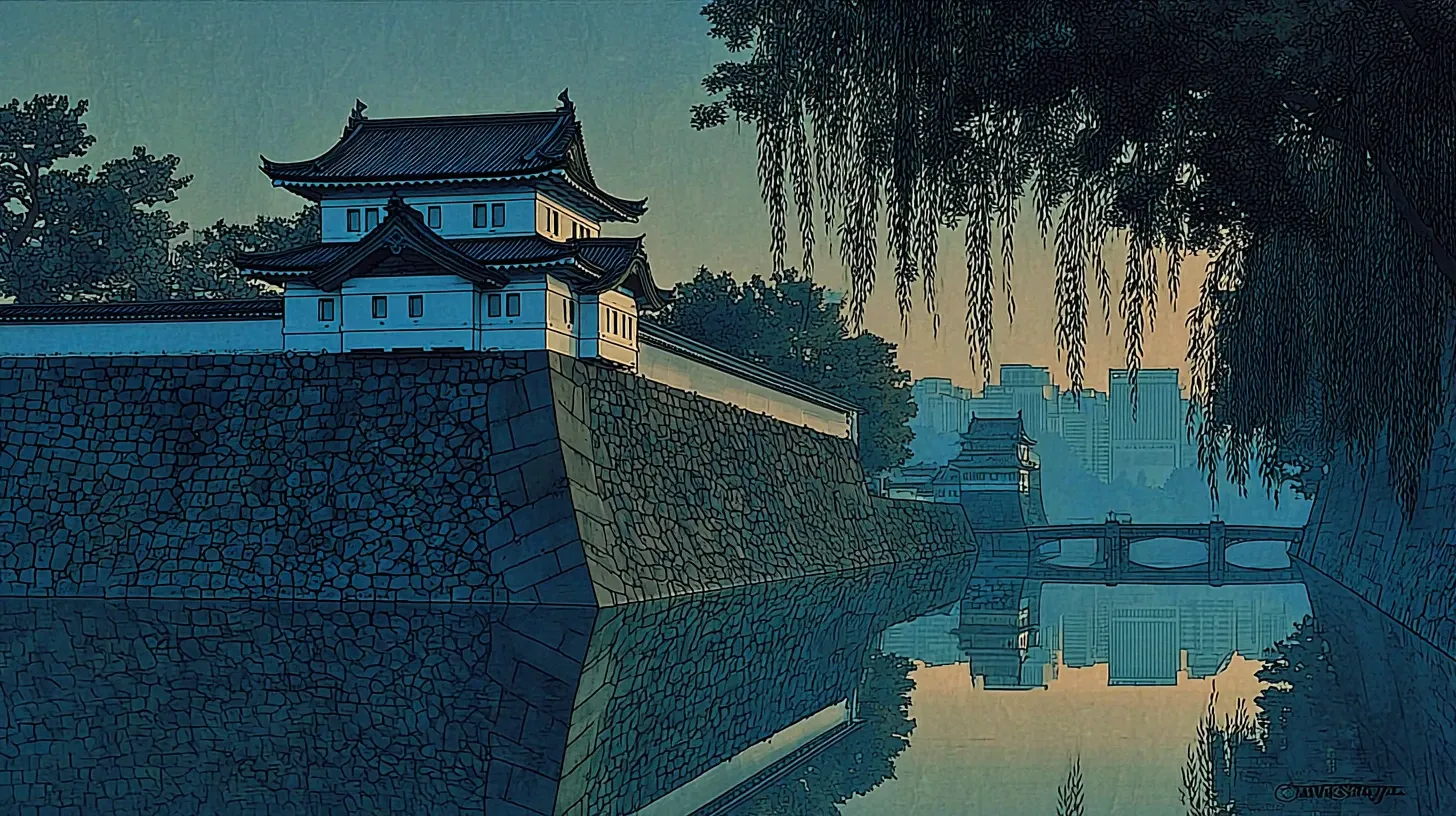
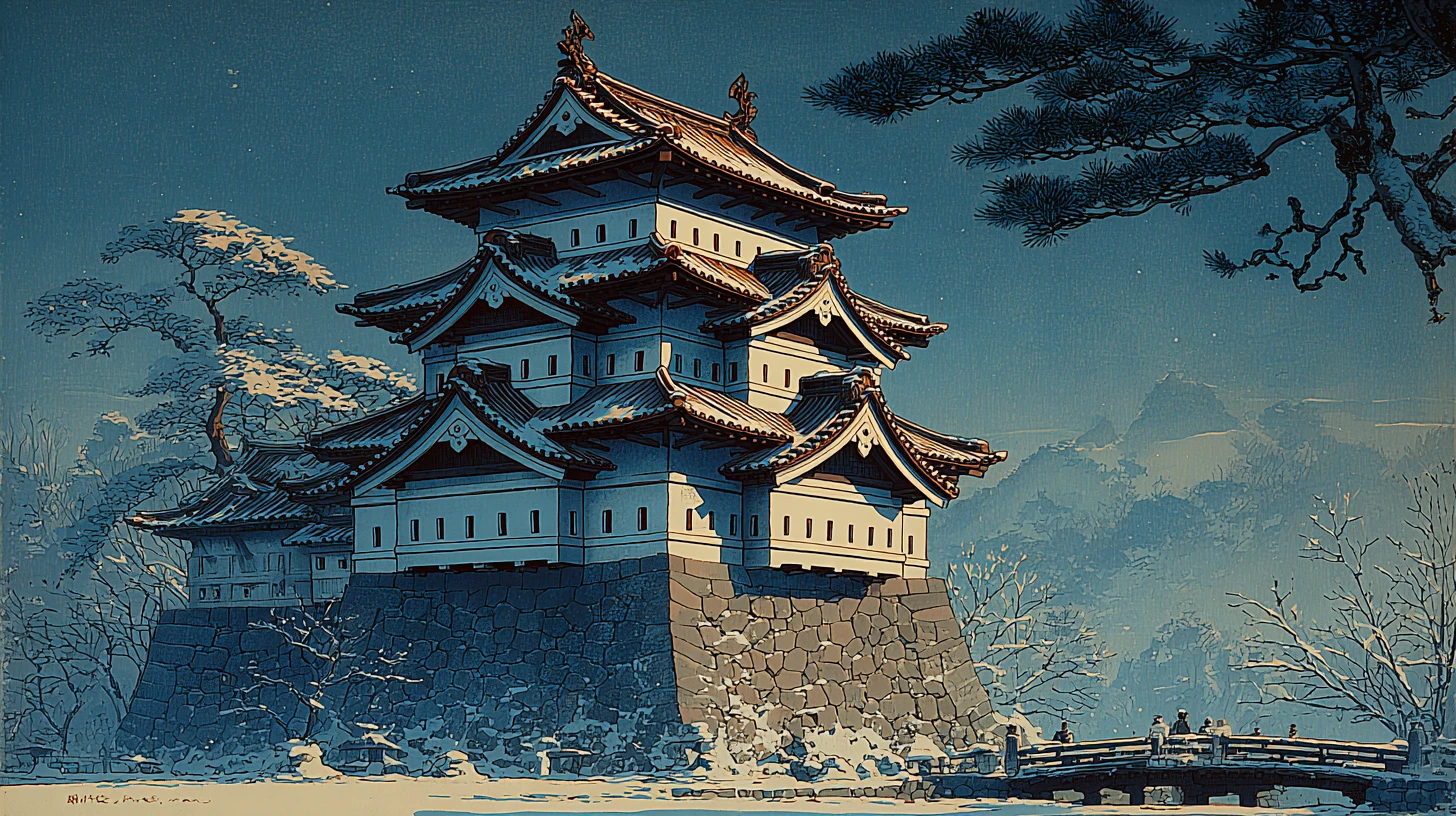
When Tokugawa Ieyasu arrived in 1590, the small hill that would become Edo Castle was already fortified, but only modestly. By the time his grandson Iemitsu finished the work in 1636, Edo Castle was the largest castle ever built — a 16-kilometer perimeter of moats, gates, and stone walls that enclosed what is now Marunouchi, Hibiya, Ōtemachi, and the Imperial Palace itself.
The wooden palace buildings burned in the 1945 firebombing of Tokyo. The current Imperial Palace, where the emperor lives, was rebuilt in 1968. But the outer walls, moats, gates, and stone foundations of the original castle survived — and many are visible today. You can walk the entire 5-kilometer perimeter of the old castle in about an hour. You can climb the 11-meter stone foundation where the castle’s main keep once stood (the keep itself burned in 1657 and was never rebuilt). You can stand at the iconic two-arched Nijūbashi bridge and look across the moat at the same scene that has been photographed for 140 years.
This is the layer you walk through at the center of modern Tokyo without realizing it. Marunouchi, the financial district between Tokyo Station and the palace, was once the area inside the outer moat where regional lords (daimyō) maintained their Tokyo mansions during the sankin-kōtai alternate-attendance system. When the lords were dismissed in 1868, the land was sold to Mitsubishi and built into Japan’s first Western-style business district. The grid of streets you walk through there today follows the same shape as the samurai precinct.
Read the full story: The Imperial Palace and Tokyo’s Hidden Center →
Layer 2 — Asakusa and the Pre-Tokugawa Temple Town
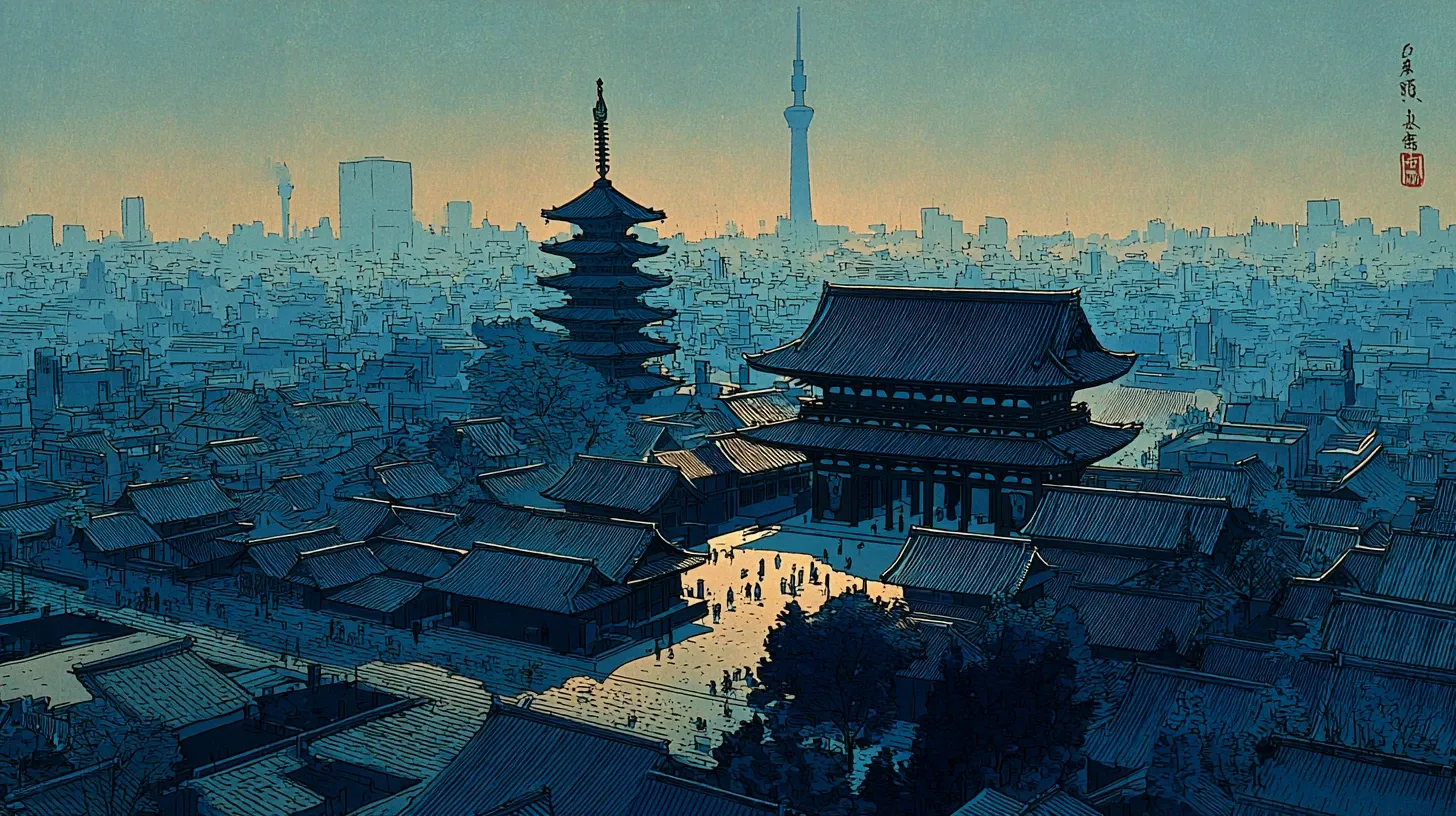
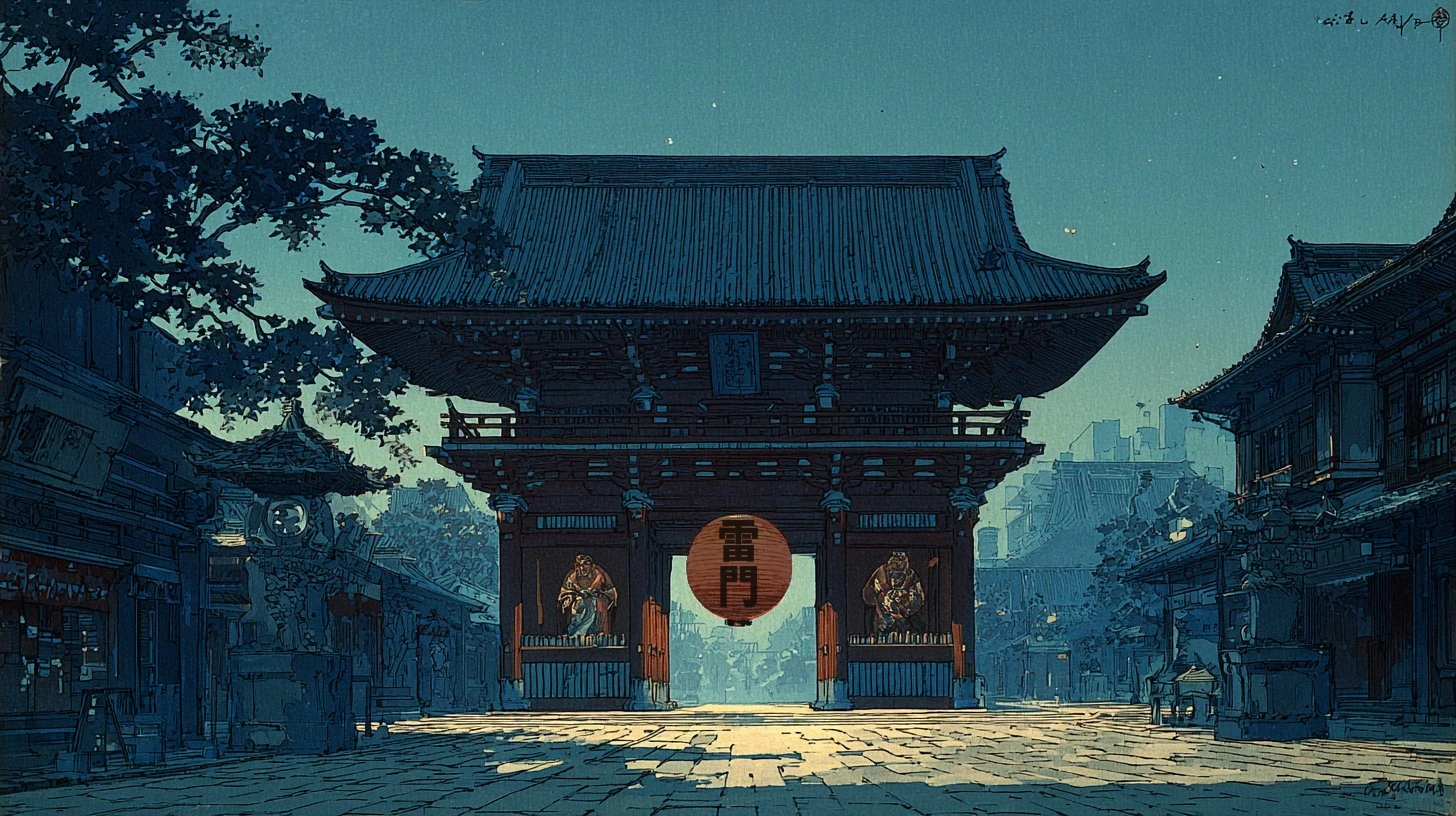
The temple that anchors Asakusa — Sensō-ji — was founded in 628, nearly a thousand years before Ieyasu arrived in Edo. According to temple legend, two fishermen pulling their nets out of the Sumida River found a small gold statue of Kannon. They tried to release it back into the water. It kept reappearing. Eventually the village headman converted his own house into a shrine to house it.
That shrine is now the oldest active institution in the city. Sensō-ji predates the Tokugawa shogunate, the Edo period, the Meiji Restoration, the 1923 earthquake, and the 1945 firebombing. It has been destroyed and rebuilt multiple times, but the spiritual continuity has not broken in nearly 1,400 years.
By 9:00 AM, the 250-meter Nakamise shopping street is shoulder-to-shoulder with visitors. At 6:30 AM, the metal shutters of the shops are still down. The wooden frames of the originals — most are descendants of the families granted shop rights by the shogunate in the late 17th century — stand exposed. In the early light, the temple feels exactly what it is: a working religious site nearly a thousand years older than the city around it.
Read the full story: Asakusa — Tokyo’s Oldest Temple District →
Layer 3 — Edo Daily Life and the Million-Person City
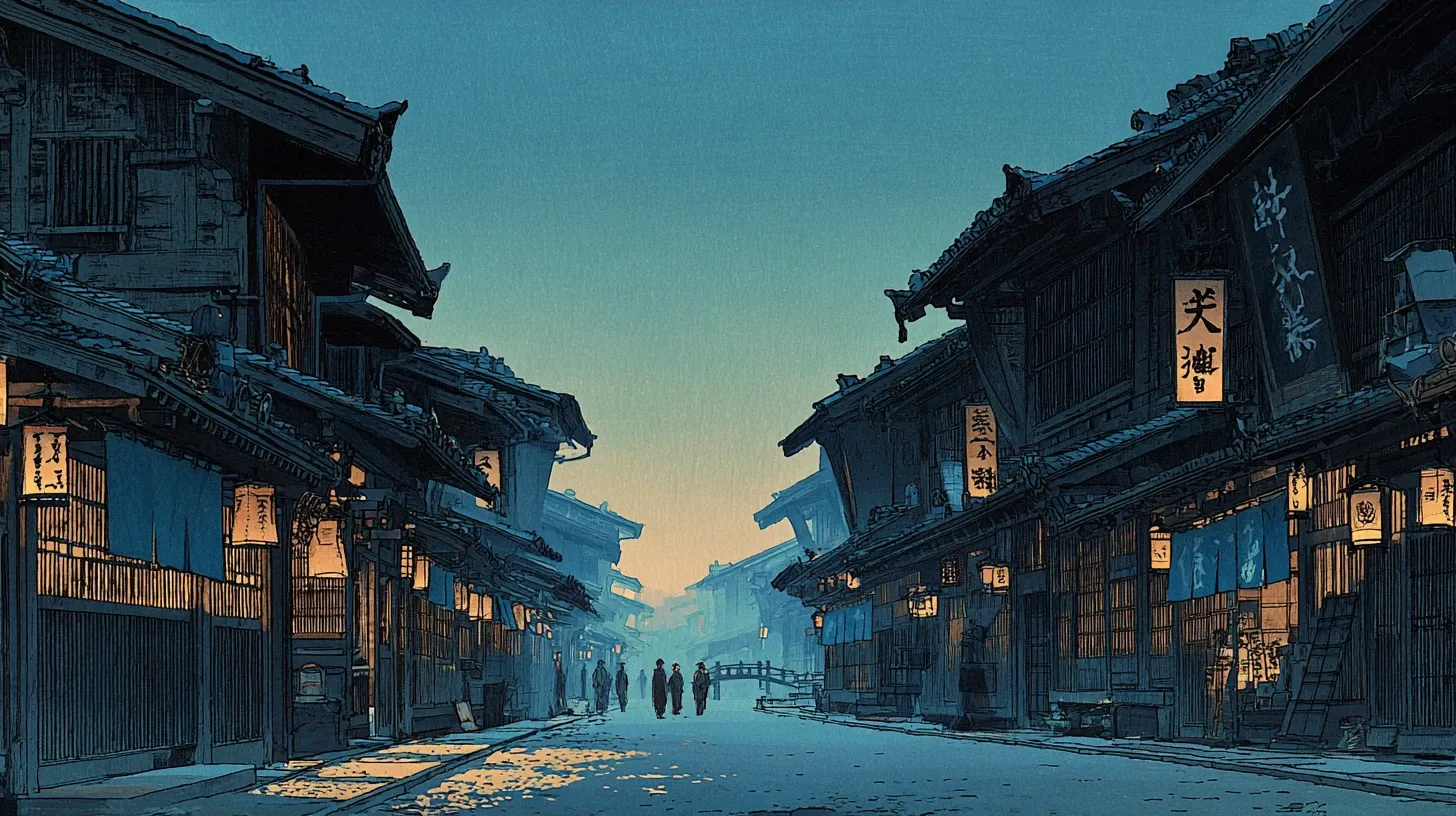
By 1700, the city you would have walked through if you arrived in Edo had more than a million residents — making it, by every reasonable estimate, the largest city on Earth. London at the same time held about 600,000. Paris was comparable. The walls and gates were built of wood and paper. The streets were unpaved. There were no glass windows, no carriages, no horses in the city center. There was no streetlighting beyond paper lanterns.
And yet it worked. A million people, fed by rice carried in on canals and ships, watered by an engineering project that brought spring water from the western hills through wooden pipes still visible in places. A million people sleeping each night in single-room houses divided by paper screens, working in trades passed down from father to son, traveling on foot along streets organized by the geometry of an exiled samurai’s plan.
No tourist ever sees this layer with their own eyes. The 1657 Meireki fire consumed it. The 1923 earthquake shattered it. The 1945 firebombing leveled it.
Yet the anatomy persists. Tokyo’s neighborhoods feel like small towns linked by trains because they were once exactly that. The commercial heart sits in the middle, not the edge, because the daimyō mansions did. A million people still walk to work along streets first laid out for warriors and merchants in the seventeenth century.
The newly reopened Edo-Tokyo Museum (March 2026) is the best single place to see this layer brought back to physical scale — including a full-size replica of the wooden Nihonbashi bridge that once marked the center of all of Japan.
Read the full story: Life in Edo — The City That Beat London by Half a Million People →
Layer 4 — The Meiji and Twentieth-Century Tokyos
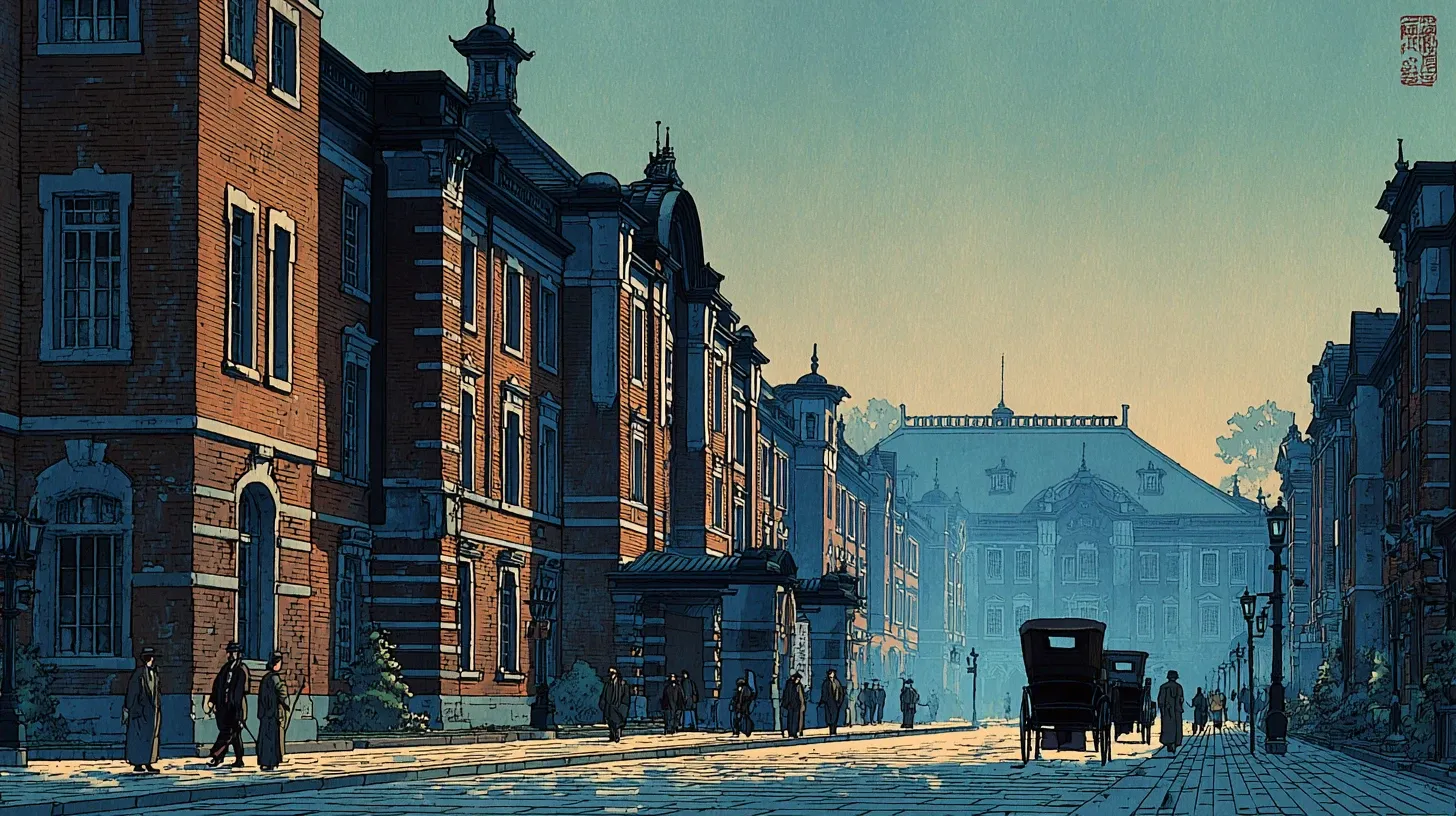
In 1868, the last shogun surrendered Edo Castle peacefully — saving a million-person city from the civil war that almost happened. The emperor moved north from Kyoto into the empty shogun’s residence. The city was renamed Tokyo (“Eastern Capital”), and a new layer began to build itself on top of the old one.
The Meiji government dismissed the samurai class, sold their Tokyo mansions to industrial conglomerates, and began an aggressive program of Western-style modernization. The first Western-style business district was built in Marunouchi (briefly called “Little London”). Japan’s first public park opened in Ueno in 1873. The first railway station, Shimbashi, opened the same year. By 1900, Tokyo had electric lighting, telephones, and a tram system. The city was reinventing itself, layer by layer, on top of the lattice of Edo streets that still survived underneath.
Then came the destructions. The 1923 Kantō earthquake killed an estimated 140,000 people and burned most of the city to the ground. The architect Gotō Shimpei led an ambitious rebuilding plan that gave Tokyo many of the boulevards and parks it still has today. Then in 1945, the U.S. Air Force firebombed Tokyo on the night of March 9–10, killing roughly 100,000 people in a single night and destroying most of what had been rebuilt. By the time the Allied occupation ended in 1952, Tokyo had been mostly destroyed and rebuilt three times in less than a century.
The Tokyo you walk through in 2026 is, in much of the city, the third rebuilding. This is why so many neighborhoods feel surprisingly recent — most of the city is. But the bones underneath (the street grid, the train alignment, the location of shrines and temples) are still Edo.
You can read this layer most clearly in the streets between Ueno (the first public park, the cluster of museums, and the site of the last samurai battle in 1868), Ryōgoku (the sumo capital and the birthplace of Hokusai), and Ginza (the Meiji-era luxury district that survived to become contemporary Tokyo’s commercial face). Spoke guides on each of these districts are coming.
Layer 5 — The Modern Tokyo of Glass and Speed
The Tokyo that most travelers think of when they hear the name is the city that emerged in the second half of the twentieth century: Shibuya, Shinjuku, Roppongi, Akihabara. The neon. The vertical neighborhoods. The world’s busiest train station (Shinjuku — 3.5 million passengers per day). The Shibuya scramble crossing where 3,000 pedestrians cross at once when the light changes.
This Tokyo is real, and it deserves at least a day of your trip. Walking through Shinjuku at night, or watching the Shibuya scramble from the Hachikō statue, or visiting one of the giant electronics arcades in Akihabara, is genuinely one of the experiences of modern travel that hasn’t been replicated anywhere else on Earth.
But it is only one layer. Most travelers who limit their Tokyo trip to this layer come away thinking the city is bigger, busier, more neon, and less historical than it actually is. The Tokyo of glass and speed is the surface. Under it sit five other Tokyos, each more interesting in its own way, and each visible if you make time for it.
This guide intentionally does not list the famous modern spots — Shibuya, Shinjuku, Tokyo Tower, Skytree, teamLab — in detail, because they are covered in every other Tokyo guide on the internet. The value this site offers is the other Tokyos that the standard guides skip.
Layer 6 — Hidden Tokyo: Museums, Lanes, and the Quiet Corners
This is the Tokyo most visitors walk right past. The neighborhoods where the 1923 earthquake and the 1945 firebombing left some old wooden buildings standing. The museums where you can see Edo artisans’ tools, Meiji modernization equipment, and Hokusai woodblock prints from the original blocks. The temples and shrines that were rebuilt in the same place, in the same wood, for the seventh or eighth time.
The single most useful introduction to this layer is the Tokyo museum cluster around Ueno (the Tokyo National Museum, the National Museum of Western Art, the National Museum of Nature and Science) and Ryōgoku (the Sumida Hokusai Museum, the Edo-Tokyo Museum). These are the institutions where the city has actively preserved the layers that the rebuildings destroyed.
The neighborhoods worth wandering for the older Tokyo include Yanaka (one of the few districts that survived both 1923 and 1945 with much of its wooden architecture intact), Nezu (an old temple district near Yanaka), and the smaller streets around Asakusa before 9:00 AM. None of these will appear on a standard tourist itinerary, but they are where you find the city that took five centuries to grow.
Read the full story: Tokyo’s Best Museums and Hidden Cultural Gems →
How Many Days — The 3 / 5 / 7 Framework
Tokyo can technically be covered in a single day. It is technically possible to see Asakusa, the Imperial Palace plaza, Shibuya, and Shinjuku in one exhausting daylight stretch. But this would be a tour, not a visit. Here is what Tokyo actually rewards, at different time scales:
3 days (the realistic minimum):
- Day 1: Imperial Palace + Marunouchi + Ginza
- Day 2: Asakusa (early morning) + Ueno museums
- Day 3: Shibuya + Shinjuku + one neighborhood of your choice
This is enough for the famous spots and one quieter layer. You will leave knowing you missed half the city.
5 days (the recommended trip):
- Day 1–3 as above
- Day 4: A historical day — Ryōgoku for sumo and Hokusai + Edo-Tokyo Museum + Yanaka walk
- Day 5: A “side of Tokyo you wouldn’t expect” day — Meiji Shrine forest + Harajuku + a small museum
This gets you across all six layers and lets you slow down. Most travelers find day 4 and 5 are what they remember.
7 days (the deep version):
- Days 1–5 as above
- Days 6–7: Day trips. Kamakura (the Great Buddha and old temples, 50 minutes by train). Nikkō (Tokugawa Ieyasu’s mausoleum, 2 hours by train). Hakone (hot springs with a view of Mount Fuji, 80 minutes). All three are deeply Tokyo-related historically — Kamakura was the shogunate that preceded the Tokugawa, Nikkō is where Ieyasu is buried, Hakone is where the daimyō stopped on the way to Edo.
The mistake most travelers make: trying to do 3 days of Tokyo + Kyoto + Osaka + Hiroshima in 10 days. This produces a blur. 5 days in Tokyo + 5 days in Kyoto + a single side trip produces a trip you remember.
Where to Stay — The Right Neighborhood for Your Trip
| You Are | Stay In | Why |
|---|---|---|
| First-time visitor | Marunouchi / Tokyo Station area | Walking distance to Imperial Palace, easy Shinkansen access, central |
| Want quiet & traditional | Asakusa | Old neighborhood feel, near temple at dawn, easy Skytree access |
| Want nightlife & modern | Shinjuku or Shibuya | The action is at your door, train hub access |
| Want luxury & shopping | Ginza | Top hotels, Michelin restaurants, Imperial Palace nearby |
| Want budget & local feel | Ueno or Asakusa | Cheaper, more residential, still well-connected |
| Doing day trips to Hakone/Mount Fuji | Shinjuku | The Romance Car to Hakone leaves from here |
The neighborhoods to avoid for first visits: Tokyo Station’s neighborhood is convenient but soulless after office hours. Roppongi has hotels but is mostly tourist bars. Akasaka is fine but lacks character. Ikebukuro is functional but feels secondary.
When to Visit — The Best Months for Tokyo
| Season | Months | Best For | What to Know |
|---|---|---|---|
| Late March – early April | Sakura | Cherry blossom viewing | Hotels book 6 months ahead. Expect crowds. |
| May | Spring | Comfortable temperatures, festivals (Sanja Matsuri) | One of the two best months overall |
| June | Rainy season | Hydrangeas, fewer tourists | Plan for indoor museum days |
| July–August | Summer | Festivals (fireworks, summer matsuri) | Genuinely hot and humid. Plan early/evening. |
| October–November | Autumn | Maple leaves, comfortable weather | The other best month overall |
| December–February | Winter | Clear skies, lower prices | Cold but not snowy. Many shrines stay open New Year’s. |
The single best month is mid-October to mid-November. Comfortable weather, autumn colors, and no crowds equivalent to the sakura peak. The second best is May, before the rainy season but after spring crowds.
Avoid: Golden Week (late April / early May) is a Japanese national holiday week — domestic tourism floods every major destination. Tokyo is busy year-round but Golden Week is something else.
Practical Tips for Visiting
Get a Suica or Pasmo IC card on arrival. This is the single most useful thing you can do. Available at any Tokyo station vending machine or at the airport. Loads with cash. Works on every Tokyo train, subway, bus, and most convenience stores. Avoid paper tickets.
Don’t try to use Google Maps for trains the way you would in Western cities. Use the Japan-specific app Navitime for Japan Travel or the official JR East app. They handle the multi-operator complexity (JR, Tokyo Metro, Toei, and various private lines) better than Google does.
The trains stop around midnight. This catches visitors out repeatedly. If you are out past 12:30 AM, you will be taking a taxi (Tokyo taxis are good but expensive: a 15-minute ride is ~¥3,000). Most lines start again around 5:00 AM.
Cash still matters, but less than it used to. Most restaurants and shops now take credit cards. Some traditional shops, small ramen places, and some temples are still cash-only. Carry ¥10,000 in cash as a buffer.
Tipping is not done. Anywhere. Restaurants, taxis, hotels. Leaving cash on a restaurant table is considered confusing and slightly rude. The staff will chase you down the street to return it.
The convenience stores are restaurants. 7-Eleven, Lawson, and FamilyMart sell genuinely excellent meals (rice balls, sandwiches, hot dishes, coffee, beer). Many travelers report eating most lunches at konbini. The quality is not a joke — it is one of the country’s best-kept practical secrets.
How to Get There
From Narita Airport:
- Narita Express (N’EX) to Tokyo Station: ~60 minutes, ¥3,070 (reserved seats, comfortable)
- Keisei Skyliner to Ueno: ~45 minutes, ¥2,570 (fastest option)
- Airport Limousine Bus to major hotels: ~90 minutes, ¥3,200
From Haneda Airport:
- Tokyo Monorail to Hamamatsuchō: ~17 minutes, ¥520
- Keikyū Line to Shinagawa: ~14 minutes, ¥330 (cheapest)
- Airport Limousine Bus to major hotels: ~30–60 minutes, ¥1,400
Haneda is closer to central Tokyo than Narita and saves at least an hour each way. If your flight schedule allows a choice, prefer Haneda.
Within Tokyo: The train and subway network handles almost all travel. Buses are useful for specific routes (e.g., from Shinjuku to Hakone). Taxis exist but are expensive. Walking is genuinely pleasant in most neighborhoods — the city is more walkable than its reputation suggests.
Continue Reading
This Hub points to the longer Deep Dive Stories on each layer of Tokyo. Each one stands alone:
- Tokyo Was a Swamp Nobody Wanted — How Tokugawa Ieyasu’s “punishment” became the largest city on Earth. The 1590 founding, the engineering project that redrew the coastline.
- Life in Edo: The City That Beat London by Half a Million People — What daily life looked like in a city of a million made of wood and paper. Fires, festivals, the entire urban culture that disappeared.
- Asakusa: Sensō-ji Was Founded in 628 — The temple that predates Edo by nearly a thousand years, the timing rule that changes everything, and the older Tokyo hidden underneath the daytime crowds.
- The Imperial Palace and Tokyo’s Hidden Center — Edo Castle was the largest castle ever built. The Imperial Palace today is its surviving outer wall. The 5km loop Tokyo runs every morning, the East Gardens, and the districts built on samurai estates.
- Tokyo’s Best Museums Are the Ones Nobody Mentions — Tokyo has more museums than Paris. Most visitors never see them. Including the newly reopened Edo-Tokyo Museum and the free building full of dinosaurs next to Tokyo Station.
FAQ
How many days do I need in Tokyo?
Three days is the realistic minimum to see the famous spots without exhausting yourself. Five days lets you see the historical layers most travelers miss (Ryōgoku, Ueno, the older neighborhoods) and is the recommended trip length. Seven days adds room for day trips (Kamakura, Nikkō, Hakone) that are deeply tied to Tokyo’s history. Most travelers who give Tokyo only 2 days report that they wished they had stayed longer; almost no one regrets 5.
Is Tokyo worth visiting, or should I just go to Kyoto?
Both. Tokyo and Kyoto are completely different cities offering completely different things — Tokyo is the world’s largest urban area built across six historical layers; Kyoto is a thousand-year-old imperial capital with the highest density of temples and gardens anywhere in Japan. Most first-time travelers do both, splitting their trip roughly evenly. The standard mistake is trying to add Osaka and Hiroshima to a 10-day trip and ending up rushed through everything. A focused Tokyo + Kyoto trip almost always produces better memories than a crammed Tokyo + Kyoto + Osaka + Hiroshima itinerary.
Where should I stay in Tokyo?
For first-time visitors, the area around Tokyo Station / Marunouchi is the most convenient — central to most sights, easy Shinkansen access, walking distance to the Imperial Palace. Asakusa is the best choice if you want a more traditional neighborhood feel. Shinjuku is best for night-life and easy Hakone access. Ginza is best for luxury hotels and shopping. Avoid hotels in Roppongi (mostly tourist bars) or Ikebukuro (functional but lacks character) for your first visit.
Is Tokyo expensive?
Less than you probably think. Tokyo is cheaper than London, Paris, or New York for almost everything except the very top tier. A good ramen lunch is ¥1,000–1,500. A solid sushi dinner is ¥3,000–5,000 per person. A subway ride is ¥170–320. Mid-range hotels are ¥15,000–30,000 per night. Where Tokyo can get expensive is luxury hotels, kaiseki dinners, and certain experiences (sumo tickets, top sushi counters). For ordinary travel, your daily budget will likely surprise you on the low end.
When is the best time to visit Tokyo?
Mid-October to mid-November is the single best window — comfortable weather, autumn colors, no extreme crowds. May is the second best, before the rainy season but after the spring crowds. Cherry blossom season (late March to early April) is famous for a reason but books up six months in advance and is genuinely crowded. Avoid Golden Week (late April to early May) when domestic tourism floods every destination.
What’s the best Tokyo neighborhood for first-time visitors to explore?
If you have only one day to walk through a single neighborhood, choose Asakusa. It has the city’s oldest temple (Sensō-ji, founded 628), the centuries-old shopping street, the river that defined Edo’s geography, and easy access to Tokyo Skytree across the river. Arrive before 8:00 AM if you want to see it as the locals see it. By 10:00 AM, the tour buses arrive.
Can I do Mount Fuji as a day trip from Tokyo?
Yes, easily. The most common route is the Hakone day trip — 80 minutes by Odakyū Romance Car from Shinjuku, then a half-day in the hot spring town and along the lake with Mount Fuji visible (weather permitting) across the water. Kawaguchiko (one of the Fuji Five Lakes) is also a 90-minute bus ride from Shinjuku Bus Terminal. Climbing Mount Fuji is a serious overnight commitment (only July to early September) and not a “day trip” in any reasonable sense.
Is the train system really as complicated as people say?
Yes, and you will figure it out within 24 hours. Tokyo has roughly 800 train stations across 13 subway lines, the JR Yamanote loop, the JR Chūō line, and dozens of private operators. The complexity is real. But the system is so reliable, so well-signed in English, and so frequent that visitors typically adapt within a day. The single most useful step is downloading the Navitime for Japan Travel app, which handles the multi-operator complexity better than Google Maps.
Sources
- Imperial Palace Information — Imperial Household Agency — Imperial Household Agency
- Asakusa Sensō-ji — Official Website — Sensō-ji Temple
- Edo-Tokyo Museum — Reopening Information — Tokyo Metropolitan Edo-Tokyo Museum
- Tokyo National Museum — Tokyo National Museum
- GO TOKYO Official Travel Guide — Tokyo Convention & Visitors Bureau
- Tokyo Metro Subway Map — Tokyo Metro
- JNTO Tokyo Travel Information — Japan National Tourism Organization
- Edo Castle — Encyclopedia Britannica — Encyclopedia Britannica
- Great Kantō Earthquake — Wikipedia — Wikipedia
- Bombing of Tokyo — Wikipedia — Wikipedia