Tokyo's Best Museums Are the Ones Nobody Mentions — Including a Free Building Full of Dinosaurs Next to Tokyo Station
- Sleepy Tales of Japan
- 11 min read
Here is a confession that most Tokyo travel guides will not make: the five places that appear in every itinerary — Shibuya Crossing, Tokyo Tower, Sensō-ji, Meiji Shrine, the Tsukiji outer market — are genuinely worth visiting. But they are also, by a wide margin, the least interesting things about this city.
Tokyo has more museums than Paris. It has neighborhoods where the twentieth century barely left a mark. It has a building next to Tokyo Station where you can walk among dinosaur skeletons, antique scientific instruments, and taxidermied birds — for free. And since March 2026, it has the newly reopened Edo-Tokyo Museum, where a full-scale replica of the wooden bridge that once marked the center of Japan stretches across the exhibition hall.
Contents
- The Museum Mile Nobody Mentions
- A City in a Building — The Edo-Tokyo Museum
- Where Old Tokyo Still Lives
- Art That Moves
- The Garden Museums
- The Hidden Spaces
- Continue Reading
- Frequently Asked Questions
The Museum Mile Nobody Mentions
Most visitors arrive in Ueno to see the cherry blossoms. What they rarely realize is that Ueno Park contains the densest concentration of world-class museums in all of Asia.
The Tokyo National Museum, founded in 1872, is the oldest and largest museum in Japan. Its collection spans over 120,000 objects — samurai armor, Buddhist sculptures, Jōmon-period pottery that predates the Egyptian pyramids, and one of the finest collections of Japanese swords in existence. The Honkan (Japanese Gallery) alone could occupy an entire morning. The Tōyōkan (Asian Gallery) holds art from China, Korea, Southeast Asia, India, and Egypt. On any given day, roughly 3,000 of its objects are on display — and the building is rarely crowded.
Across the plaza, the National Museum of Western Art occupies a building that is itself a work of art. Designed by Le Corbusier in 1959, it is the only UNESCO World Heritage Site in Tokyo — recognized not for its collection, but for its architecture. Inside, the permanent galleries hold Monets, Renoirs, and Pollocks. Rodin’s The Thinker sits in the forecourt, largely unnoticed by the crowds heading to the zoo next door.
Then there is the National Museum of Nature and Science, where a life-size blue whale model hangs from the ceiling and the exhibits walk you through 4.6 billion years of planetary history, with a particular emphasis on Japan’s unique position at the junction of four tectonic plates.
All three museums sit within five minutes of each other. A combined visit costs less than a single meal in Ginza. Yet on most days, the crowds in Ueno Park are at the Starbucks, not the galleries.
A City in a Building — The Edo-Tokyo Museum
The Edo-Tokyo Museum reopened in March 2026 after four years of renovation, and it is, without exaggeration, the single best place to understand how Tokyo became Tokyo.
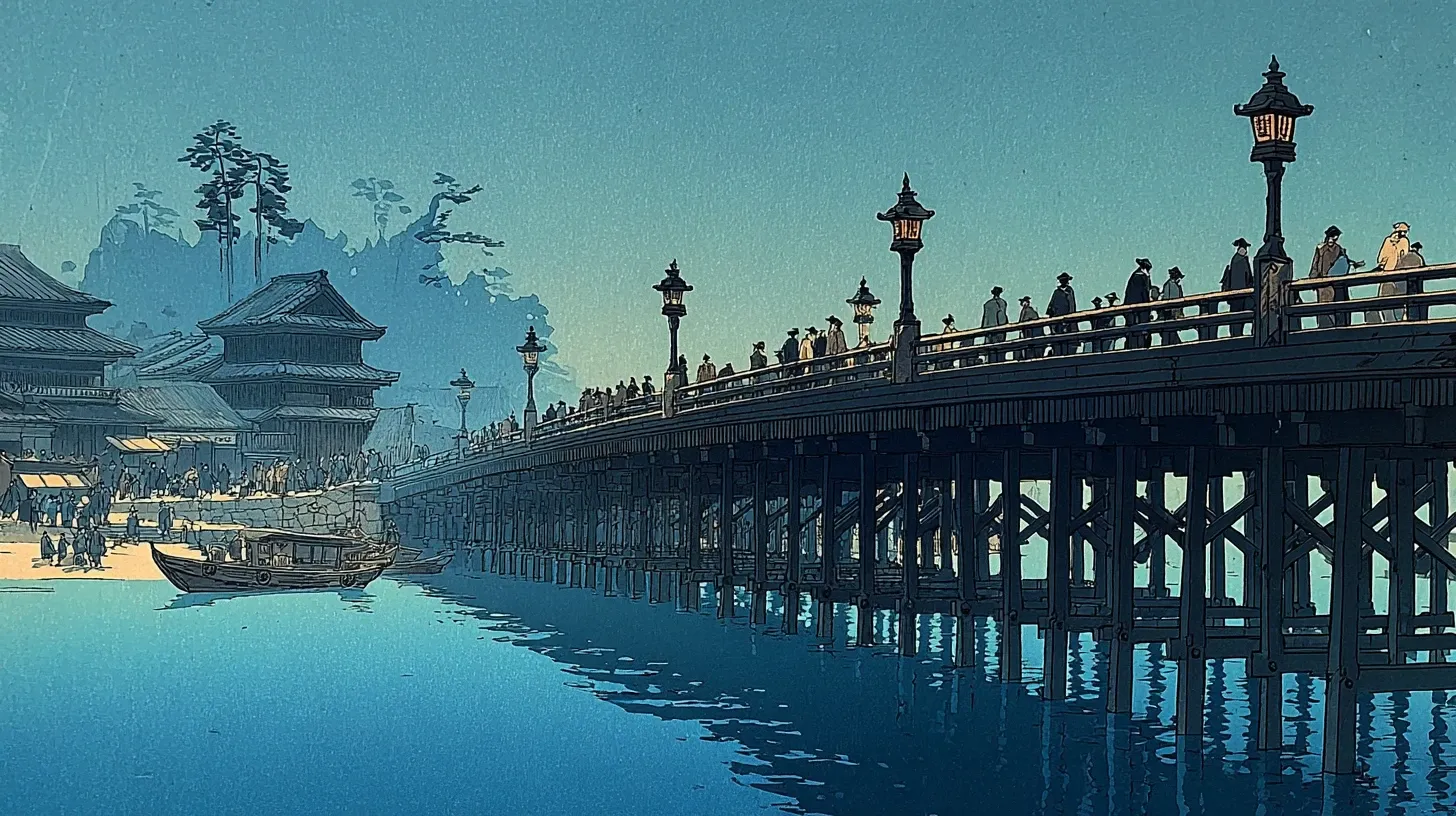
The permanent exhibition begins with a full-scale reproduction of Nihonbashi — the wooden bridge that served as the official starting point of all five major highways in Edo-period Japan. You walk across it, looking down at a diorama of the city that once sprawled below. From there, the exhibition traces Tokyo’s transformation from a fishing village to a city of over a million people in the eighteenth century, through the catastrophic fires that repeatedly leveled it, the earthquake of 1923 that destroyed it, and the firebombing of 1945 that destroyed it again.
The museum’s genius is its scale models. An entire Edo-period neighborhood is reconstructed at one-to-one scale — you can step inside a merchant’s shop, peer into a tenement room, and understand exactly how tightly people lived in a city where space was always the scarcest resource. The new renovation adds a full-scale reproduction of the Hattori Watch Shop, an iconic symbol of Meiji-era Ginza, and a redesigned third-floor plaza by architect Shōhei Shigematsu.
Multilingual audio guides are available on your own smartphone — no need to borrow a device.
Where Old Tokyo Still Lives
Most of central Tokyo was destroyed twice in the twentieth century — first by the Great Kantō Earthquake of 1923, then by American firebombing in 1945. Nearly every “old” building in the city center is, at most, eighty years old.
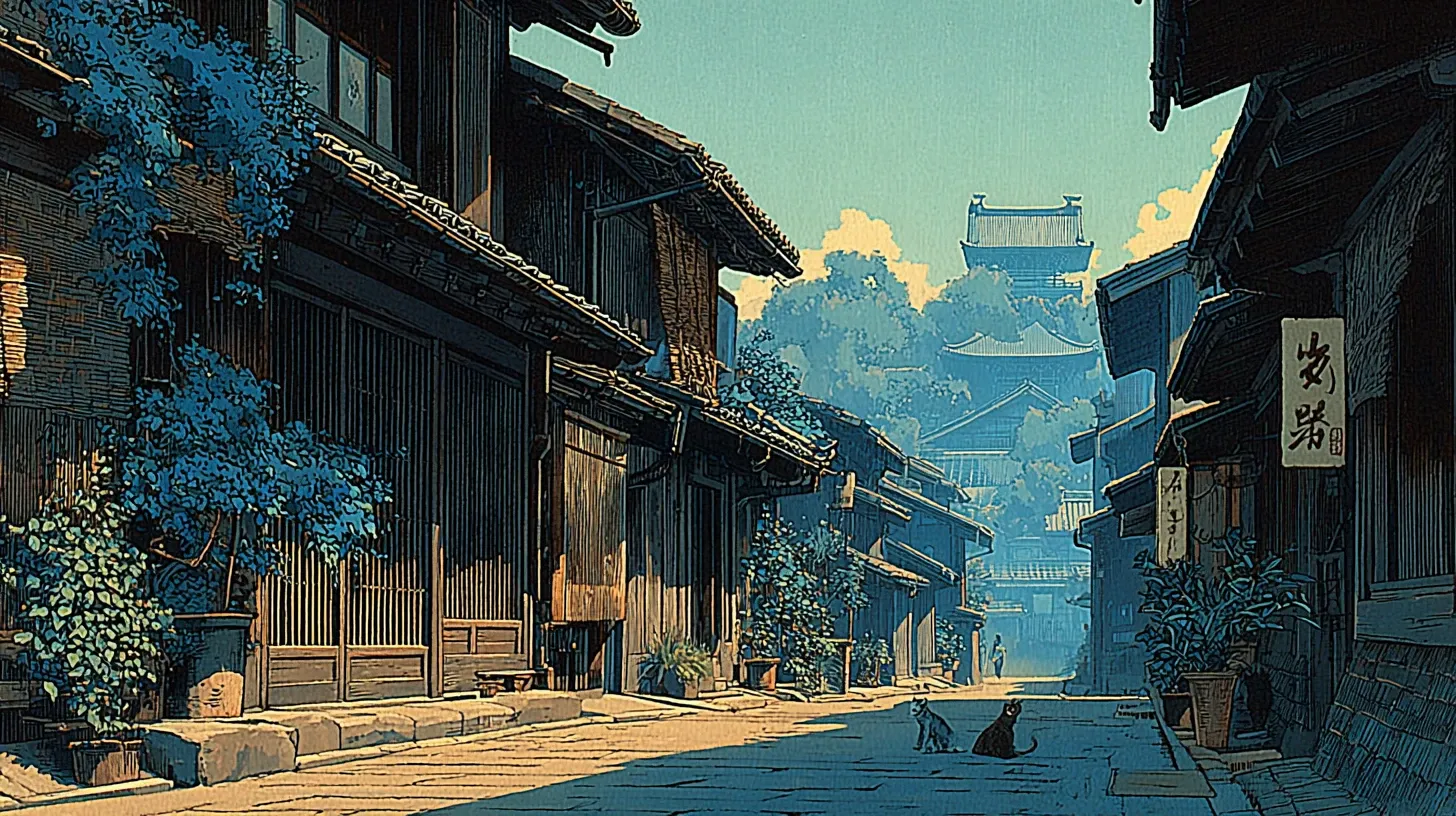
There is one exception. The neighborhoods of Yanaka, Nezu, and Sendagi — collectively called Yanesen by locals — somehow survived both disasters. Walking through their narrow lanes is the closest you can come to experiencing what Tokyo felt like before concrete replaced wood.
Yanaka Ginza, a 170-meter shopping street lined with about sixty small shops, has no chain stores. The butcher, the rice cracker shop, the sembei vendor who grills each cracker by hand — they have been here for decades. At the western end, a staircase called Yūyake Dandan (“Sunset Steps”) faces directly west, and on clear evenings, the entire street turns gold.
Nearby, Nezu Shrine is one of Tokyo’s oldest, founded (by tradition) over 1,900 years ago. Its tunnel of vermillion torii gates rivals Kyoto’s Fushimi Inari in beauty but sees a fraction of the visitors. In late April and early May, the shrine’s hillside garden explodes with three thousand azalea bushes in every shade from white to crimson.
The entire area is best explored on foot, without a plan. The charm of Yanesen is in what you stumble upon: a cat sleeping on a temple wall, a hand-painted sign advertising a shop that has been open since the Meiji era, the sound of a shamisen lesson drifting from an upstairs window.
Art That Moves
If Ueno represents Tokyo’s classical art tradition, teamLab Borderless represents its future.
Reopened in February 2024 at Azabudai Hills in Minato, teamLab Borderless is a 10,000-square-meter space where digital artworks flow across walls, floors, and ceilings without boundaries. Flowers bloom and scatter beneath your feet. Waterfalls cascade down surfaces that do not exist. The artworks respond to your presence — stand still, and butterflies will gather around you; move, and they disperse.
It is not a museum in any traditional sense. There are no frames, no labels, no prescribed route. The experience is designed to be immersive and disorienting in equal measure. Allow at least two hours. Advance tickets are essential — same-day entry is rarely available, especially on weekends.
For a more conventional but equally striking experience, the Mori Art Museum sits on the 53rd floor of Roppongi Hills, offering contemporary art exhibitions alongside a panoramic observation deck. The combination of cutting-edge installation art and a 360-degree view of Tokyo is genuinely unique.
The Garden Museums
Two of Tokyo’s finest museums hide behind gardens so beautiful that visitors sometimes forget to go inside.
The Nezu Museum in the Omotesandō district houses one of Japan’s premier collections of pre-modern Asian art — Buddhist sculptures, Chinese bronzes, Edo-period paintings, and seven objects designated as National Treasures. The building, designed by architect Kuma Kengo, is deliberately understated: low ceilings, natural materials, walls of glass that dissolve the boundary between gallery and garden.
The garden itself is the second reason to visit. Paths wind down a hillside past stone lanterns, moss-covered statuary, a pond with a teahouse, and groves of bamboo. In April and May, the garden’s irises bloom in waves of purple and white. The entire experience — art, architecture, and nature — takes about ninety minutes and costs ¥1,300.
The Tokyo Metropolitan Teien Art Museum in Meguro offers a different kind of beauty. The building is a 1933 Art Deco mansion, originally the residence of Prince Asaka. The interior features geometric patterns, Lalique glass panels, and Henri Rapin-designed rooms that make the building itself the primary exhibit. The surrounding park includes a Japanese garden and a western-style rose garden, both free to enter.
The Hidden Spaces
These are the places that even many Tokyo residents overlook.
INTERMEDIATHEQUE, located on the second and third floors of the JP Tower next to Tokyo Station, is one of the most extraordinary free museums in the world. A collaboration between Japan Post and the University of Tokyo, it displays the university’s academic collections — dinosaur skeletons, mineral specimens, astronomical instruments, rare taxidermy, and anatomical models — in a setting that feels like stepping into a nineteenth-century cabinet of curiosities. The space is deliberately eclectic: a giant tortoise skeleton sits near a collection of hand-drawn botanical illustrations. There is no set route; you wander as your curiosity leads.
The Sumo Museum, tucked inside the Ryōgoku Kokugikan (the national sumo arena), is small but fascinating. Its rotating exhibitions display ceremonial aprons worn by legendary wrestlers, woodblock prints of historical bouts, and the ritual objects that link sumo to its Shinto origins. Admission is free on weekdays outside of tournament periods. During the three annual Tokyo tournaments (January, May, and September), you need a tournament ticket to enter — but if your visit coincides with a tournament, the museum becomes secondary to the spectacle of watching sumo live.
The Sumida Hokusai Museum, designed by architect Sejima Kazuyo with its striking aluminum-clad exterior, sits in the neighborhood where Katsushika Hokusai — the artist behind The Great Wave — was born and spent most of his life. The permanent collection includes high-resolution replicas of his masterworks and a life-size model of the cluttered studio where the eighty-year-old artist worked in his final years. Original prints rotate through special exhibitions. General admission is ¥400.
For anyone who visited the Edo-Tokyo Museum and wanted to step inside the Edo period rather than look at it from above, the Fukagawa Edo Museum offers exactly that. A full-scale reconstruction of an Edo-era neighborhood fills the interior — houses, shops, a fire watchtower, a canal with a moored boat — with lighting that cycles from dawn to dusk. Check the museum’s website before visiting, as it was undergoing renovation through early 2026.
Tokyo’s most photographed intersection has 3,000 people crossing it every two minutes. The Sumo Museum, five train stops away, might have thirty visitors on a Tuesday afternoon. The Tokyo National Museum holds objects that are literally irreplaceable, and on most days, you can stand alone in front of a thousand-year-old sword.
The city’s real cultural wealth is not hiding. It is simply waiting for you to look past the obvious.
Continue Reading
- Tokyo Was a Swamp Nobody Wanted — how the city these museums document was actually built.
- Life in Edo: A City of One Million — what the Edo-Tokyo Museum’s full-scale Nihonbashi replica is recreating.
- Asakusa: Sensō-ji Was Founded in 628 — the shitamachi district just east of the museum cluster.
- Mount Fuji in Art: 300 Years of an Obsession — Hokusai prints you can still see in the Sumida Hokusai Museum.
Frequently Asked Questions
What is the best area in Tokyo for museums?
Ueno Park has the highest concentration, with the Tokyo National Museum, National Museum of Western Art (a UNESCO World Heritage building), and National Museum of Nature and Science all within walking distance. A full day in Ueno covers more art and history than most cities offer in a week.
Is the Edo-Tokyo Museum open in 2026?
Yes. The museum reopened on March 31, 2026 after a four-year renovation. The updated permanent exhibition includes new full-scale reproductions, multilingual audio guides accessible on your smartphone, and a redesigned third-floor plaza. It is one of the best introductions to Tokyo’s history available anywhere.
Do I need to book teamLab Borderless tickets in advance?
Yes, strongly recommended. teamLab Borderless at Azabudai Hills uses timed entry tickets that frequently sell out, especially on weekends. Book online up to two months in advance. Same-day tickets are occasionally available but should not be relied upon.
Are there free museums in Tokyo?
Several excellent museums offer free admission. INTERMEDIATHEQUE near Tokyo Station displays the University of Tokyo’s academic collections at no charge. The Sumo Museum in Ryōgoku is free on weekdays outside tournament months. Many of Tokyo’s shrine and temple grounds, including Meiji Shrine and Sensō-ji, are also free to enter.
What is Yanesen, and why should I visit?
Yanesen is the collective name for the adjacent neighborhoods of Yanaka, Nezu, and Sendagi in Tokyo’s Taitō and Bunkyō wards. Unlike most of central Tokyo, these areas survived both the 1923 earthquake and the 1945 air raids, preserving pre-war wooden architecture, narrow lanes, and a quiet neighborhood atmosphere that has largely vanished elsewhere in the city.
Sources
- Tokyo National Museum — Tokyo National Museum
- Edo-Tokyo Museum Reopening — Tokyo Metropolitan Edo-Tokyo Museum
- National Museum of Western Art — National Museum of Western Art
- teamLab Borderless — teamLab
- Nezu Museum — Nezu Museum
- INTERMEDIATHEQUE — JP Tower Museum INTERMEDIATHEQUE
- Sumida Hokusai Museum — Sumida Hokusai Museum
- Sumo Museum — Japan Sumo Association