Japan Has 27,000 Hot Springs. Iceland Has 800. Here's What's Happening Underground.
- Sleepy Tales of Japan
- 9 min read
Iceland is internationally famous for its geothermal landscape: 45 active volcanic systems, roughly 800 hot springs, an entire national identity built around steam and hot water. New Zealand has perhaps three thousand. The United States, despite being twenty-six times Iceland’s size, has around 1,600.
Japan has more than 27,000.
Japan’s natural hot spring sources discharge an estimated 2.6 million liters of heated water every minute, in every prefecture of the country. The reason sits beneath the bath itself: four tectonic plates are colliding under the archipelago in slow motion, and the heat from that collision is what fills the pool.
Geology explains the springs. It does not explain the rest — why people on this archipelago have bathed in them for 3,000 years, why sixteenth-century generals used hidden valley pools to treat their soldiers’ battle wounds, why a Hot Springs Act passed in 1948 still defines exactly which mineral content qualifies water as onsen. Geology is half the story. The culture, by now, is the other half.
Table of Contents
Open Table of Contents
Four Plates, One Archipelago
Japan’s archipelago crosses the boundary where four major tectonic plates converge. The Pacific Plate slides beneath the North American Plate in the east. The Philippine Sea Plate dives under the Eurasian Plate in the southwest. This process — subduction — drags ocean crust deep into the mantle, where pressure and heat generate magma.
That magma does not just create volcanoes. It heats the surrounding rock and groundwater to extreme temperatures. Rainwater and snowmelt seep downward through cracks in the earth, sometimes reaching several kilometers deep. There, the water absorbs heat, dissolves the minerals around it — sulfur, sodium, calcium, iron, silica — and rises back to the surface as a hot spring.
Japan has roughly 110 active volcanoes, about 10% of the planet’s total, on less than 0.25% of its land area. Wherever the volcanoes go, hot springs follow. Onsen appear on every major Japanese island, from Hokkaidō in the north to Kyūshū in the south, and on remote volcanic islands like Yakushima and the Ogasawara chain.
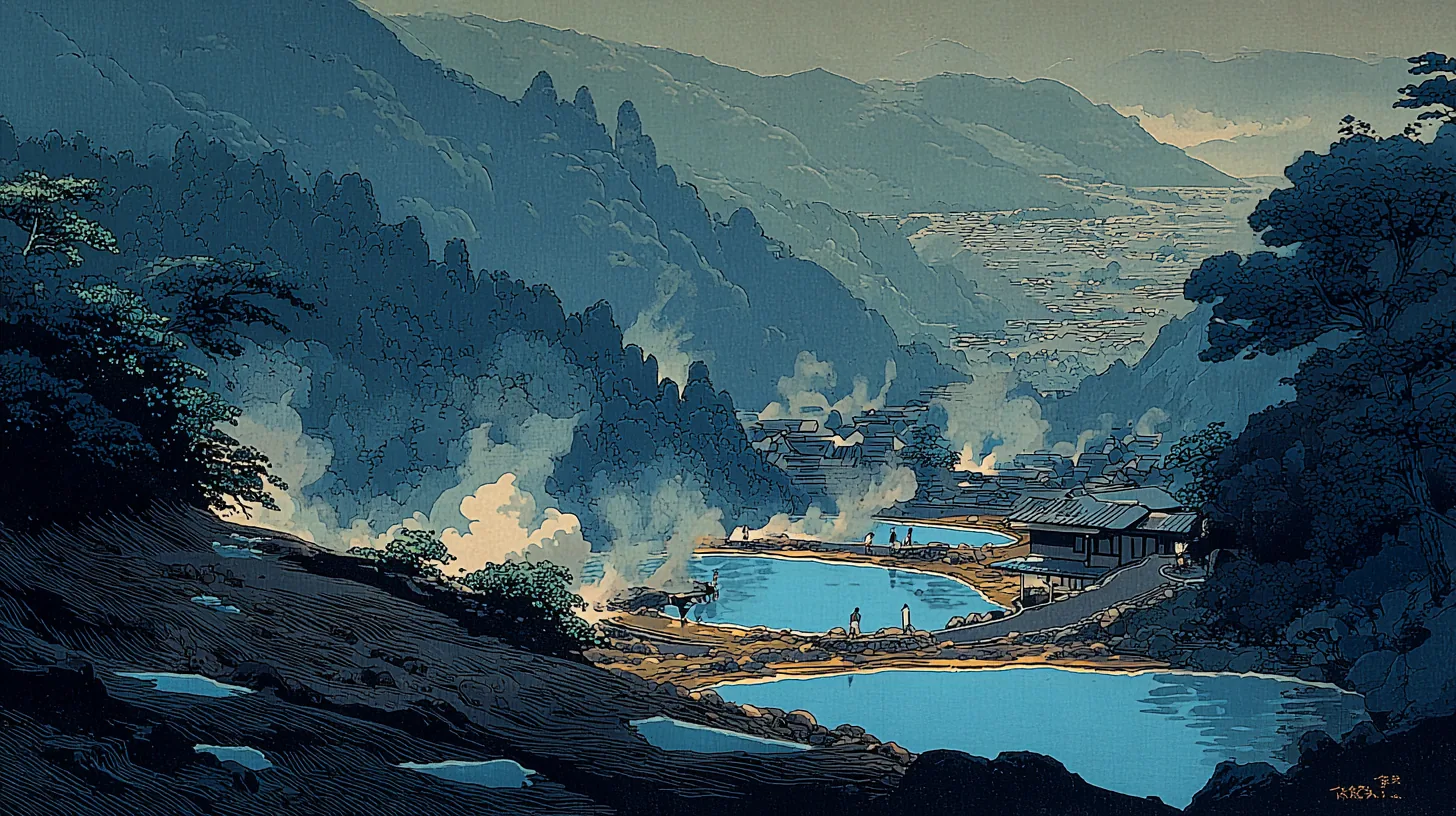
Beppu, in Ōita Prefecture, sits directly atop one of the most concentrated geothermal zones on Earth. The city alone holds over 2,000 hot spring sources — more than any other municipality on the planet by most counts. Visitors can walk between the jigoku (literally “hells”): boiling pools of vivid blue, milky white, and iron-red water that vent steam directly from the volcanic plumbing below.
Not All Hot Springs Are the Same
Japanese hot springs are not interchangeable. The mineral content varies sharply depending on local geology, and Japan’s Ministry of the Environment formally classifies onsen water into ten distinct types.
Simple thermal springs carry few dissolved minerals and feel gentle on the skin. Most first-time bathers begin here.
Sulfur springs smell of rotten eggs and sometimes appear milky white. Volcanic gases heat them; sulfur compounds give them their antibacterial reputation. Kusatsu Onsen in Gunma Prefecture is the most famous example, with springs that have treated skin conditions for at least four centuries.
Sodium chloride springs are essentially natural saltwater baths. The salt deposits a thin film on the skin that slows evaporation, keeping the body warmer long after the bath ends. Coastal hot springs typically fall into this category.
Iron springs turn reddish-brown as dissolved iron oxidizes on contact with air. Carbon dioxide springs carbonate naturally, fizzing against the skin. Radioactive springs contain trace amounts of radon — the concentrations are low, and Japanese folk medicine has prized these waters since at least the Edo period.
Within a single region, neighboring springs can produce completely different water depending on the rock below. Hakone, located inside an old volcanic caldera southwest of Tokyo, has roughly 20 distinct spring sources with different mineral compositions, temperatures, and colors. Bathers in Japan do not simply visit “a hot spring.” They choose water types by purpose — skin care, joint pain, circulation, or the texture of soaking in a bath that smells of sulfur, tastes of iron, or fizzes against the skin.
Three Thousand Years of Soaking
The earliest written reference to hot spring bathing in Japan appears in the Nihon Shoki, compiled in 720 CE. Dōgo Onsen in Ehime Prefecture is mentioned by name. Legend has it that the spring was found when a white heron was seen healing its injured leg in the warm water — an origin story repeated, with variations, by hot springs across the country.
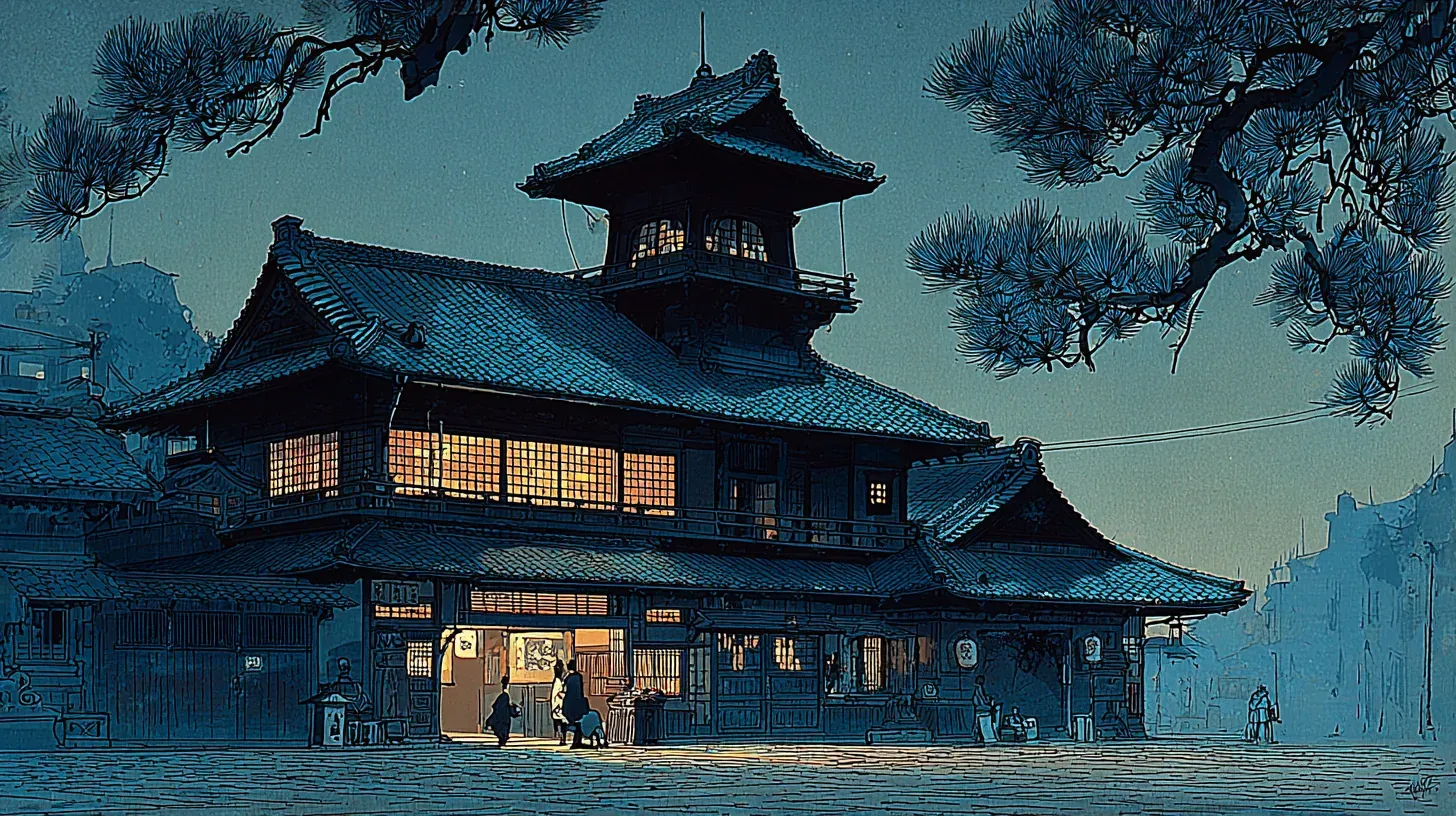
Prince Shōtoku, one of the most influential figures in early Japanese history, reportedly visited Dōgo Onsen in the early seventh century and left an inscription praising its waters. Some details in these accounts are surely legend, but the recurring theme — hot springs as places of healing and purification — runs continuously through Japanese sources from the eighth century onward.
In the Nara and Heian periods (710–1185), hot spring bathing tied closely to Buddhism and Shintō. Buddhist monks built temples next to springs and offered bathing as a form of charitable care. Shintō ritual purification — misogi — held deep spiritual weight, and water heated by the earth itself qualified as especially sacred.
From Healing Waters to Public Culture
Until the seventeenth century, hot spring bathing remained mostly the privilege of the aristocracy, the clergy, and warriors recovering from battle. Feudal lords — daimyō — kept private hot spring retreats. Takeda Shingen, who controlled much of central Japan in the sixteenth century, hid pools in mountain valleys to treat his wounded soldiers. Several onsen in Nagano and Yamanashi prefectures still carry the name Shingen no Kakushi Yu — Shingen’s Hidden Spring.
The Edo period (1603–1868) opened the practice. Over two centuries of peace under the Tokugawa shōgunate let travel and leisure culture spread. Ordinary citizens faced movement restrictions, but pilgrimages to temples and shrines — and, conveniently, the hot springs nearby — counted as permitted travel.
Towns like Kusatsu, Hakone, and Atami grew into thriving destinations. Edo-period guidebooks ranked the best onsen across the country, much as food critics rank restaurants today. One famous chart, modeled on the sumō hierarchy, listed hot springs as if they were competing champions, with Kusatsu consistently near the top.
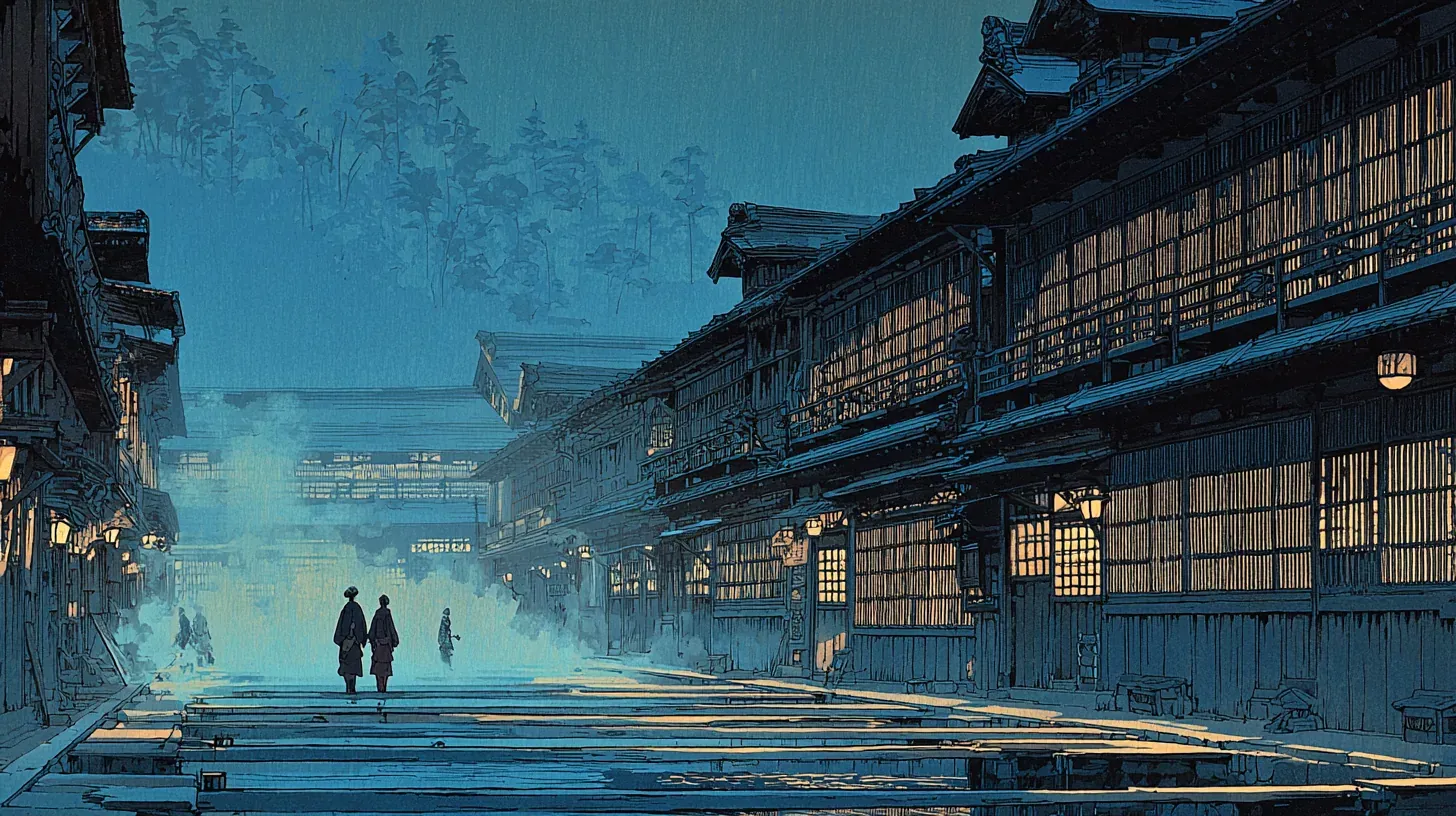
In Edo (modern Tokyo), public bathhouses called sentō became part of daily life. By the early nineteenth century the city had more than 500 of them, serving a population of over a million. These were not hot springs in the geological sense — wood fires heated the water — but they built the communal bathing habits that later merged with onsen tourism as Japan modernized.
The Science Behind the Soak
A 2014 study from Beppu compared regular onsen bathers with non-bathers in the same region. The regular bathers showed lower blood pressure, better circulation, less chronic pain, and lower rates of self-reported depression. The mechanisms appear to combine three things: the hydrostatic pressure of immersion compressing the body’s tissues, the elevated water temperature dilating blood vessels, and the absorption of trace minerals through the skin.
The Japanese government regulates onsen by statute. The Hot Springs Act (Onsen-hō), enacted in 1948 and revised several times since, sets the legal threshold: water must emerge at 25°C or higher, or contain at least one of 19 specified mineral components above defined levels. Without one of those qualifications, an establishment cannot legally call its water onsen.
The Act also requires operators to display the water’s chemical analysis — mineral content, temperature, pH — at the entrance to the bath. Walk into almost any onsen facility in Japan and the chart is on the wall, posted with the kind of detail more commonly found on a pharmaceutical label.
Volcanoes and Hot Springs: The Living Connection
The same geothermal forces that built Mount Fuji over 260,000 years feed the famous hot springs of Hakone, located in the remains of an ancient caldera just southwest of the mountain. (See the full Mount Fuji history →)
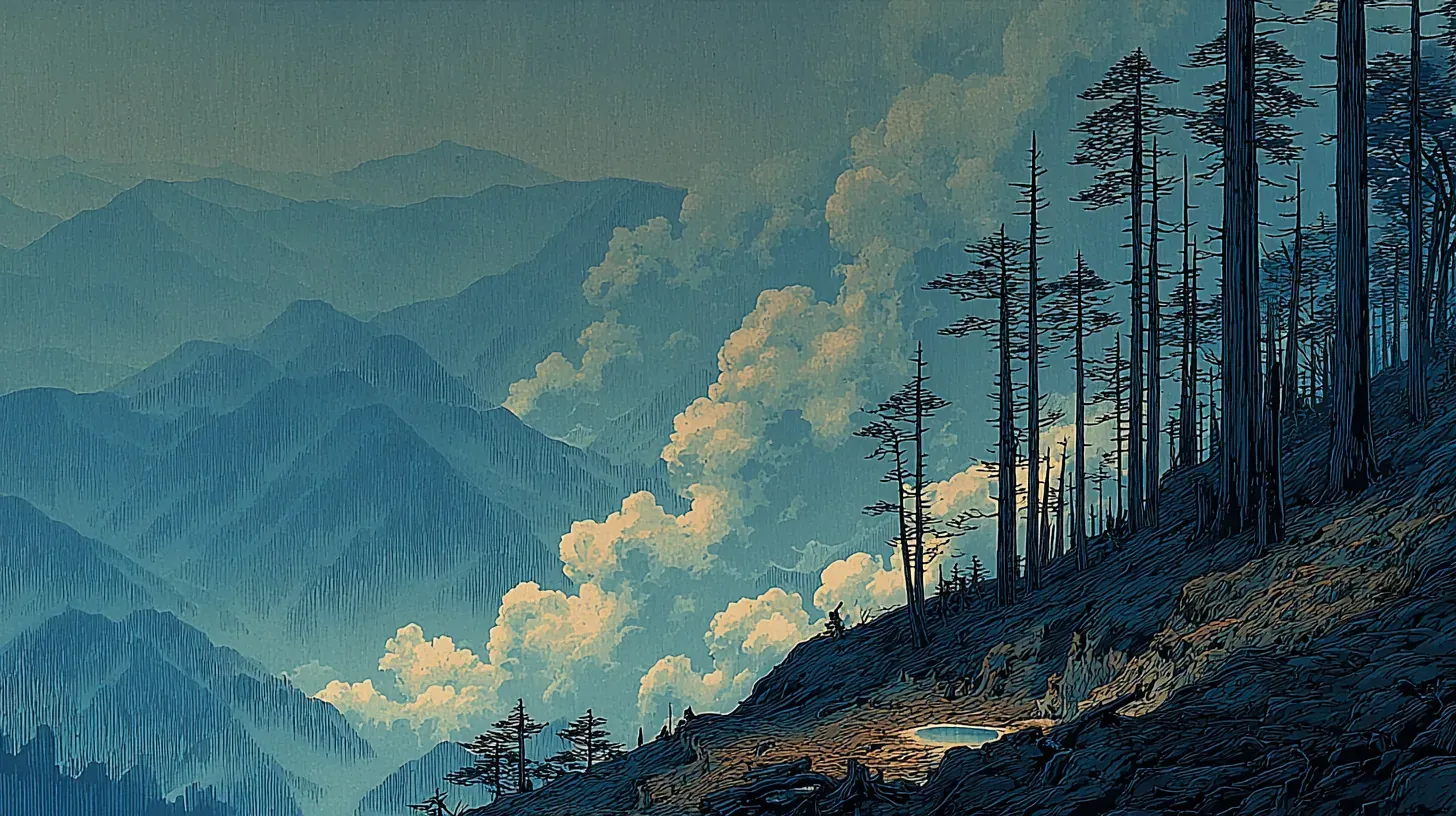
Hakone’s Ōwakudani — “Great Boiling Valley” — makes the connection between volcano and bath plainly visible. Steam vents hiss from sulfurous rock. There is no vegetation. The eggs sold at the souvenir stand are boiled in the volcanic pools and emerge black from hydrogen sulfide in the steam; local tradition claims each one adds seven years to your life.
Other countries along the Pacific Ring of Fire — Indonesia, the Philippines, Chile — also have hot springs. None of them built the bathing culture Japan built around theirs. The combination of geological abundance, religious significance, feudal patronage, and centuries of internal peace produced something specific to this archipelago.
What Survives Today
Japan’s relationship with its hot springs keeps changing. Traditional ryokan with private onsen have declined as rural populations shrink. Hot spring tourism is still one of Japan’s largest domestic travel industries. Modern “super sentō” complexes — multi-pool urban bathing centers — bring some version of the experience to people who may never visit a mountain village.
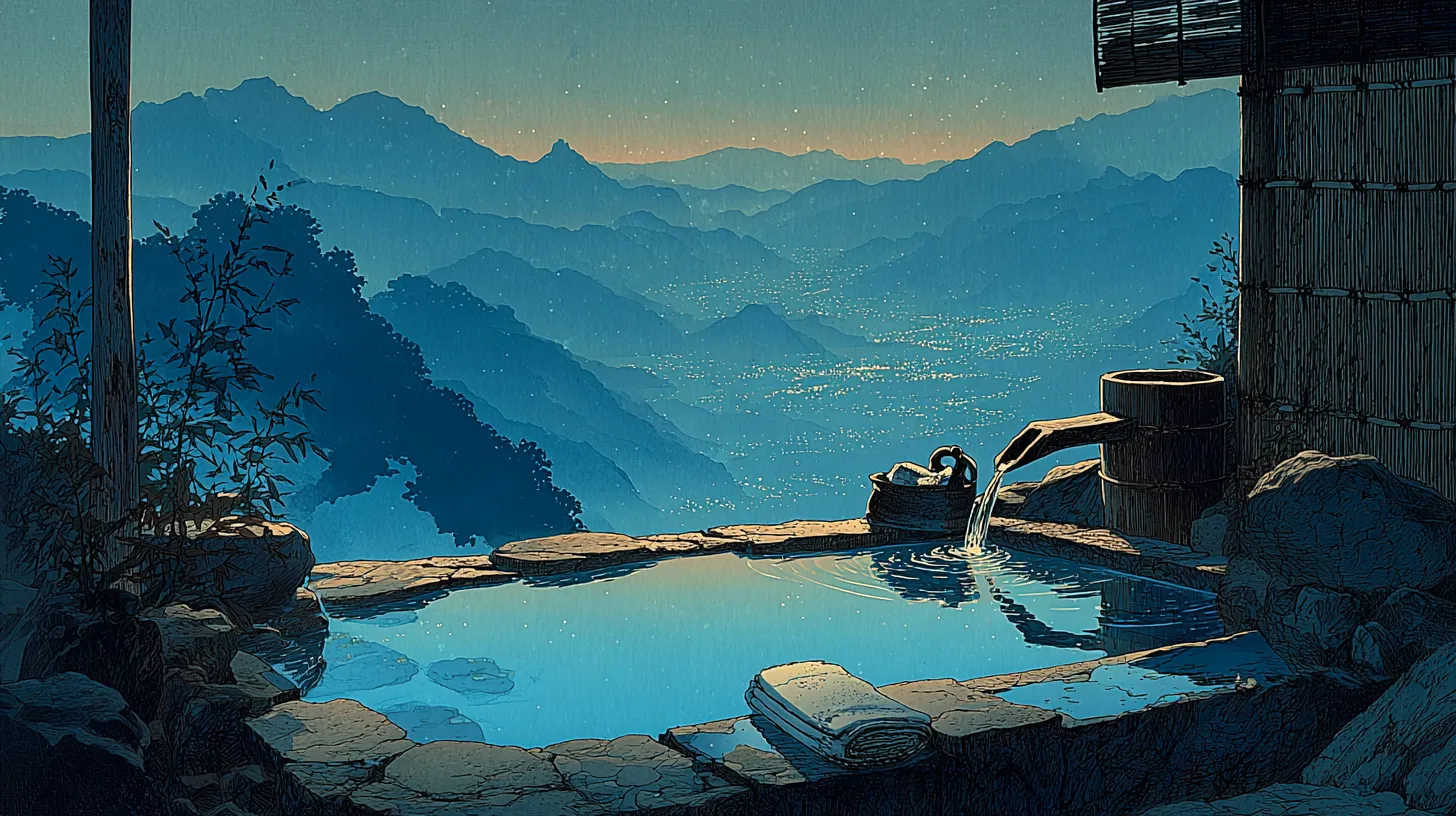
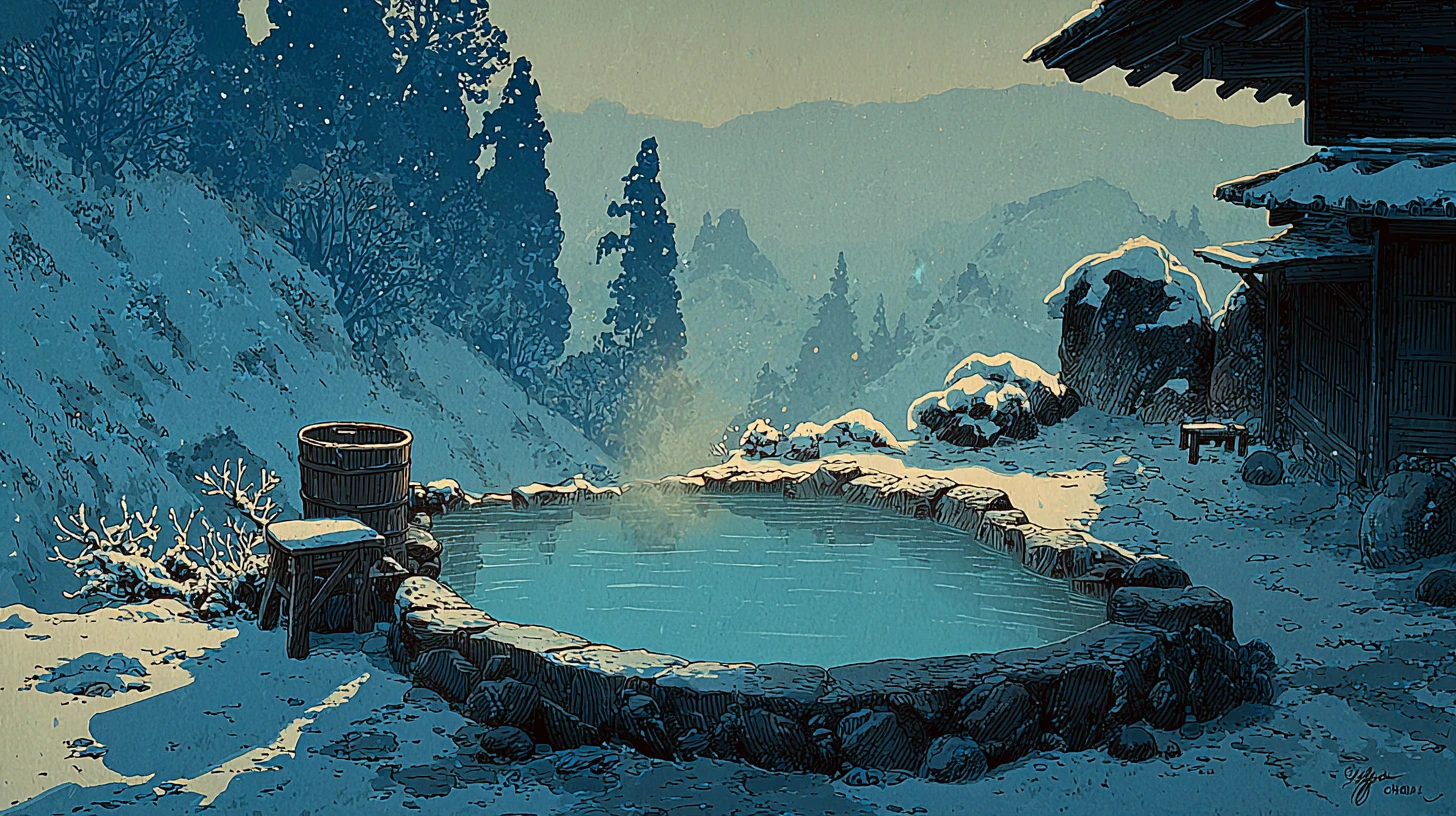
Step into an outdoor bath — a rotenburo — at a mountain onsen, and the activity itself is one people on this archipelago have repeated for three thousand years. The water around you fell as rain or snow, perhaps decades ago. It filtered downward through volcanic rock, dissolved minerals from the geology, and rose back to the surface. The chemical signature is slightly different from the spring in the next valley, and different again from one across the mountains.
Twenty-seven thousand springs. Each one fed by water that has been moving toward this surface for years — sometimes for decades — before anyone steps in.
Continue Reading
- Japanese Onsen: The Complete Guide — etiquette, best towns, and the practical side.
- Japanese Onsen Etiquette for First-Timers — the complete beginner’s etiquette guide.
- Is Mount Fuji Still an Active Volcano? — the same tectonic forces, but visible at the surface.
FAQ
What is the oldest hot spring in Japan?
Dōgo Onsen in Matsuyama, Ehime Prefecture, is traditionally counted as Japan’s oldest, with a history described as reaching back over 3,000 years. It is mentioned by name in the Nihon Shoki (720 CE). Arima Onsen and Shirahama Onsen are the other two springs in Japan’s “Three Ancient Hot Springs.”
What is the difference between onsen and sentō?
An onsen uses naturally heated water from a geothermal source and must meet legal criteria under Japan’s Hot Springs Act — either a minimum temperature of 25°C or one of 19 specified mineral components above defined thresholds. A sentō is a public bathhouse using artificially heated tap water. Both share the same bathing etiquette and communal tradition, but the water sources are fundamentally different.
Can I tell what type of spring I’m bathing in?
Yes. The Hot Springs Act requires every licensed onsen facility to display the chemical analysis of its water — mineral content, temperature, pH — at the entrance to the bath. The chart names the spring type (simple thermal, sulfur, sodium chloride, etc.), and the smell, color, and feel of the water typically match the classification within a few seconds of immersion.
Sources
- Hot Springs: What Are They? — Japan National Tourism Organization (National Parks)
- The Science of Onsen — Hakone Tourism Association
- History of Hot Springs in Japan — Hakone Tourism Association
- Japan: Geologic Framework — Encyclopædia Britannica
- Different Types of Onsen and Its Benefits — Japan National Tourism Organization
- Onsen (Hot Springs) in Japan: Transforming Terrain into Healing Landscapes — PubMed / Applied Geography