Japanese Onsen Etiquette for First-Timers: The Rules No One Tells You (Until You Get Them Wrong)
- Sleepy Tales of Japan
- 9 min read

While the thermal complexes of Caracalla and Diocletian collapsed into ruins with the fall of Rome, leaving the West with a deep-seated suspicion of public nudity, Japan codified communal bathing into a thousand-year social matrix. Today, this archipelago manages 27,000 distinct hot spring sources, channeling mineralized subterranean water into a daily ritual that sees 130 million annual visits. It operates under a deceptively simple paradigm known as hadaka no tsukiai—a concept translating to “naked friendship” where corporate hierarchies, socioeconomic status, and modern anxieties dissolve in 42°C water.
This is not exotic leisure. It is an infrastructure of collective vulnerability.
For the uninitiated Western traveler, the prospect of shedding every stitch of clothing before a room of strangers triggers an immediate psychological brake. Understanding the precise mechanisms behind this ancient thermal culture transforms what looks like an intimidating gauntlet of rules into the most liberating collective silence you will experience in East Asia.
Table of Contents
Open Table of Contents
Three Thousand Years of Hot Water
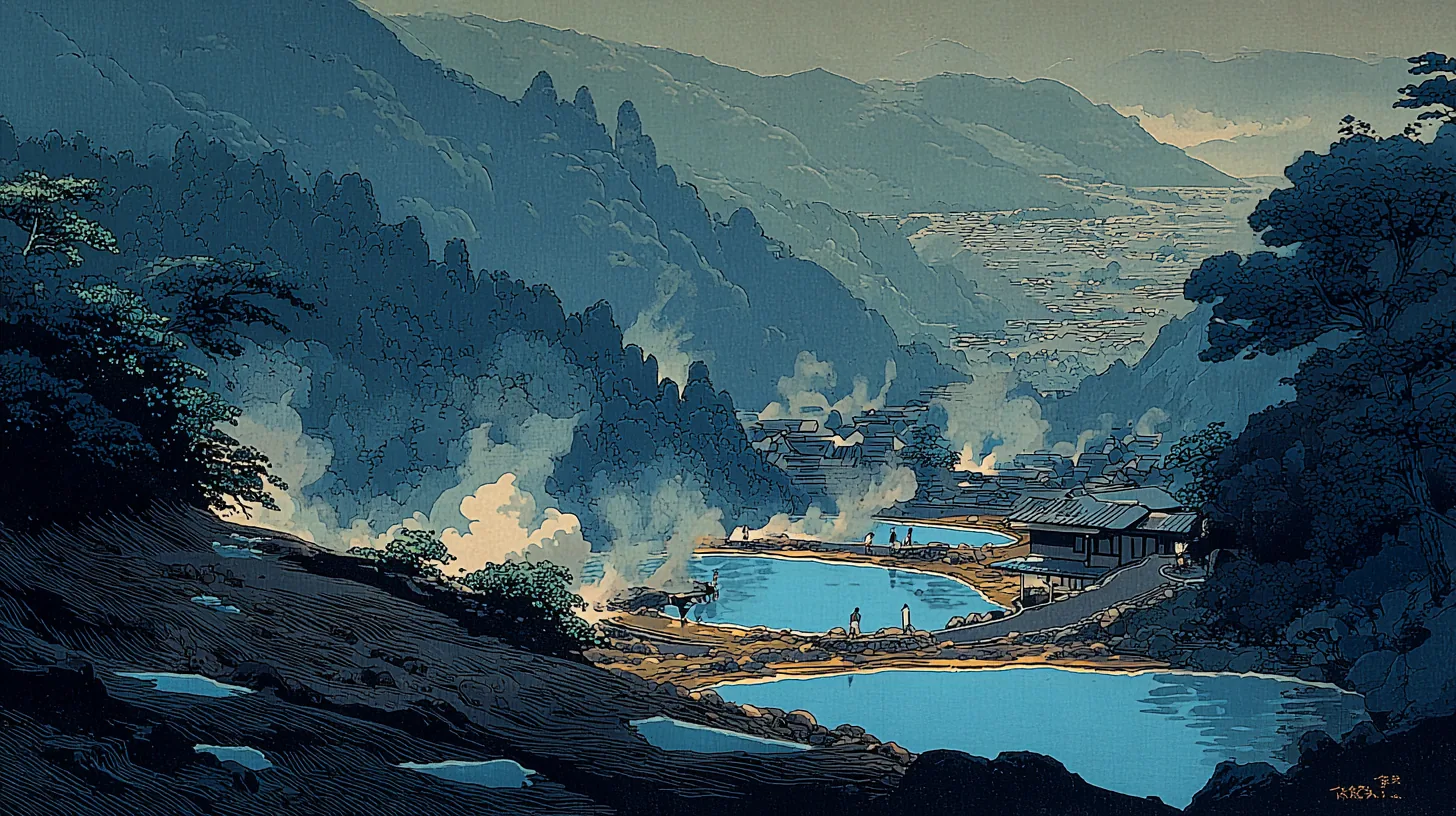
Tectonic friction dictates Japanese history. The same volatile fault lines that rupture the earth fuel a continuous geothermal output, generating a discharge capacity that dwarfs other volcanic landscapes. Iceland boasts roughly 800 hot springs; Japan scales this to a network where the earth constantly forces mineral-heavy water through fractured crust.
The earliest written state records, the Kojiki (Records of Ancient Matters, compiled in 712 CE) and the Nihon Shoki (The Chronicles of Japan, 720 CE), detail emperors and Shintō deities descending into these steaming thermal vents to purge illness and battle wounds. Archaeological excavations of Jōmon-period settlements suggest humans congregated around these geothermal oases over three millennia ago.
Dōgo Onsen in Ehime Prefecture demonstrates this longevity. Its three-story timber bathhouse—the architectural blueprint for the spirit-world sanctuary in Hayao Miyazaki’s Spirited Away—has stood since 1894, but its spring water has flowed uninterrupted since at least the sixth century. Prince Shōtoku, the legendary statesman who shaped early Japanese Buddhism, soaked in these exact waters.
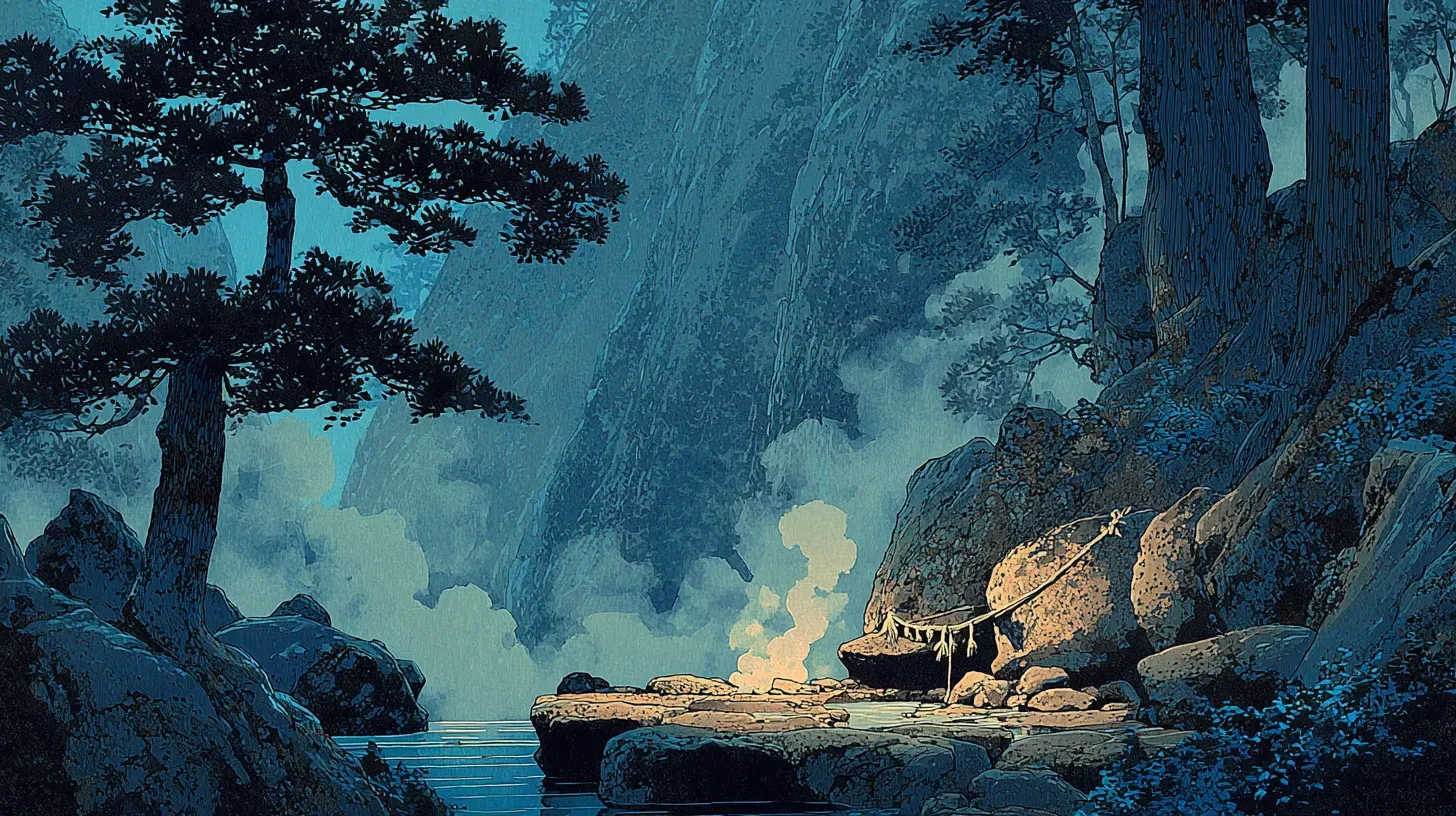
Ancient hot springs were never viewed as playgrounds. Geothermal water emerging from the volcanic substrate was treated as a direct manifestation of the kami, the localized spirits of the Shintō cosmos. Submerging the body was an act of misogi—a demanding ritual of spiritual purification designed to wash away cosmic pollution (kegare).
The physical pleasure of the heat was merely a byproduct of the sacred.
The Bath That Built a Country
Buddhism transformed a localized tribal cleansing ritual into a wide-scale urban health strategy. The arrival of the Onshitsu-kyō—the “Greenhouse Sutra”—from China during the eighth century explicitly reframed bathing as an act of spiritual merit, prompting prominent temples to erect public bathhouses to combat pestilence among the peasantry.
The bath passed through three distinct ideological hands:
- Shintō Misogi — bathing as ritual purification of cosmic pollution.
- Buddhist Sutras — bathing institutionalized as an act of spiritual merit.
- Edo Shōgunate — bathing commercialized into secular, democratic public space.
By the time the Tokugawa shōgunate—the military government that ruled from Edo between 1603 and 1868—enforced absolute isolationism, the hot spring had evolved into a commercial engine. Relaxed travel restrictions allowed ordinary citizens to embark on long-distance pilgrimages to remote mountain enclaves like Kusatsu and Hakone. These were ostensibly religious journeys, but in reality, they operated as an early form of mass-tourism market.
Edo-period publishers printed onsen-banzuke, highly competitive broadsheets modeled after the official sumō wrestling hierarchies, ranking the country’s thermal springs based on medicinal efficacy and mineral density. Kusatsu routinely occupied the supreme ōzeki champion rank.
In the dense, timber-built neighborhoods of Edo (now Tokyo), where residential fire risks made private bathtubs illegal, entrepreneurs engineered the sentō—the commercial neighborhood bathhouse. By 1810, more than 500 sentō dissolved the rigid class structures of feudal Japan, forcing samurai, merchants, and laborers to sit knee-to-knee in the same wooden vats.
Though modern domestic plumbing caused sentō numbers to plummet from a 1960s peak of 2,600 down to fewer than 500 in contemporary Tokyo, the foundational social architecture endured. The ritual survived the advent of the modern porcelain home tub because it was never designed merely to scrub away dirt.
What Naked Friendship Actually Means
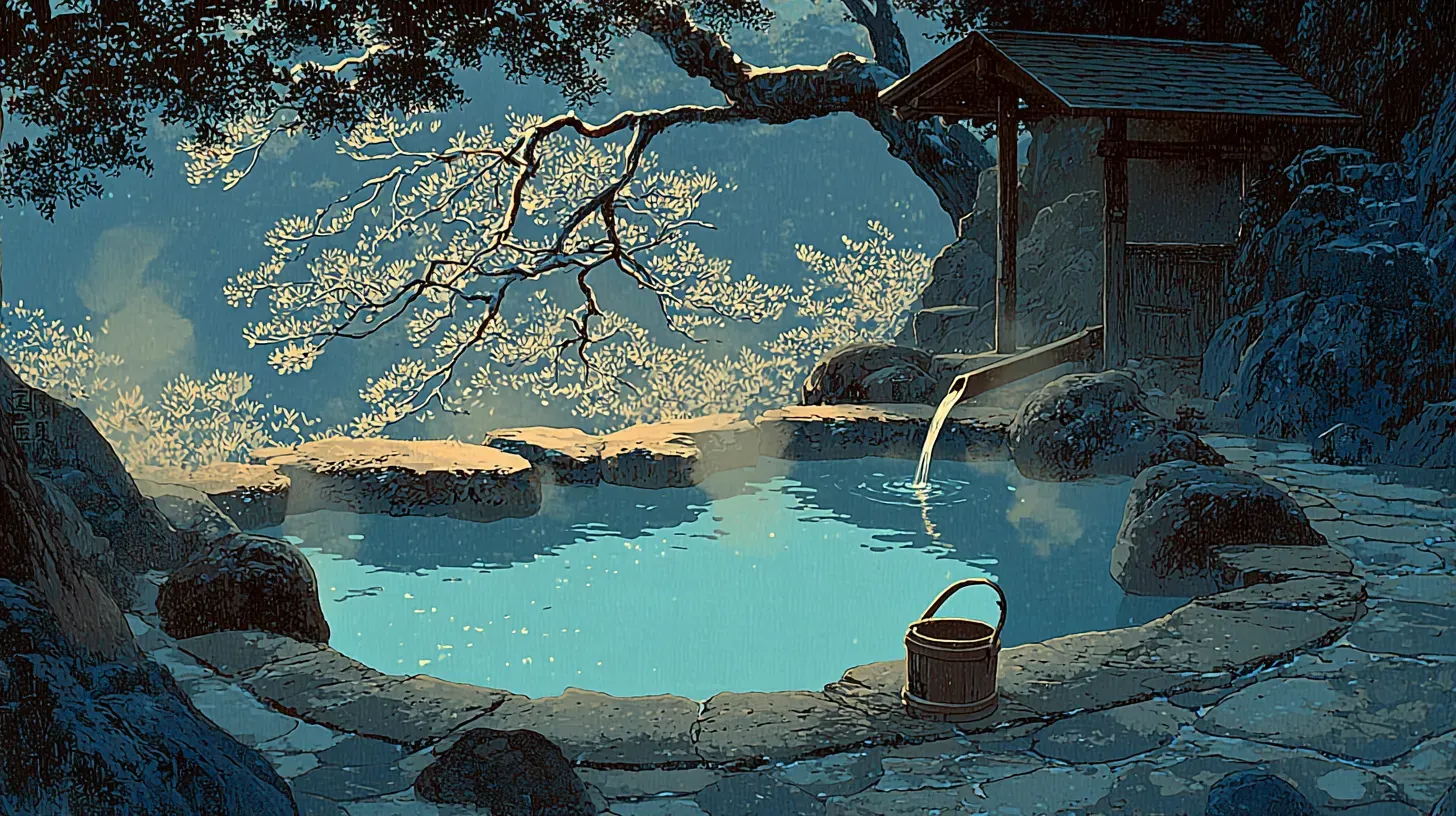
Western anxieties regarding communal nudity invariably stem from a cultural conflation of exposed skin with sexuality or vulnerability. Japanese bathing spaces completely sever this link through centuries of reinforced context. Because neither Shintō nor early Buddhist theology burdened the physical form with original sin, the naked body in a bathhouse is viewed as a neutral biological fact.
The phrase hadaka no tsukiai functions as an essential corporate and familial pressure valve. Stripping away clothing strips away the rigid semiotics of Japanese society. The tailored Brioni suit, the Rolex, the pristine uniform of the laborer—all vanish.
A senior managing director and a twenty-two-year-old intern sit completely exposed, reducing human interaction to its most egalitarian form. Decisions that stall in stiff boardroom meetings are routinely resolved on the slippery granite tiles of a hot spring.
This structural equalizer dictates family life as well. Three generations will submerge themselves simultaneously, the rising steam softening the generational hierarchies that dominate the dinner table.
For the foreign traveler, the initial panic of the changing room reliably evaporates within three minutes of entering the steam. The sheer indifference of the locals creates an immediate shield; nobody is scanning the room, nobody is judging proportions. You are simply another body navigating the heat.
Why Every Rule Exists
The complex architecture of onsen etiquette is governed by a non-negotiable axiom: the water belongs exclusively to the collective, never the individual.
- The Pre-Wash Mandate: You do not enter the bath to clean your skin; you clean your skin to preserve the purity of the bath. Bathers sit on low wooden or plastic stools at perimeter washing stations, utilizing hand-held shower nozzles, aggressive soaps, and abrasive washcloths. Every millimeter of the body must be scrubbed, rinsed, and cleared of soap residue before your foot breaks the surface of the communal pool.
- The Modesty Towel Paradox: You are issued a tenugui—a small, rectangular cotton hand towel. It must never touch the water. Submerging it introduces textile fibers and trace detergents into the mineral ecosystem. Instead, bathers fold the damp cloth into a compact square and balance it carefully on top of their heads, a practice that also helps regulate blood pressure in the intense heat.
- The Architecture of Silence: Onsen function as secular sanctuaries. Loud vocalization, splashing, or swimming breaks the meditative focus of the space. Conversations are held in low, gravelly whispers that blend into the ambient hiss of rushing water.
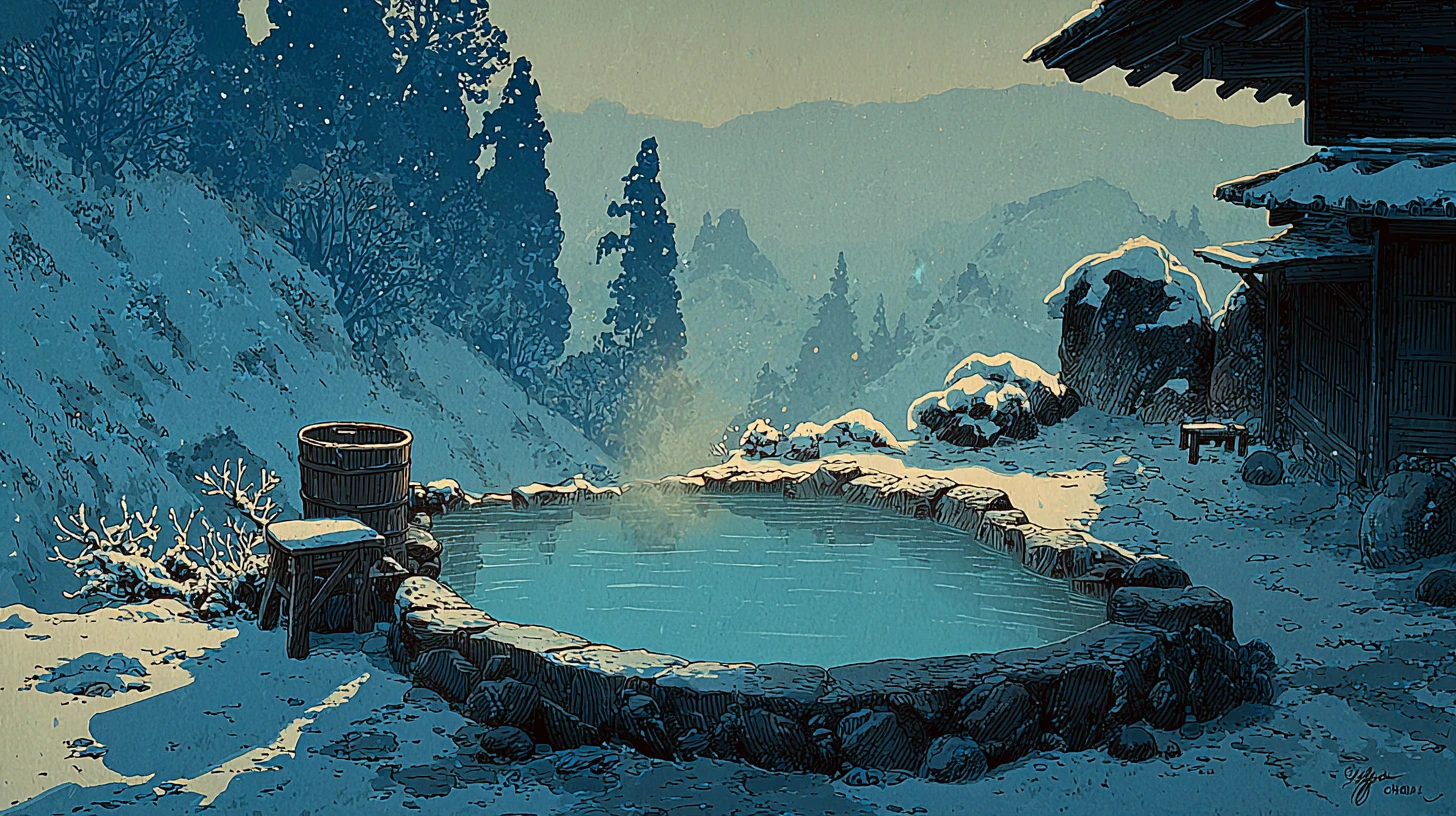
- The Shield of Un-Attention: Eye contact inside the bathhouse is fleeting and intentional. Bathers employ a highly practiced form of civil inattention, gazing slightly upward into the rising steam or focusing on the distant landscape of the outdoor rotenburo (open-air bath).
The order is non-negotiable: wash station → scrub & rinse completely → submerge body (towel on head) → maintain civil inattention.
To break these protocols is not to violate an arbitrary aesthetic preference; it is to signal that your personal convenience outweighs the collective comfort of the community.
The Tattoo Question
The absolute exclusion of inked travelers from traditional onsen is not an exercise in xenophobia, but a lingering legal artifact of the Edo period. During the seventeenth century, the shōgunate implemented irezumi-kei—pictorial penal tattooing designed to permanently brand violent criminals.
By the late twentieth century, this carnal marking was co-opted by the yakuza (organized crime syndicates), whose members endured extensive, full-body hand-poked tattoos to prove their pain tolerance and permanent alienation from polite society.
The meaning of tattoos in Japan shifted in three distinct phases:
- 17th century — irezumi-kei. State penal branding of criminals.
- 20th century — yakuza clan ink. A signifier of organized-crime allegiance.
- Modern era — global body art. Cultural clash with domestic safety codes.
The “No Tattoos” placards posted at bathhouse entrances were never meant to target Western tourists with souvenir ink; they were ironclad liability shields designed to bar syndicate enforcers from terrorizing local patrons.
Modern realities are forcing a slow, bureaucratic pivot. The Japan Tourism Agency actively pressures operators to accommodate the surging volume of international travelers.
If you carry significant body art, you navigate three clear avenues: target modern urban facilities that explicitly advertise tattoo-friendly policies, utilize flesh-colored waterproof adhesive patches to conceal small pieces, or pay a nominal premium to reserve a kashikiri-buro—a private family bath operating on its own independent geothermal loop.
The water in a high-caliber Japanese hot spring registers 40 to 43°C. The chemistry changes by the mile: the milky, acidic sulfur streams of Kusatsu will tarnish silver jewelry instantly; the heavy sodium chloride springs along the Izu Peninsula leave a crust of sea salt on the skin; the iron-rich “gold water” of Arima emerges crystal clear before oxidizing into a deep, opaque orange as it strikes the air.
The psychological hurdle ends the moment you walk out of the locker room door.
What remains is the weight of mineralized water, the smell of wet cedar, and the rhythm of ten strangers exhaling in unison against the cold mountain air.
Continue Reading
- Japanese Onsen: The Complete Guide — the full hub article on hot springs, towns, and ryokan.
- Your First Ryokan Stay — how the traditional Japanese inn experience actually works.
- Japan Has 27,000 Hot Springs. Iceland Has 800. — the volcanic science underneath the bath.
FAQ
Do I have to be completely naked in an onsen?
Yes. Every form of swimwear or undergarment is strictly prohibited. Synthetic fabrics introduce foreign chemicals, laundry detergents, and loose microfibers into highly sensitive, mineral-balanced volcanic waters. If total communal exposure remains an insurmountable psychological barrier, you should seek out facilities that offer kashikiri-buro (private rentable baths).
Are onsen separated by gender?
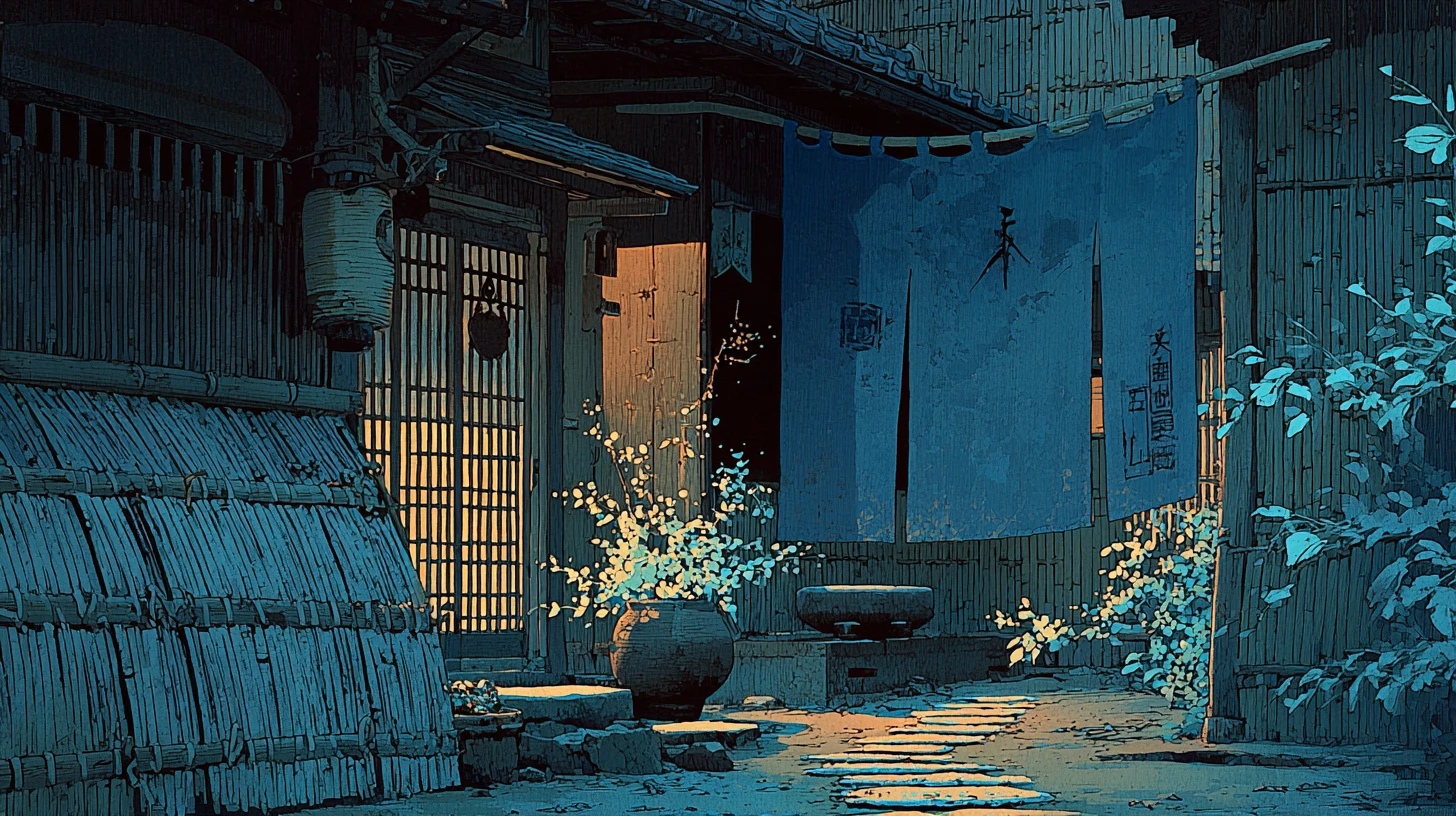
The vast majority of modern establishments feature strict gender segregation, denoted by traditional split curtains (noren): blue (男) for men and red (女) for women. Mixed-gender bathing (konyoku) persists almost exclusively as a protected historical curiosity in deep mountain valleys or rural riverbeds, typically frequented by older generations.
Is the water safe? What are the health benefits?
The Japanese Hot Spring Act legally dictates that true onsen water must emerge at a minimum of 25°C and contain specific thresholds of therapeutic minerals. The medical benefits depend entirely on regional geomorphology: sulfur baths dilate blood vessels to treat chronic skin conditions, while high-salinity sodium chloride springs form an insulated layer on the skin that traps body heat long after exiting.
What is the difference between an onsen and a sentō?
An onsen is structurally defined by its geological origin, drawing natural, volcanically heated mineral water straight from underground aquifers. A sentō is a secular urban public bathhouse that fills its communal pools with municipal tap water heated via wood-fired or gas boilers. While the operational etiquette remains identical, sentō serve as daily neighborhood social hubs rather than therapeutic wellness destinations.
Sources
- Onsen History and Culture — Hakone Japan Official — Hakone Japan
- Different Types of Onsen and Benefits — JNTO — Japan National Tourism Organization
- Japanese Onsen and Ink — The Tattoo Taboo — JNTO — Japan National Tourism Organization
- Onsen Etiquette — Japan Travel Official — Japan National Tourism Organization
- The Story of Sentō — Nippon.com — Nippon.com
- Dōgo Onsen — Japan Guide — Japan Guide
- Japanese Ryokan Guide — JNTO — Japan National Tourism Organization