Hakone: The Checkpoint That Ran Japan for 250 Years
- Sleepy Tales of Japan
- 11 min read
The Tokugawa shogunate locked down this mountain pass for exactly 250 years. That is four decades longer than the United States has existed as a country.
Every traveler moving along Japan’s primary highway submitted to inspection here. Guards opened every palanquin. Women caught crossing without authorization faced a straightforward penalty: arrest, followed by execution. The checkpoint finally fell in 1869, immediately following the Meiji Restoration. Today, this exact same pass functions as one of Japan’s premier hot spring resorts, built directly inside an active volcanic caldera just one hour southwest of Tokyo.
The mountains channel mist into the valley. The ancient collapse of the volcano’s summit left a broad bowl holding a deep crater lake. On clear autumn mornings, Mount Fuji rises white above the far rim. Hiroshige carved this exact view into his Fifty-Three Stations of the Tōkaidō. The samurai who had just survived inspection at the checkpoint above would have stood in precisely the same spot.
Table of Contents
Open Table of Contents
- The Volcano Underneath Hakone
- The Checkpoint on Japan’s Most Important Road
- Lake Ashi and the View of Fuji
- Ōwakudani — The Active Volcanic Valley
- The Hot Springs — What They Are Actually Like
- Two Museums Worth Your Time
- The Quieter Side of Hakone
- Getting There and Getting Around
- When to Go — and When Not to
- Continue Reading
- FAQ
The Volcano Underneath Hakone
Hakone does not sit on the slopes of Mount Fuji. It occupies an entirely different volcano.
The Hakone Volcano has vented and erupted for roughly 400,000 years, dwarfing the lifespan of Fuji, which only began serious eruptions 100,000 years ago. A massive prehistoric summit collapse created the vast, bowl-shaped caldera that contains today’s resort towns. Lake Ashi fills the southwestern corner, dammed by a smaller eruption 3,000 years ago.
The volcano remains strictly classified as active. In 2015, the Japan Meteorological Agency raised the alert level, shutting down the main vent trail for months. Yet the ropeways ran. The onsen (hot springs) flowed. “Active volcano” and “luxury hospitality” coexist here without friction.
This geothermal violence yields extreme mineral diversity. Iceland, famous for its volcanic activity, holds roughly 800 hot springs. Japan claims over 27,000. The Hakone caldera alone produces more than 20 distinct spring sources, each fracturing into different temperatures, colors, and chemical profiles.
The Checkpoint on Japan’s Most Important Road
The Tōkaidō functioned as the absolute spine of Edo-period Japan. Stretching 500 kilometers from Edo (modern Tokyo) to Kyoto, it carried government officials, daimyō (feudal lords), merchants, and urgent relay post. Hakone stood as the most dramatic bottleneck.
The Tokugawa regime established the Hakone Sekisho (checkpoint) in 1619. Its operational mandate was famously blunt: teppo wa irazu, onna wa idezu — “guns shall not enter, women shall not leave.”
Guns threatened Edo militarily. Women threatened it politically. Under the sankin-kōtai system, regional lords rotated between their domains and the capital. While a lord traveled, the shogunate held his wife and children in Edo as hostages. A lord’s family moving westward through Hakone without extreme authorization signaled impending rebellion.
Guards searched aggressively. They trained specifically to spot women disguised as male travelers — looking for soft hands, rigid posture, or shaved eyebrows.
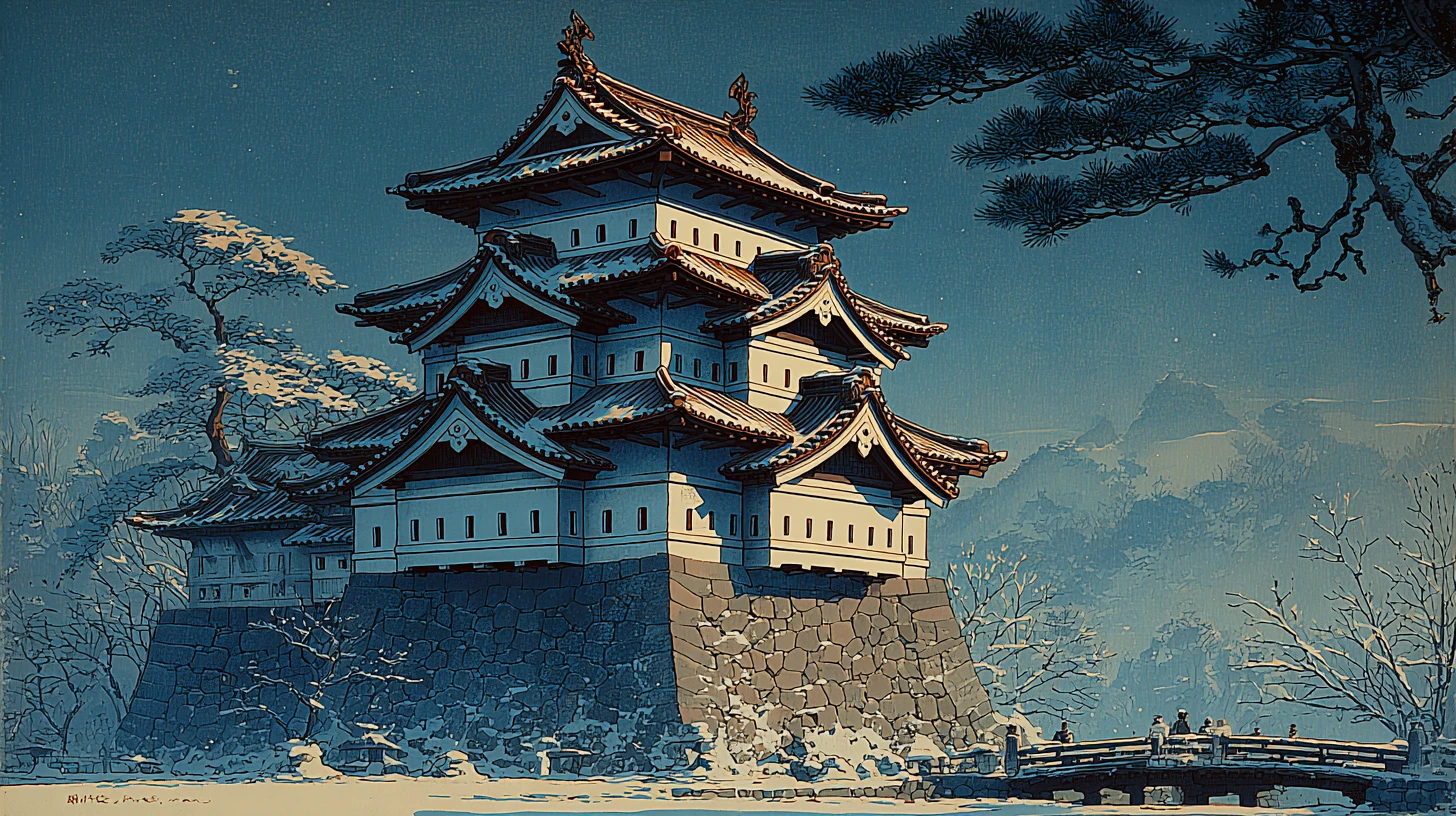
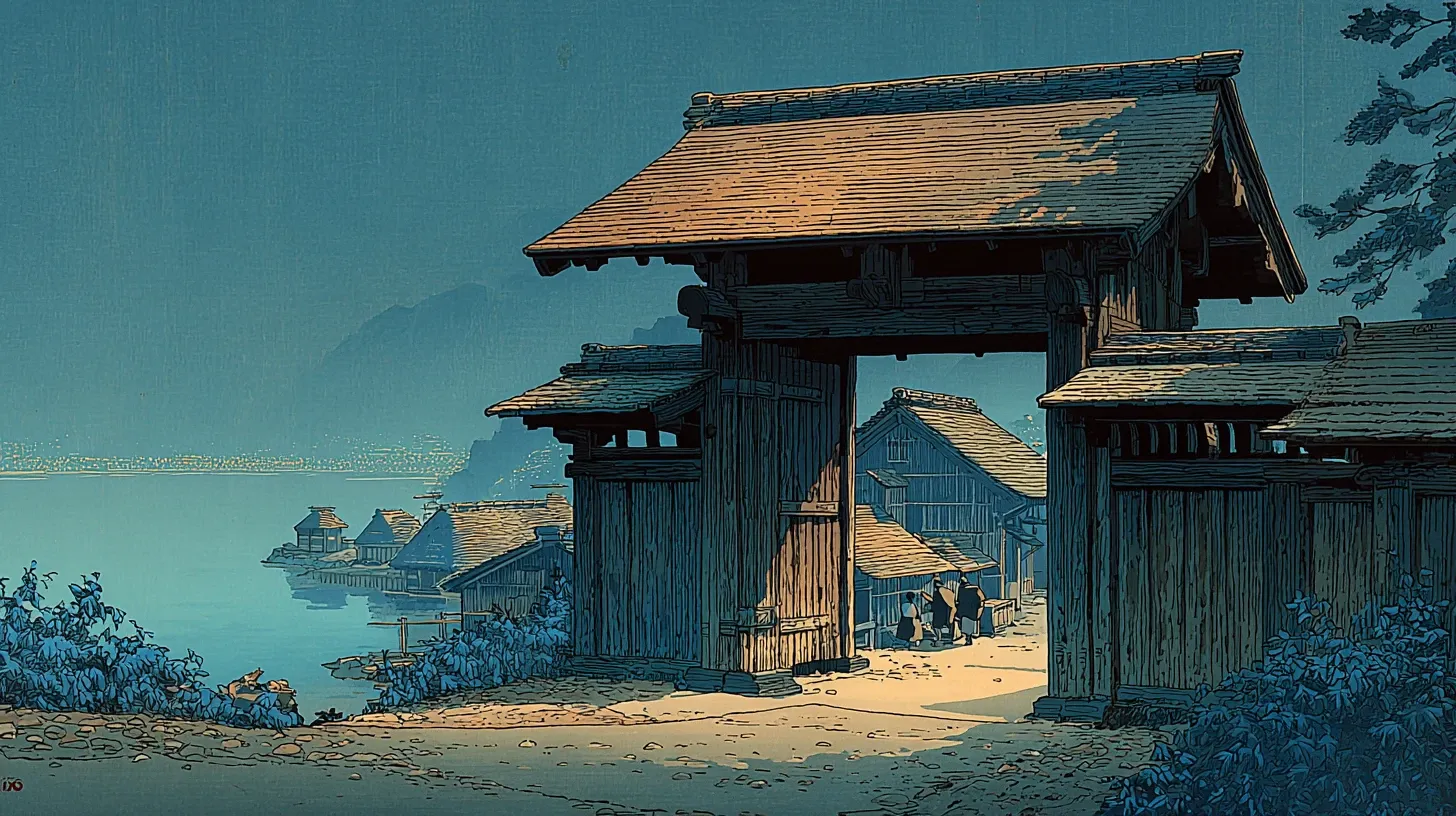
The new imperial government tore the structure down in 1869. A rigorous, architecturally faithful reconstruction opened in 2007. It is not a sprawling fortress. It is a wooden gatehouse and a small courtyard. The shogunate did not hold this pass through overwhelming masonry. They held it through rigid bureaucracy and the absolute certainty that stepping off the sanctioned path meant death.
Lake Ashi and the View of Fuji
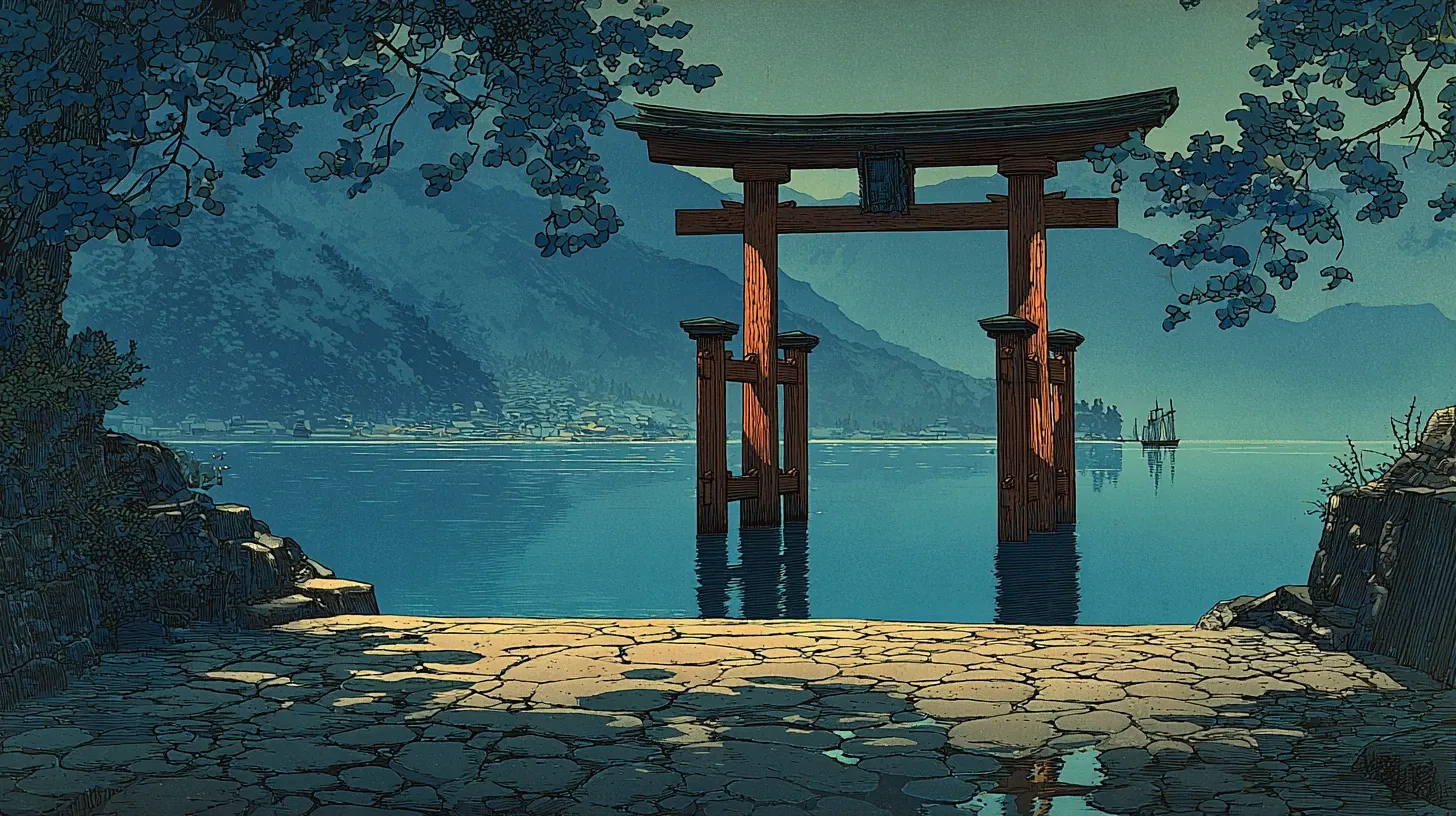
The defining photograph of Hakone features the red torii gate of Hakone Shrine anchored in Lake Ashi, with Mount Fuji looming behind it.
The image is real. The visibility is not.
Mount Fuji shows itself clearly from the wider region on only about 80 days per year. Hakone, walled in by its own caldera, generates localized cloud cover that drives that number lower. From June through August, the mountain disappears completely on up to 70 percent of days. Even in November, Hakone’s clearest window, Fuji can hide for a week straight.
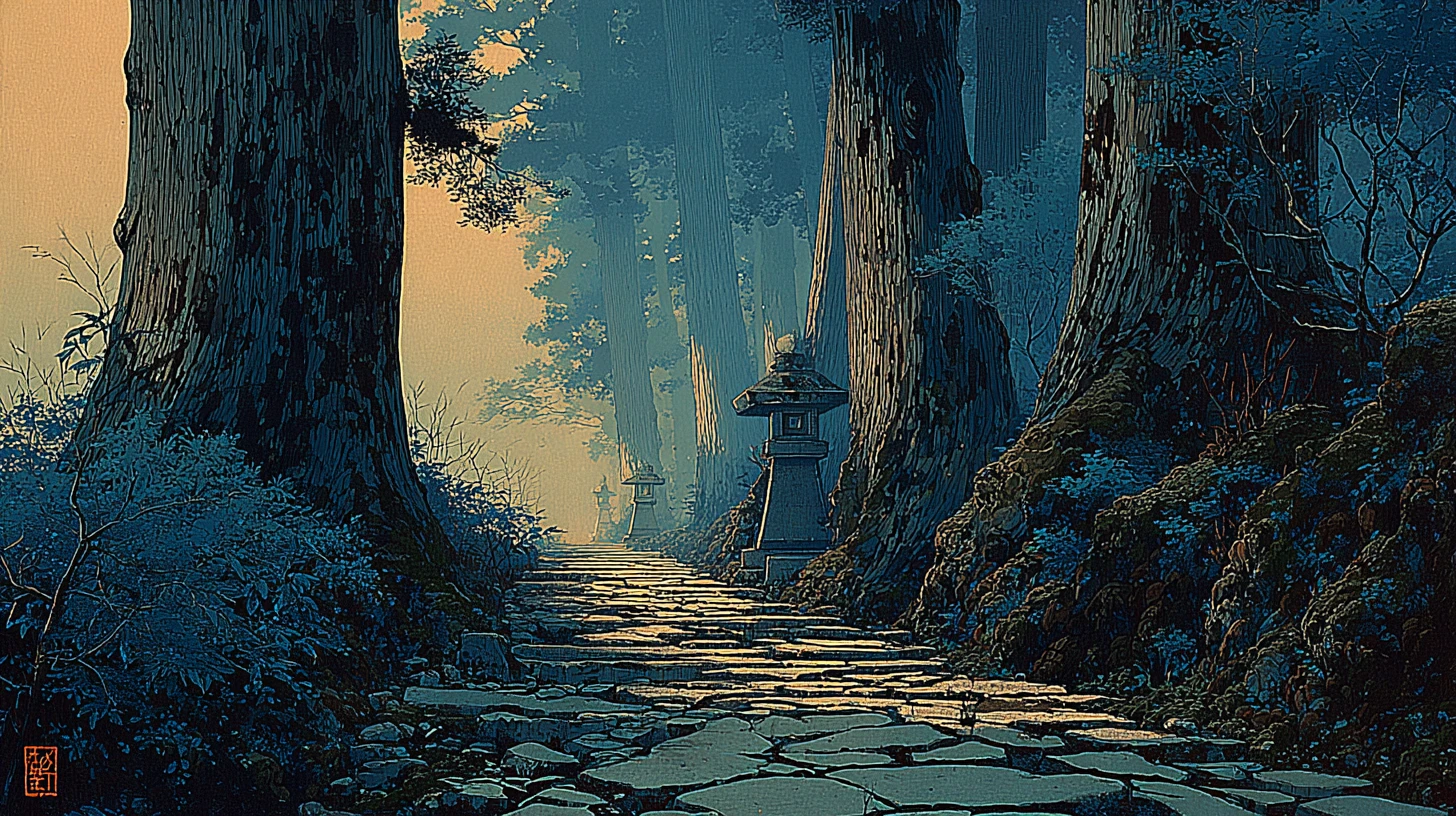
Yet the lake demands attention regardless of the cloud ceiling. Spanning enough distance that ferry crossings take twenty minutes, the water runs cold enough to steam in winter dawns. Hakone Shrine (founded 757 CE) retreats into dense, centuries-old cedar forest on the eastern shore. While crowds cluster at the water gate for photos, the stone path climbing behind it into the ancient timber remains nearly silent.
The Onshi Hakone Park, on a promontory near Hakone-machi, occupies the grounds of a former Meiji-era imperial villa. The landscaping survives intact. On clear days, the lake views from its pavilion terraces rank among the best in the area, without the ferry terminal crowds.
Ōwakudani — The Active Volcanic Valley
Ōwakudani (“Great Boiling Valley”) is the caldera’s open wound. At the edge of the ropeway station, hydrogen sulfide aggressively vents from the yellow earth. On windless mornings, the steam columns register from the lake six kilometers away.
Walk the 300-meter loop trail. Standing inside active volcanic steam, separated from boiling vents only by wooden boardwalks, offers a visceral geology lesson unavailable elsewhere in the Tokyo radius.
Vendors boil eggs (kuro tamago) in the spring water. Sulfur compounds react with calcium in the shells, turning them absolute black. The local marketing apparatus insists eating one extends your life by seven years. They taste exactly like hard-boiled eggs.
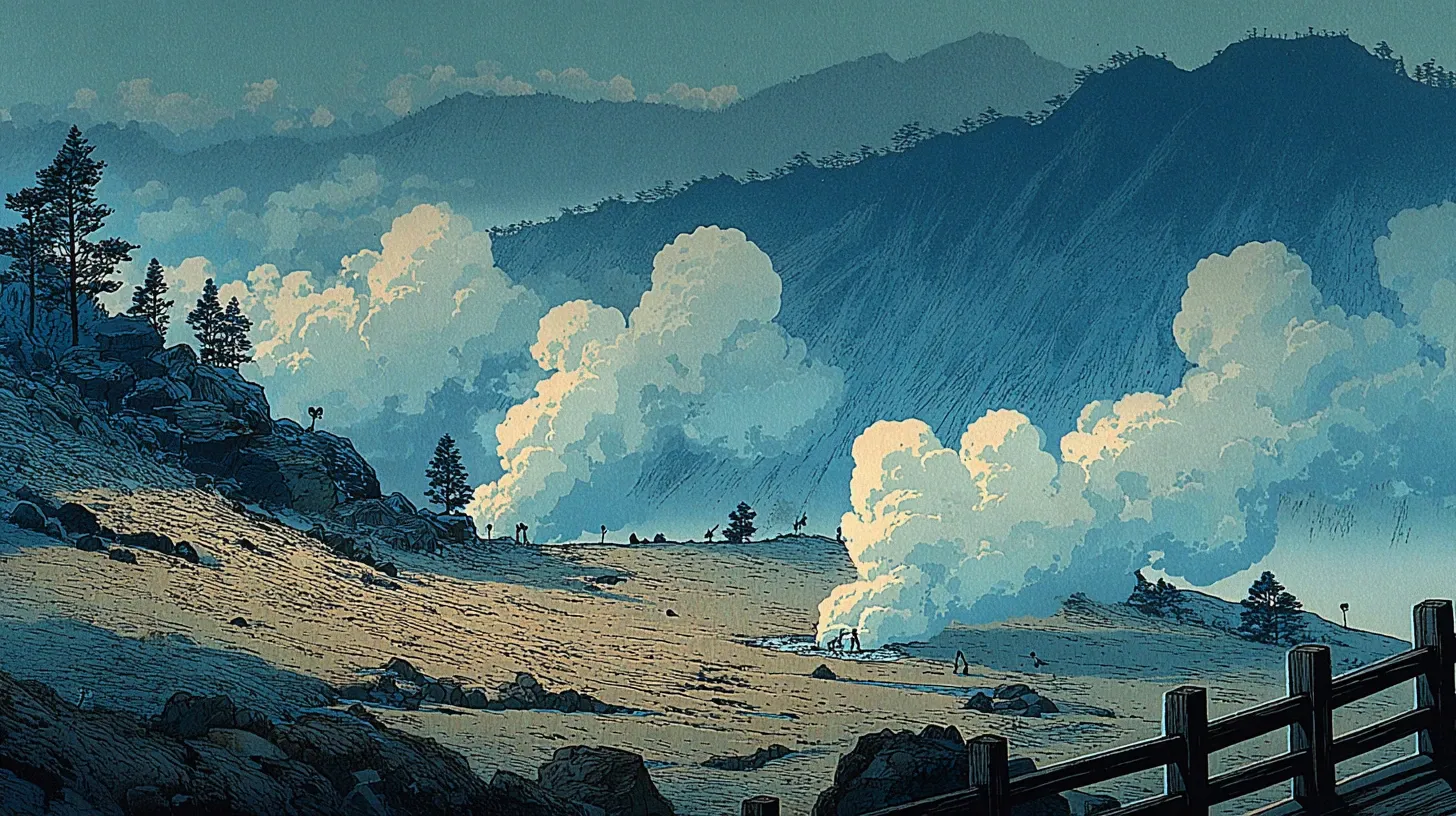
The Hakone Ropeway crosses directly over this steaming devastation. On peak weekends, the queue at Sōunzan station regularly exceeds thirty minutes. Arrive before 9:00 AM to bypass the crush.
The Hot Springs — What They Are Actually Like
Resort infrastructure here represents twelve centuries of iteration. Hakone divides into distinct zones: Hakone-Yumoto on the valley floor, Miyanoshita climbing the slope, Gōra higher up, and Sengokuhara on the flat plateau.
Travel guides routinely assign specific water types to each zone. The geology ignores them.
Water quality shifts dramatically between individual bathhouses, not zip codes. A facility drawing clear sodium chloride might sit fifty meters from one pumping milky sulfur.
The critical decision is day-use versus overnight. An overnight stay in a ryokan (traditional inn) is not merely lodging. The kaiseki multi-course dinner, the profound silence of the evening cedar forest, and entering a private hot spring before dawn — this is the actual destination.
Day-use facilities operate across the area. Hakone Yuryo, near Yumoto Station, is purpose-built for day visitors. For visitors with tattoos, policies vary by facility. Tenzan Tōji-kyō in Yumoto is consistently cited as tattoo-friendly. Private onsen rooms (kashikiri-buro), available at many ryokan and some public facilities, bypass communal bath policies entirely.
Two Museums Worth Your Time
The Hakone Open Air Museum (1969) scattered works by Picasso, Rodin, and Moore across 70,000 square meters of mountain hillside. Seeing massive 20th-century European bronzes framed against active volcanic peaks creates a sharp, highly deliberate dissonance.
The Pola Museum of Art hides in the Sengokuhara beech forests. Holding 9,500 works — Monet, Renoir, Cézanne — the building embeds into the hillside to dodge strict national park height limits. Natural light floods the subterranean concrete. It is consistently empty compared to the lake ferries.
The Quieter Side of Hakone
The standard tourist circuit flows predictably: Romancecar from Shinjuku, train to Gōra, funicular, ropeway, ferry, bus back. It is efficient. It guarantees you will share every view with three hundred other people.
Reverse it. Take the direct bus from Yumoto to Moto-Hakone first thing in the morning. You hit the lake and shrine before the tour groups wake up, and reach the ropeway in the afternoon as the crowds flush out.
The Komagatake Ropeway, departing from Hakone-en on the eastern shore, climbs to a summit (1,327 m) that faces Fuji from a different angle than Ōwakudani. It runs outside the standard Freepass coverage and receives a fraction of the visitors.
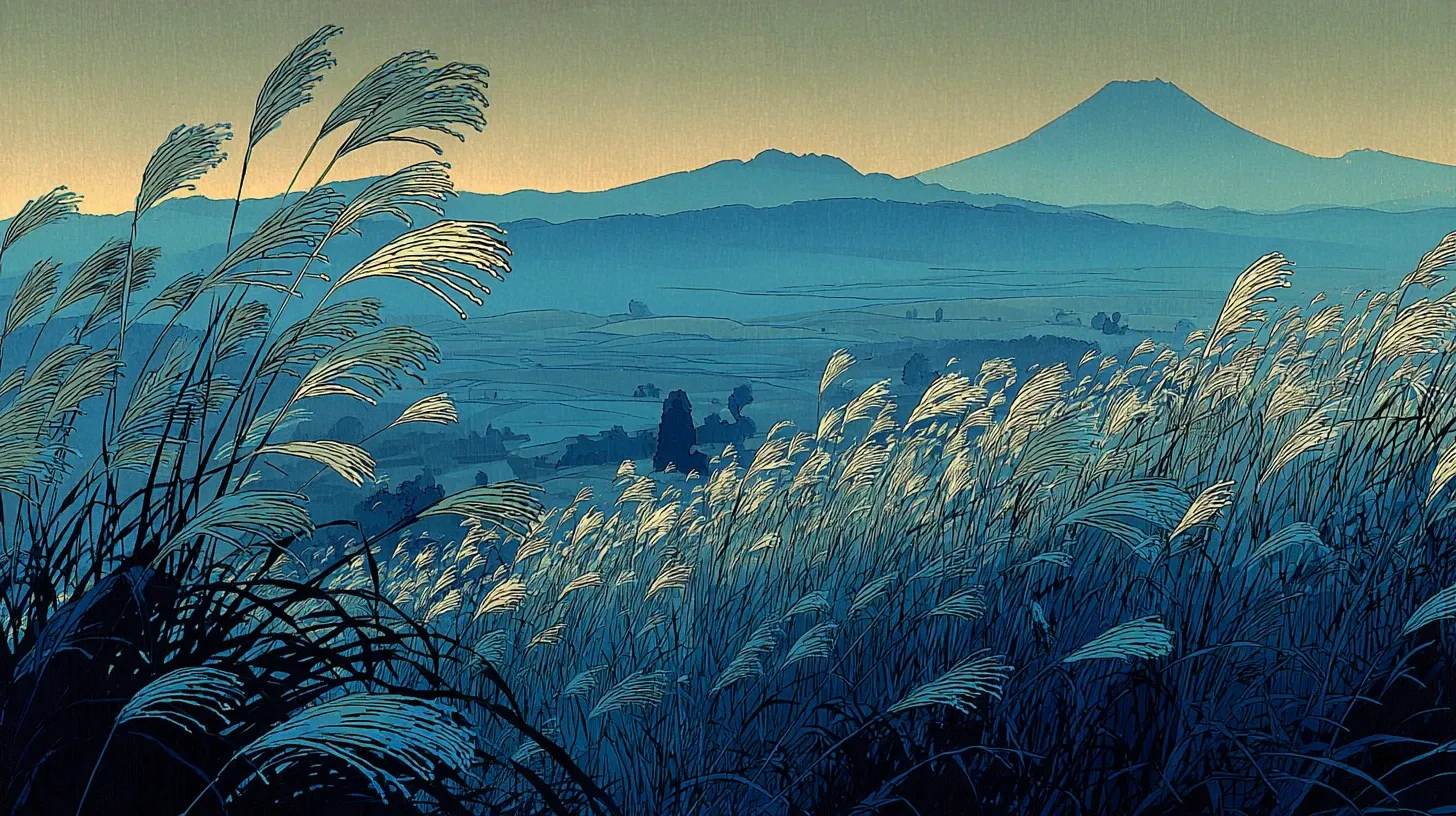
Sengokuhara peaks in late September through October, when its susuki pampas grass turns silver across the plateau. The field is a short walk from the bus stop. Fuji, if visible, rises above the far ridge in a composition entirely unlike the lake-and-torii photograph.
Walk the Old Tōkaidō Road. A surviving stretch of Edo-period highway connects the Amazake-chaya teahouse to the checkpoint. You hike for 90 minutes over the exact stones laid by the Tokugawa shogunate, walking the same incline as millions of historical travelers.
Getting There and Getting Around
The Odakyu Romancecar runs direct from Shinjuku to Hakone-Yumoto in 85 minutes. The base fare sits inside the Hakone Freepass, but boarding requires a mandatory ¥1,200 limited-express surcharge per seat. Book this in advance; weekend trains sell out. Alternatively, the JR Shinkansen reaches Odawara in 35 minutes from Tokyo Station, with local trains continuing to Hakone-Yumoto at no surcharge.
The Hakone Freepass (¥7,100 for two days from Shinjuku) absorbs the Tozan Railway, the funicular, the main ropeway, the ferries, and most local buses. Doing the loop without it costs roughly ¥9,000. The math is straightforward. The pass does not cover the Komagatake Ropeway or the Romancecar surcharge.
When to Go — and When Not to
November commands the calendar. The autumn air sharpens, the caldera walls turn red, and Fuji shows itself.
Late February through early March offers clear winter air, a snowcapped mountain, and low crowds. The late June hydrangeas lining the mountain railway are spectacular — but you will fight for every inch of breathing room.
Avoid Golden Week (late April to early May) entirely. Ryokan book out months prior, ferry queues stretch for hours, and the mountain buses become standing-room endurance tests.
Continue Reading
- Mount Fuji: The Sacred Volcano — The eruption history and geothermal science behind the mountain visible (on clear days) from Hakone’s lake
- Japanese Onsen: The Complete Guide — The full picture of Japan’s hot spring culture, bathing etiquette, and regional variation
- Life in Edo — The city at the eastern end of the Tōkaidō highway that the Hakone checkpoint was built to protect
- The Five Lakes of Mount Fuji — The northern approach to Fuji, where the mountain is closer and views more reliable than at Hakone
FAQ
Is the Hakone Free Pass worth it?
If you are completing the loop from Shinjuku, the 2-day pass (¥7,100 in 2026) saves you roughly ¥2,000 over individual fares. Note that the pass does not cover the mandatory Romancecar surcharge (¥1,200) or the independent Komagatake Ropeway.
Will I see Mount Fuji from Hakone?
Statistically, probably not. The mountain is clearly visible from the wider region on roughly 80 days per year. Hakone’s enclosed caldera geography produces localized cloud cover, making it significantly cloudier than the Fuji Five Lakes area to the north. Treat a clear view as a rare meteorological bonus.
How long do I need in Hakone?
A highly focused day trip starting before 8:00 AM can execute the main loop. However, an overnight stay changes the fundamental nature of the visit. Accessing a private onsen before dawn and walking the Old Tōkaidō trail without staring at a train schedule justifies the expense of a ryokan.
Can visitors with tattoos use the onsen?
Facility policies dictate access, not regional laws. Tattoo-friendly public options exist (Tenzan Tōji-kyō in Yumoto is a known standard). Alternatively, private ryokan baths (kashikiri-buro) bypass communal restrictions entirely. Always verify direct policies before traveling.
About Sleepy Tales of Japan
Sleepy Tales of Japan tells the deep, quiet, ancient stories of Japan — the histories and cultural threads that other tourist guides skip. Our YouTube channel narrates similar deep dives as 30–60 minute sleep stories, with thousands of listeners falling asleep to Japanese history each night. All our articles are researched against primary sources — tourism boards, government archives, and official venue documentation — and reviewed for factual accuracy before publication.
Watch our sleep stories on YouTube → · About this site →
Sources
- Hakone Sekisho Checkpoint — Official Site — Hakone Sekisho Preservation Foundation
- Hakone Freepass — Odakyu — Odakyu Electric Railway (2026)
- Hakone Ropeway & Ōwakudani — Hakone Navi (official tourism portal)
- Pola Museum of Art — Pola Museum of Art
- Hakone Open Air Museum — Hakone Open Air Museum
- Hakone Shrine — Official — Hakone Jinja
- Mt. Fuji Visibility Data — Magical Trip