Japanese Onsen: The Complete Guide to a Country With 27,000 Hot Springs (And the One Rule That Matters Most)
- Sleepy Tales of Japan
- 20 min read In-depth
If you are planning a trip to Japan, the word onsen has probably entered your research at least once. Maybe a friend who has been to Japan mentioned it. Maybe a TikTok video showed steam rising over a wooden tub against a mountain backdrop. Maybe you keep seeing the same town names — Hakone, Kusatsu, Beppu, Kinosaki — and wondering whether one of them belongs on your itinerary.
And then a quieter second thought: isn’t everyone supposed to be naked?
This guide is built to give you what most onsen guides do not: the cultural context that makes the bath make sense, alongside the practical answers you actually need. It covers the four things every onsen-curious traveler ends up wanting to know — where to go, what kind of onsen to choose, what etiquette actually matters in 2026, and what locals mean when they say a particular hot spring trip was the real thing. The short version: the right town depends on what you want to feel afterward, the etiquette is simpler than the internet has made it sound, and a single ryokan night with onsen access runs from about $80 to over $1,000 per person depending on the depth of experience you choose.
Japan has roughly 27,000 natural hot spring sources — more than any country its size on Earth. Around them have grown thousands of bathhouses, hundreds of resort towns, an entire genre of inn (the ryokan), a thousand years of social ritual, and a phrase — hadaka no tsukiai, “naked friendship” — that does not translate cleanly into any other language. The bath is not a side activity in Japan. It is one of the threads holding the culture together.
This guide brings together what you need to understand and experience Japanese onsen: why Japan has so many, how to bathe without offending anyone (the rules are simpler than you think), where the famous and the hidden hot spring towns are, and what locals mean when they say a particular hot spring trip was the real thing.
Table of Contents
Open Table of Contents
- Why Japan Has 27,000 Hot Springs — The Volcanic Foundation
- Onsen vs Sentō — Two Different Worlds
- The Culture and the Etiquette
- The Ryokan Stay — When the Bath Becomes a Pilgrimage
- The Famous Onsen Towns
- Hidden Onsen — Where the Locals Go
- The Real Onsen Experience — Rotenburo, Totonou, and the Bottle of Milk
- The Tattoo Question, Updated
- Planning Your Visit
- Continue Reading
- FAQ
Why Japan Has 27,000 Hot Springs — The Volcanic Foundation
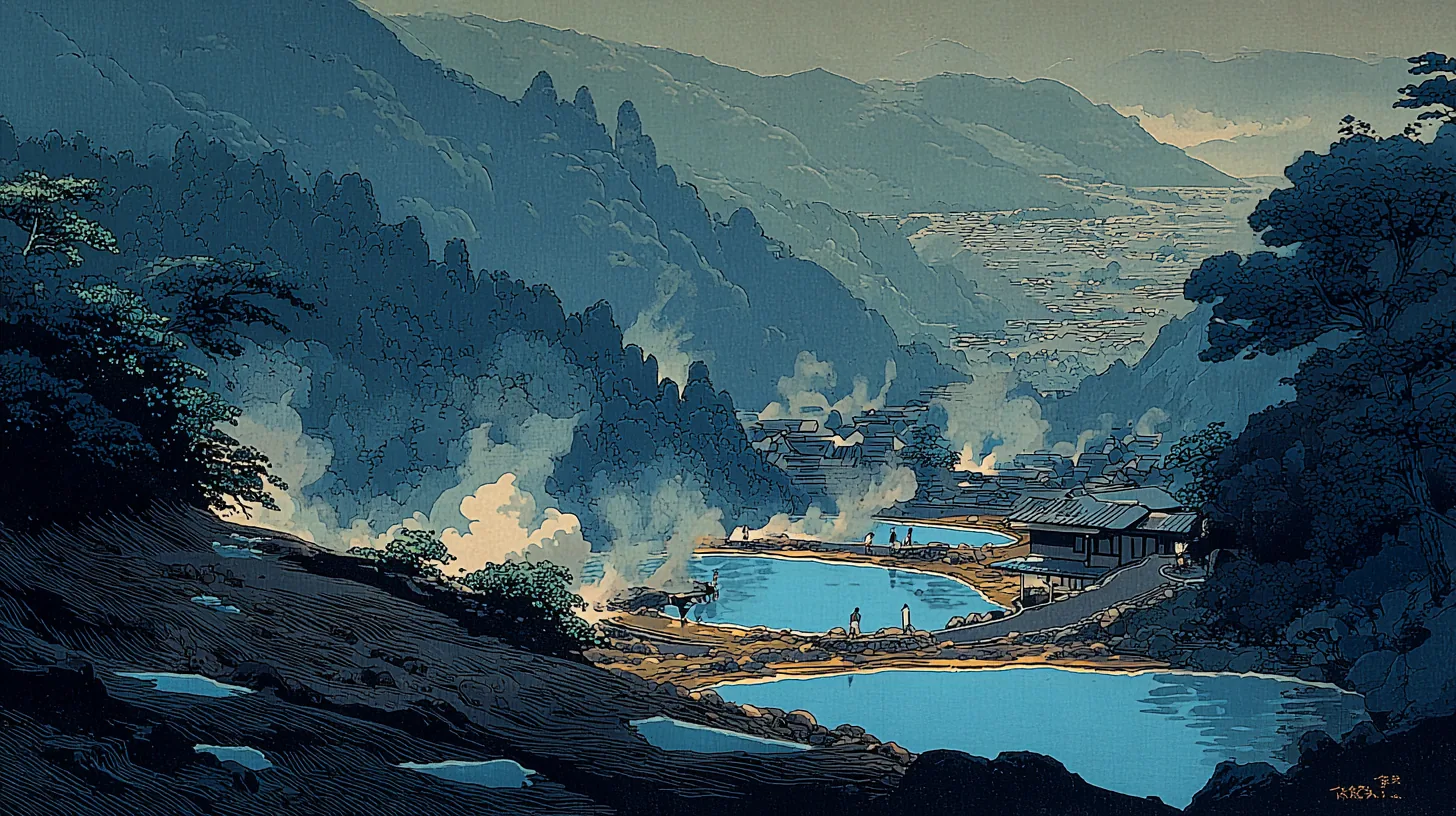
Japan sits on the Pacific Ring of Fire — the seismically active belt that wraps around the rim of the Pacific Ocean. Four tectonic plates meet under the Japanese archipelago, and the same forces that produce the country’s earthquakes and 110 active volcanoes also push superheated, mineral-rich water up through the earth’s crust at thousands of separate points across the country.
The result is roughly 27,000 hot spring sources, more than any other nation of comparable size. Japanese law defines an onsen specifically: water labeled as such must be at least 25°C at the source and contain specified concentrations of one or more of nineteen recognized minerals. Within that legal definition, an enormous variety exists. Some springs run sulfur-yellow and smell strongly of rotten eggs. Some are milky white from suspended carbonate. Some are clear but stain the bath floor with iron. Each chemistry is associated with different traditional health claims — sulfur for skin conditions, sodium chloride for warming the body, iron for circulation — and a 2014 study in Beppu found correlations between regular onsen use, lower blood pressure, and reduced symptoms of chronic fatigue.
The earliest written references to onsen appear in the Kojiki (712 CE) and the Nihon Shoki (720 CE), Japan’s two oldest chronicles. Both describe gods and emperors bathing in hot springs to heal wounds and cure illness. Archaeological evidence suggests that humans have been using these springs since the Jōmon period, more than three thousand years ago. The country’s relationship with hot water predates writing.
Onsen vs Sentō — Two Different Worlds
Foreign visitors often blur the two together, but for Japanese people, an onsen trip and a sentō visit are completely different experiences.
A sentō is a neighborhood public bathhouse in a city. The water is heated tap water, the building is functional, the price is around 520 yen, and the visit takes 45 minutes after work. People go because they enjoy it, but it is part of daily life — closer to a gym membership than to a vacation. Most Japanese people grew up using sentō, and many still visit them weekly or monthly. Tokyo had over 2,600 sentō at the peak in the 1960s; today the number has dropped below 500 as home bathtubs have become universal, but the surviving ones are often architectural landmarks (Funaoka Onsen in Kyoto, Daikoku-yu in Tokyo).
An onsen trip is something else entirely. It involves leaving the city, traveling to a hot spring town, checking into a ryokan or hot spring hotel, soaking multiple times across one or two days, eating a multi-course meal in a yukata robe, sleeping on a futon, and bathing again at sunrise. It is a special occasion — a reward, a romantic getaway, a recovery from overwork, or a multi-generational family ritual. The water is naturally heated mineral water from underground, and the experience is built around slowing down completely.
The two share the same etiquette and the same fundamental act of communal bathing. But asking a Japanese person whether they “did onsen” when you went to a city sentō is a small misunderstanding. They are part of the same culture, but they are not the same thing.
There is a third category between them: the super sentō — large modern facilities (often suburban, often called “onsen” if they pump real spring water) that combine the daily-use convenience of a sentō with the therapeutic appeal of an onsen. These have become enormously popular in recent decades and are an excellent gentle introduction for first-time visitors. A super sentō trip is light commitment — admission around 1,000–2,000 yen, no overnight stay required, multiple types of baths under one roof, and a relaxation lounge for napping afterward.
The Culture and the Etiquette
In Japan, communal nudity in a bathing context carries no sexual meaning. None. This is not a modern reinterpretation; it is a cultural fact rooted in centuries of practice. Neither Shinto nor Buddhism has ever treated the naked body as inherently shameful, and the long tradition of communal bathing means that Japanese people grow up understanding nudity in the bath as completely normal.
The phrase hadaka no tsukiai (“naked friendship”) captures the social function. When you remove your clothes, you also remove the visible markers of status — the suit, the bag, the company badge. The CEO and the new hire sitting in the same pool look exactly the same, and the conversation tends to be flatter and more honest as a result. Japanese companies have historically used onsen trips for this exact reason. Schools organize onsen-town field trips. Families visit hot spring towns to reconnect across generations.
The etiquette can look intimidating but every rule has a reason:
- Wash thoroughly before entering the bath. Sit on the small stool, use the shower, wash everything. The bath itself is for soaking, not for cleaning.
- The small towel never touches the bath water. Most people fold it and place it on top of their head. This keeps the towel — which has touched everything — out of the shared mineral water.
- Be quiet. Conversation is fine, but soft. Many bathers say nothing at all. Silence is part of the experience.
- Don’t stare. This is the rule that makes everything work. Mutual non-attention is the social contract that allows shared bathing to exist.
- Tie up long hair. Hair in the bath water is the same problem as the towel.
- Enter slowly. The water is typically 40–43°C. Going in fast can shock the body. Start with your feet, then your legs, then sit slowly.
The discomfort foreign visitors expect almost always dissolves within five minutes of being in the water. The view is usually beautiful. Nobody is looking at you. Everyone is focused on their own quiet relaxation. The thing you were dreading turns out to be the most peaceful experience of the entire trip.
Read the full guide: Japanese Onsen Etiquette for First-Timers →
The Ryokan Stay — When the Bath Becomes a Pilgrimage
For a deep onsen experience, the right vehicle is a ryokan — a traditional Japanese inn. A typical ryokan stay unfolds across about eighteen hours and follows a sequence that has been refined over centuries:
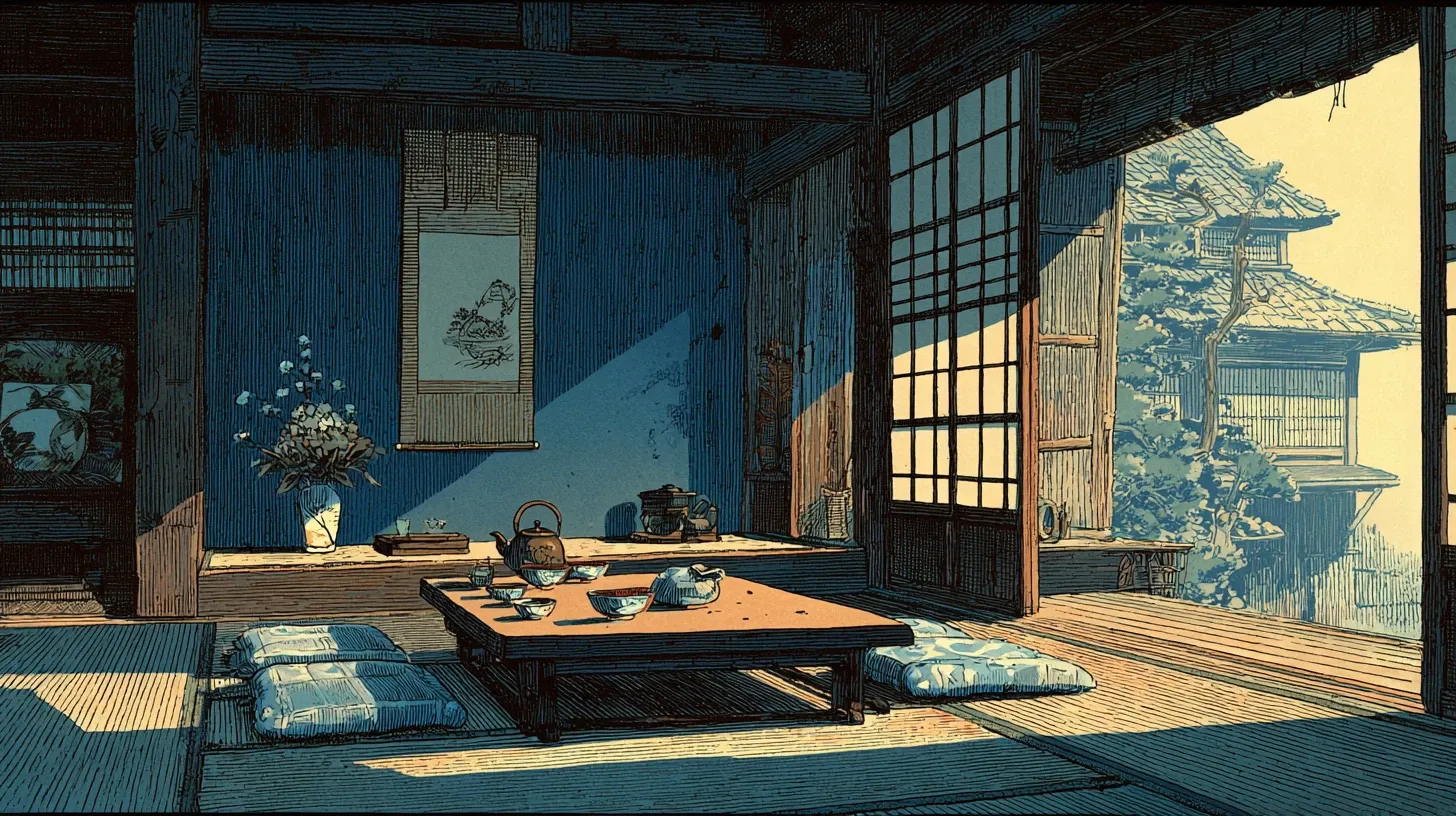
You arrive in the late afternoon. You are shown to your room — tatami flooring, a low table, a tokonoma alcove with a single hanging scroll and a flower arrangement. You change out of your travel clothes into a yukata — a light cotton robe — provided by the inn. You take your first bath of the trip, usually in the late afternoon while the public baths are still uncrowded.
You return to your room, where dinner has been laid out: a multi-course kaiseki meal, often eight to twelve small dishes that follow a strict seasonal logic. Sashimi from local waters. Vegetables that came into season this week. A small grilled fish. Rice and pickles to close. The room attendant unobtrusively manages the timing of each course.
After dinner, the futon is laid out on the tatami while you take your evening bath — often the most atmospheric, with the outdoor rotenburo darkened and lit by a single lantern. You sleep on the futon. At dawn, before breakfast, you bathe one more time — the morning bath is considered the best of the three because the water has had all night to flow fresh through the system and other guests have not yet stirred.
The whole experience is a kind of pilgrimage. You go somewhere remote, you submit to a ritual sequence, you slow down completely, and you leave changed. A good ryokan stay is one of the most distinctive experiences available anywhere in the world, and it is impossible to recreate at home — which is exactly the point.
Read the full story: Your First Ryokan Stay — What to Expect at a Traditional Japanese Inn →
The Famous Onsen Towns
Hundreds of onsen towns exist across Japan; the following are the ones most often recommended to first-time visitors. Each has a distinct character.
Hakone (Kanagawa, near Tokyo). The most accessible from Tokyo — about 90 minutes by Romance Car train from Shinjuku. Hakone is a full mountain resort with hot springs, a lake, an open-air sculpture museum, a pirate-style cruise ship, and on clear days an iconic view of Mount Fuji. The onsen experience here is more “luxury hotel with spring water” than “remote pilgrimage town”; if you want a comfortable first onsen trip with side activities, this is the right choice.
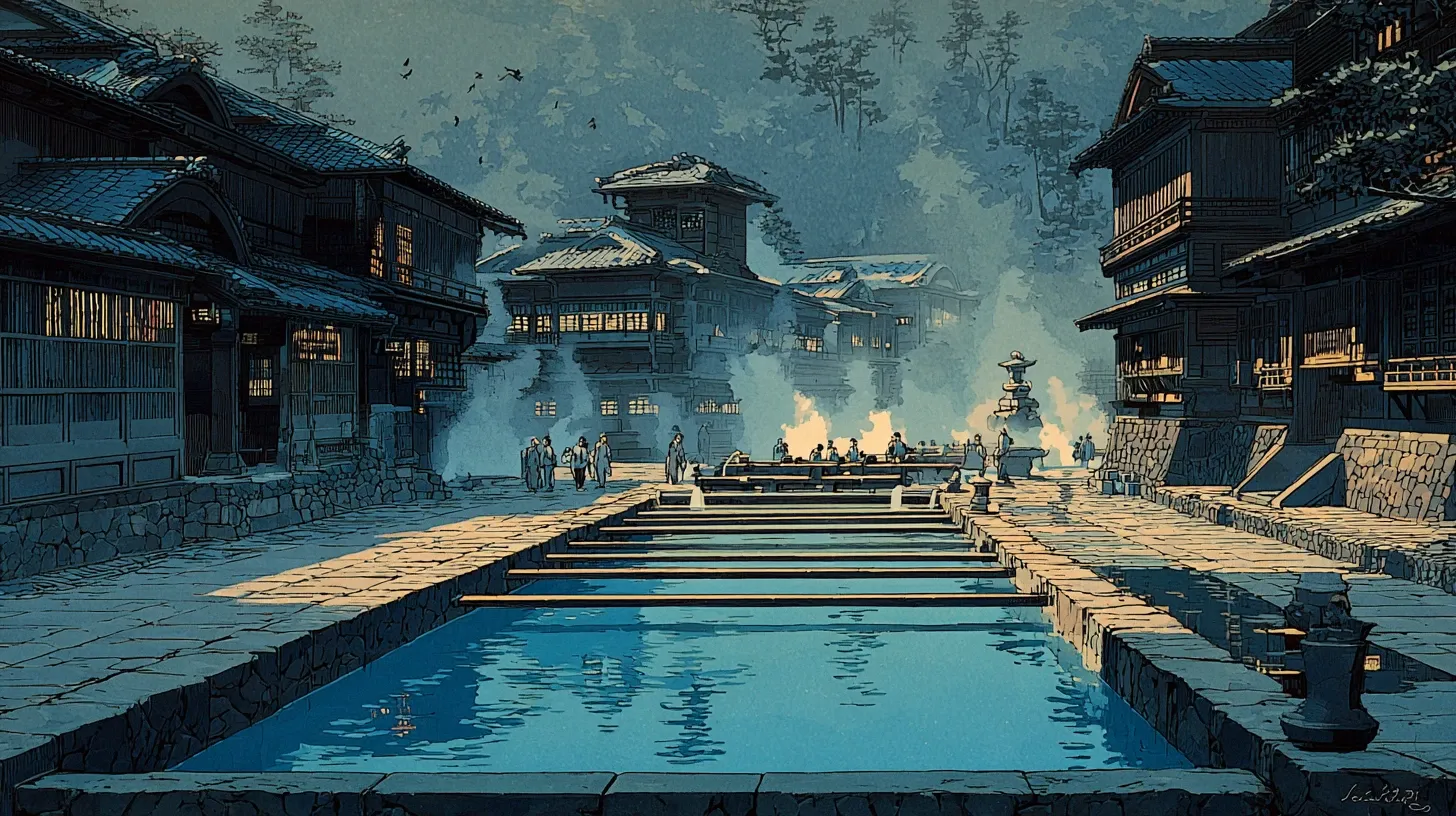
Kusatsu (Gunma, central Honshu). Considered by many Japanese to be the country’s premier hot spring town. Kusatsu’s signature feature is the Yubatake — “the hot water field” — a wooden grid of channels in the town center where superheated 50°C+ sulfur water is cooled before being piped to the bathhouses. The town is walkable, the water is famously strong (skin tingles, body warms quickly), and several public baths are free for anyone to use.
Beppu (Ōita, Kyushu). The town with the most onsen sources in Japan — over 2,000. Beppu’s specialty is variety: regular hot baths, sand baths where you are buried up to the neck in volcanic sand, mud baths, and steam baths. The “Hells of Beppu” — eight dramatic geothermal pools that are too hot to bathe in but stunning to visit — are a separate sightseeing circuit.
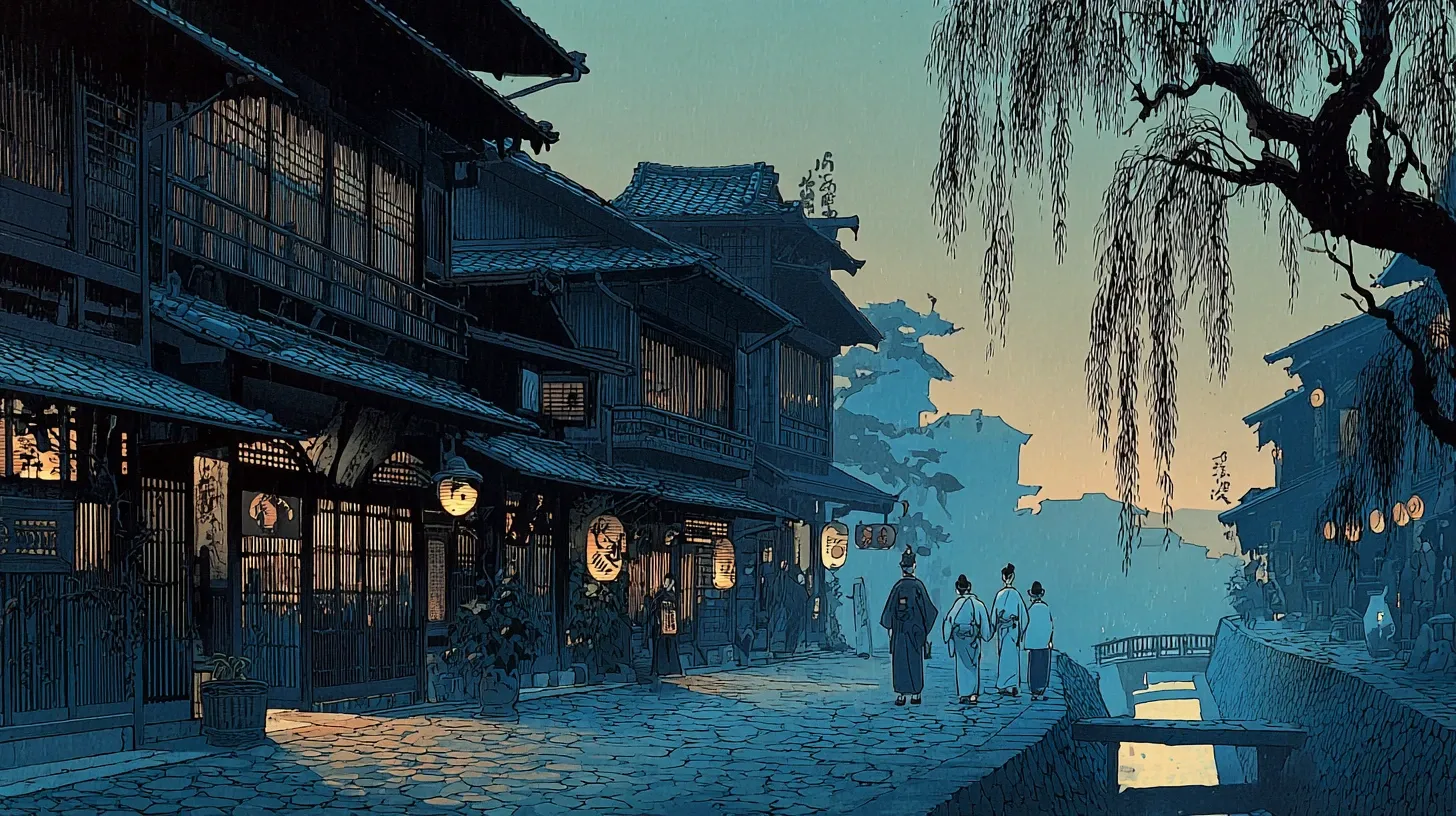
Kinosaki (Hyōgo, near Kyoto/Osaka). A small canal-lined town with seven public bathhouses scattered along willow-lined streets. The signature experience is yumeguri (“hot spring hopping”) — your ryokan provides a wooden pass that grants free access to all seven, and you walk between them in your yukata and wooden geta sandals. Kinosaki has been voted one of Japan’s best onsen towns by multiple sources, and the compact walkable scale gives it a particularly atmospheric character.
Hidden Onsen — Where the Locals Go
If you want to step away from the famous towns, three categories are worth knowing.
Kurokawa Onsen (Kumamoto, Kyushu) is consistently named by Japanese travelers as one of the most atmospheric onsen towns in the country. There are no neon signs. No big souvenir arcades. No chain konbini visible from the main street. Instead, about 30 small ryokan line a narrow river gorge, and almost every ryokan opens its baths to outside visitors through the Nyutō Tegata — a single wooden pass (1,500 yen) that admits you to any three baths in town. You walk between them in your yukata. The town has consciously rejected the pattern of overdevelopment that other onsen towns followed in the bubble years.
Tōhoku — the northeastern region of Honshu — contains the country’s highest concentration of small, deeply rural onsen. Towns like Nyūtō Onsen-kyō (a cluster of seven secluded inns deep in Akita’s mountains) and Ginzan Onsen (Yamagata’s gas-lamp-lit canal town that inspired the visual look of Spirited Away) are remote enough that they remain dominated by Japanese guests rather than international tourists.
Day-use options near the cities. If a ryokan stay is not feasible, every major city has access to day-use onsen facilities. Hakone has dozens of ryokan that admit non-staying guests for a fee (called higaeri, “day return”). Tokyo has Ōedo Onsen Monogatari and several modern super sentō with real hot spring water. Kyoto has Funaoka Onsen and Yamato-Yu in walking distance from central neighborhoods. These are excellent introductions for travelers without time for an overnight trip.
The Real Onsen Experience — Rotenburo, Totonou, and the Bottle of Milk
Ask Japanese onsen lovers what makes a hot spring trip “the real thing,” and the answers converge on a few specific elements.
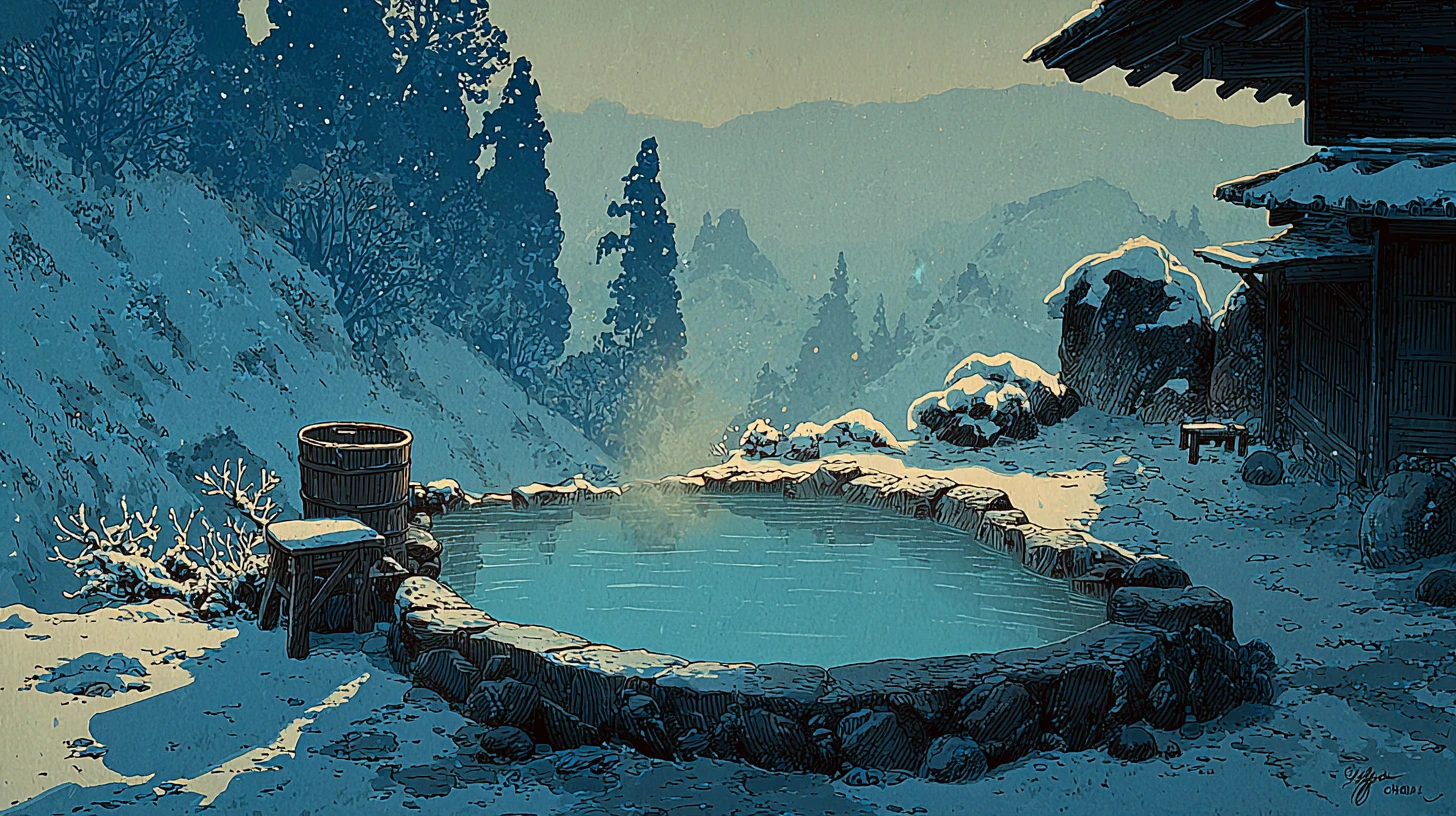
The rotenburo. The outdoor bath is the heart of the experience. Roten means “open air”; buro means “bath.” A great rotenburo opens onto a view that you can soak in for an hour without your attention wandering — a snow-covered mountain ridge, a river gorge, a dark forest. Indoor baths are pleasant; rotenburo are why people come back.
Totonou — the sense of being “tuned.” The Japanese word totonou (整う) means something between “in order,” “balanced,” and “ready.” When applied to bath culture, it refers to the very specific physiological state that comes from cycling between hot water, brief cooling, and rest — heart rate normalizes, the autonomic nervous system resets, the mind goes quiet without trying. People describe it as the body being “tuned.” It is one of the things foreign visitors are least likely to read about in advance, and one of the things that keeps Japanese people coming back to onsen for a lifetime.
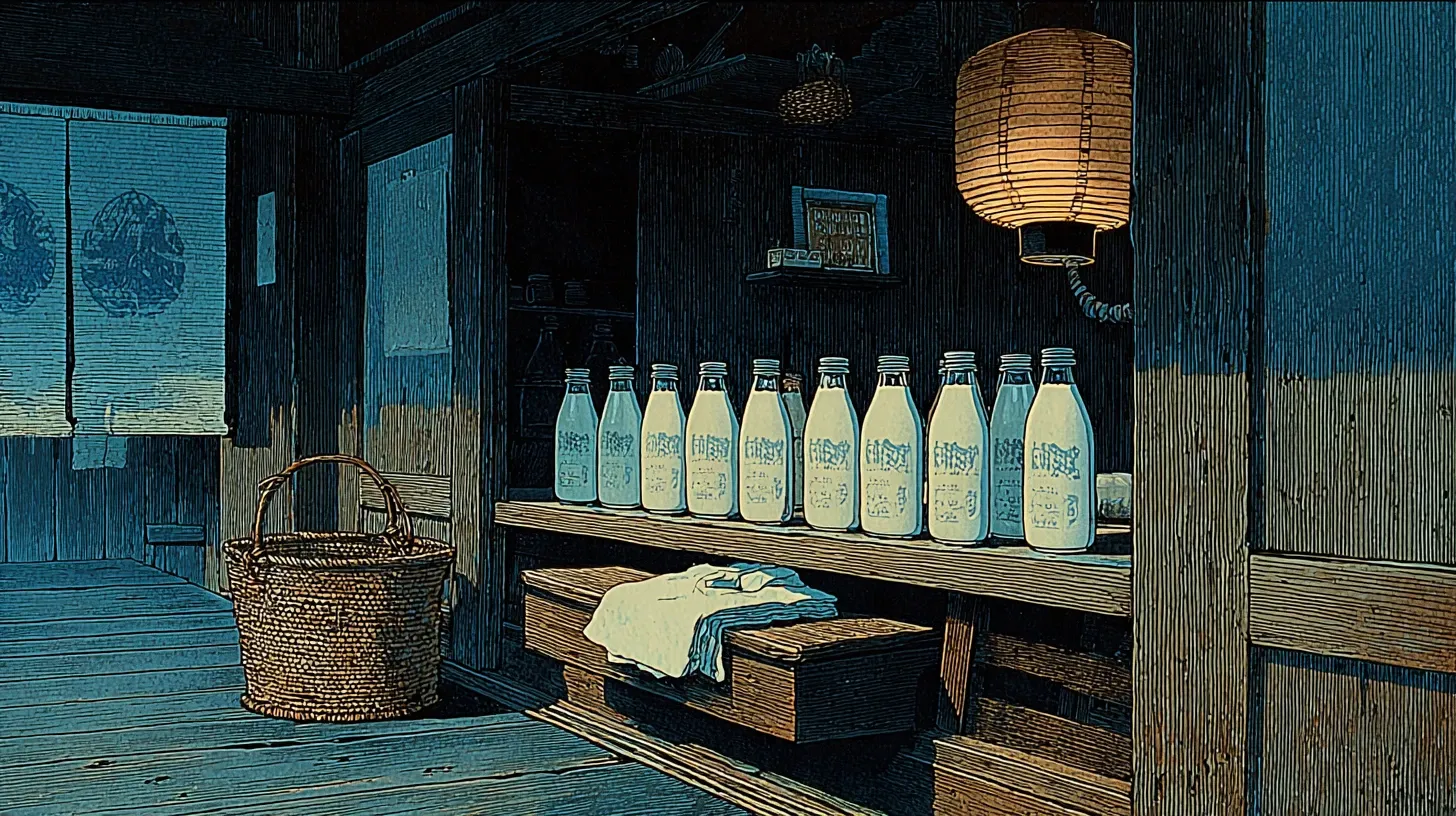
The yu-agari ritual. Yu-agari — “after the bath” — is its own small ceremony. You step out into the cool changing room. You dry off slowly. You put on a fresh yukata. You walk out onto the inn’s wooden floor in your bare feet. And then, traditionally, you drink something cold. The classic choice is a small glass bottle of cold milk — coffee milk or fruit milk from a vending machine, kept ice cold in a refrigerator next to the changing room. Many onsen lovers will tell you that the moment of standing in a yukata, slightly flushed from the bath, drinking cold milk in complete silence, is the single most peaceful moment of their year.
The walk in yukata. In an onsen town, guests change into the yukata provided by their ryokan and walk between baths, restaurants, and shops dressed that way. This is socially normal and visually striking — entire small towns where everyone in sight is wearing the same loose cotton robe and wooden sandals. It is also surprisingly comfortable.
These four elements — rotenburo, totonou, yu-agari, the yukata walk — together make the difference between an onsen visit and an “onsen experience.” The first is a place you went; the second is a state you entered.
The Tattoo Question, Updated
If you have a tattoo, you have probably read that you will be banned from every onsen in Japan. This is increasingly out of date.
The historical context: from the Edo period onward, tattoos in Japan were associated with criminal punishment (offenders were branded with ink) and later with organized crime (members of the yakuza traditionally wear elaborate full-body tattoos as a mark of loyalty). For decades, “no tattoos” signs at onsen and public baths were essentially a polite way of saying “no gangsters.” Tattooed foreign tourists were caught in the same blanket policy.
The shift since 2015 has been substantial. The Japan Tourism Agency now publishes guidelines explicitly encouraging onsen operators to reconsider blanket bans. Many onsen towns — Kusatsu, Beppu, Kinosaki, Kurokawa — maintain official directories of tattoo-friendly facilities in English. Several practical options now exist:
- Tattoo-friendly onsen. Hundreds of facilities, especially in tourist-heavy areas, openly welcome guests with tattoos. The website tattoofriendlyonsen.com maintains a searchable directory.
- Cover patches. Skin-colored adhesive patches are available at many onsen receptions for small tattoos.
- Private baths (kashikiri-buro). Reserved-for-your-party baths are available at most ryokan for an additional fee, regardless of tattoo policy.
- Quiet hours. Some facilities allow tattooed guests during off-peak times.
- Ask in advance. Email or call. Foreign visitors are often given more leeway than Japanese visitors would be, because the obvious context (tourism, not yakuza membership) reframes the situation.
The blanket “no tattoos in any onsen” rule that older guidebooks repeat is no longer accurate. Plan a little more carefully and the experience is fully accessible.
Planning Your Visit
How long. A first onsen trip is usually one or two nights. One night gives you the full ryokan ritual — afternoon arrival, multi-bath cycle, kaiseki dinner, futon sleep, morning bath, breakfast, departure. Two nights lets you slow down further and try a different bath in the second evening.
When. Onsen are excellent year-round, but each season has a signature appeal. Winter (December–February) is the classic season; the contrast between cold air and hot water is the entire point of the rotenburo, and snow-covered mountain views are unmatched. Autumn (October–November) adds maple foliage. Spring (April) adds cherry blossoms. Summer is the least obvious choice, but evening rotenburo soaking in mountain air still works, and prices and crowds are lower.
Where to start. For a first onsen trip from Tokyo, Hakone is the right answer — easy access, comfortable infrastructure, multiple side activities. From Kyoto/Osaka, Kinosaki is the most atmospheric direct option (2.5 hours by limited express). For a bigger commitment, Kusatsu is the most decisively “onsen town” experience in central Japan, and Kurokawa is the most atmospheric in Kyushu.
What it costs. Ryokan stays vary enormously. Budget options exist around 10,000–15,000 yen per person per night (with two meals). Mid-range stays are typically 20,000–35,000 yen. High-end ryokan with private rotenburo in each room and kaiseki dinner can run 50,000 yen or more per person. Day-use facilities are far cheaper — usually 500–2,000 yen for entry only.
Travel essentials. A small towel and sometimes a yukata are provided at ryokan; you do not need to pack any bath equipment. Mobile data is far cheaper through a Japan eSIM purchased before arrival than through international roaming. Travel insurance with overseas medical coverage is strongly recommended.
Continue Reading
If onsen is part of your trip, you’ll probably also be planning these:
- Mount Fuji: The Complete Guide — the volcano that makes Hakone’s hot springs possible.
- Kyoto Travel Guide — the imperial capital, with its own quiet bathing districts.
- Japanese Food History — where the kaiseki dinner tradition comes from.
- Tokyo’s Best Museums — what to see on either side of your onsen trip.
FAQ
Do I have to be completely naked in an onsen?
Yes. Swimwear is not allowed in traditional onsen — the reasons are both hygienic (fabric releases detergent and fibers into the mineral water) and cultural (bathing nude is the centuries-old tradition). If communal nudity feels uncomfortable, start with a private bath (kashikiri-buro), which is available at most onsen facilities for an additional fee. Most foreign visitors find their nervousness dissolves within five minutes of being in the water.
What is the small towel actually for?
This is one of the most common foreign visitor questions. The small towel has three jobs and one rule. The jobs: (1) wash with it at the shower station before the bath, (2) use it for modesty while walking between the changing area and the bath, (3) place it folded on top of your head while soaking. The rule: the towel never touches the bath water. After your final bath, use it to pat yourself dry before re-entering the changing room. Yes, you do sit on the small stool at the shower — standing is considered slightly bad form because water can splash on neighbors.
What is the difference between an onsen and a sentō?
An onsen uses naturally heated mineral water from underground hot springs (legally must be ≥25°C at source with specified mineral content). A sentō is an urban public bathhouse using heated tap water. The bathing etiquette is identical, but onsen are typically destinations (resort towns, ryokan) while sentō are part of daily city life. For Japanese people, an onsen trip and a sentō visit are completely different experiences — one is a special occasion, the other is closer to a gym membership. A useful third category, the super sentō, is a large modern facility that often pumps real spring water and combines the convenience of a sentō with onsen benefits.
Can I visit an onsen with tattoos?
Increasingly, yes. The blanket “no tattoos” policy that older guidebooks describe is no longer accurate. Hundreds of tattoo-friendly facilities exist (search tattoofriendlyonsen.com), cover patches are widely available, private baths (kashikiri-buro) accept tattooed guests with no restrictions, and foreign visitors are generally given more leeway than Japanese visitors would be. Plan a little more carefully and the experience is fully accessible.
Is the water safe? What are the health benefits?
Onsen water is naturally heated and mineral-rich. Different mineral compositions are traditionally associated with different effects: sulfur springs for skin conditions, sodium chloride springs for warming the body, iron springs for circulation. A 2014 study in Beppu found correlations between regular onsen use, lower blood pressure, and reduced symptoms of chronic fatigue. Practical safety notes: enter slowly to avoid temperature shock, do not stay submerged more than 10–15 minutes per session, drink water before and after, and step out immediately if you feel dizzy. Nobose (overheating) is a real risk, especially for first-time visitors who underestimate the strength of the water.
Where should I go for my first onsen trip?
From Tokyo: Hakone is the easiest and most comfortable introduction (90 min by Romance Car, multiple side activities). From Kyoto/Osaka: Kinosaki (2.5 hours by limited express, walkable seven-bath circuit). For a more atmospheric experience and willing to travel further: Kurokawa in Kyushu or Kusatsu in Gunma. Avoid trying to combine an onsen trip with a packed sightseeing day — the point of going is to slow down completely.
What does “totonou” mean and why do Japanese people talk about it?
Totonou (整う, “to be tuned”) refers to a specific physiological state that comes from cycling between hot water, brief cooling, and rest. The autonomic nervous system resets, the mind goes quiet, and the body feels balanced — somewhere between deeply relaxed and deeply alert. Japanese onsen lovers describe it as the body being “in order.” It is one of the things most foreign visitors don’t read about in advance, but is a major reason why hot spring trips remain popular in Japan despite homes having perfectly good bathtubs.
What should I do after the bath?
The post-bath ritual (yu-agari) is its own small ceremony. Step out slowly into the cool changing room, dry off carefully, put on a fresh yukata, and walk out into the inn’s wooden floor in bare feet. Then — traditionally — drink something cold. A small glass bottle of cold coffee milk or fruit milk from the changing room refrigerator is the classic choice. Many onsen lovers will tell you that the moment of standing in a yukata, slightly flushed, drinking cold milk in silence, is one of the most peaceful moments of their year.
Sources
- Onsen — JNTO — Japan National Tourism Organization
- Different Types of Onsen and Benefits — JNTO — Japan National Tourism Organization
- Japanese Onsen and Ink — The Tattoo Taboo — JNTO — Japan National Tourism Organization
- Tattoo-Friendly Onsen Directory — Tattoo Friendly Onsen
- Hakone Tourism — Hakone Tourism Association
- Kusatsu Onsen Tourism — Kusatsu Onsen Tourism Association
- Kinosaki Onsen Tourism — Kinosaki Onsen Tourism Association
- Beppu City Tourism — Beppu City
- Kurokawa Onsen Tourism — Kurokawa Onsen Tourism Cooperative