Kyoto Travel Guide: A Thousand Years of Temples, the Famous Spots Locals Quietly Skip, and Where to Find the Real City
- Sleepy Tales of Japan
- 20 min read In-depth
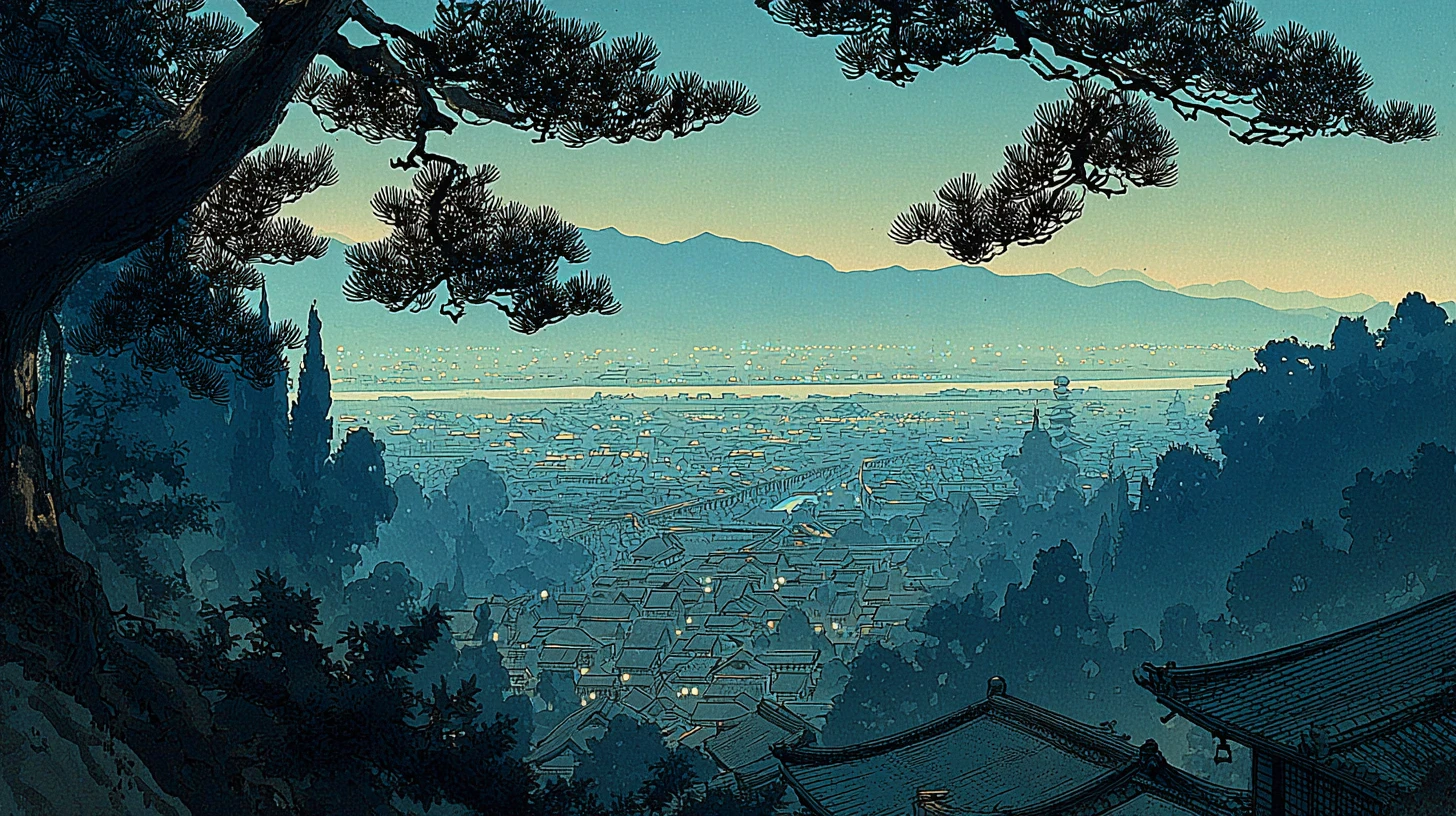
Almost every Japan itinerary — whether it is your first trip or your fourth — eventually arrives at the same question: how to do Kyoto without doing only its postcard. The famous places (Fushimi Inari, Kiyomizu-dera, Arashiyama) deserve their reputations and absolutely belong on your list. But Kyoto rewards travelers who treat it as a city to read, not a checklist to complete. This guide is for travelers who want both — the temples that everyone visits, and the layers of history and quiet underneath them.
The short version: three full days is the minimum that does Kyoto justice. The famous spots appear on everyone else’s itinerary too, so the difference between an exhausting checklist trip and one you remember comes down to two decisions: what time of day you visit them, and whether you make time for the other Kyoto — the riverbank lanes, the quiet northern temples, the morning sound of someone sweeping a gate before the buses arrive.
Kyoto has been Japan’s imperial capital for 1,074 years — longer than Rome, longer than Constantinople — and the entire city is a layered record of that history. This guide covers what to see, when to come, where to stay, and how to find both the postcard Kyoto and the quiet city the locals actually live in.
Table of Contents
Open Table of Contents
- A Thousand-Year Capital — A Brief History
- Fushimi Inari — Ten Thousand Gates
- Kiyomizu-dera — The Wooden Stage and the Pure Water
- Arashiyama — Bamboo, Boats, and a Temple Born from a Dream
- Gion — The Geiko Districts
- The Northern Temples — Kinkaku-ji, Ginkaku-ji, Ryōan-ji
- Beyond the Famous — Where Locals Find “Kyoto”
- When to Come — Seasons and Crowd Avoidance
- Planning Your Visit
- Continue Reading
- FAQ
A Thousand-Year Capital — A Brief History
Kyoto was Japan’s imperial capital for 1,074 years — from 794 to 1868 — making it one of the longest continuously inhabited capital cities in the world. The city was founded by Emperor Kanmu, who moved his court west from Nara to escape the political influence of the Buddhist monasteries that had grown too powerful there. He named the new city Heian-kyō — “the capital of peace and tranquility” — and laid it out on a precise rectangular grid modeled after Chang’an, the capital of Tang dynasty China.
For the next four centuries, Kyoto was the cultural heart of Japan. It produced The Tale of Genji, the eleventh-century novel by Murasaki Shikibu often considered the world’s first long-form work of fiction. It produced the courtly aesthetics of mono no aware — the bittersweet awareness of impermanence — that still shape Japanese sensibilities today. And it produced the architectural language of Buddhism that you will see at every temple in the city.
Then it was burned. The Ōnin War (1467–1477) was a ten-year civil war fought inside the capital itself, between rival coalitions of feudal lords. By the time the fighting ended, much of the upper city was rubble. What rebuilt Kyoto, remarkably, was not the aristocracy or the shōgun — it was the machishū, the merchants and craftsmen of the lower city, who organized themselves into self-governing neighborhood units and funded reconstruction, defense, and the revival of cultural institutions like the Gion Festival.
In 1868, when the Meiji Restoration brought the emperor’s residence to Tokyo (the renamed Edo), Kyoto lost its political role — but no formal edict ever stripped it of its status as the capital. Some Kyoto residents will still tell you, with varying degrees of seriousness, that the city remains a capital of Japan. Just one that the emperor happens not to be living in at the moment.
In 1945, Kyoto was on the United States military’s atomic bomb target list. Secretary of War Henry Stimson successfully argued for its removal — partly out of cultural appreciation, partly out of geopolitical calculation that destroying Japan’s cultural heart would make postwar reconciliation impossible. Hiroshima replaced it. The Kyoto you walk through today survived because of that decision.
Read the full story: Why Kyoto Was Japan’s Capital for 1,000 Years →
Fushimi Inari — Ten Thousand Gates
On the southern edge of Kyoto, two stops south of Kyoto Station on the JR Nara Line, sits a shrine that does not look like a shrine. It looks like a tunnel. Tens of thousands of vermilion torii gates, packed so tightly together that sunlight barely reaches the path, climb the slopes of Mount Inari for four kilometers from the main hall to the summit.
This is Fushimi Inari Taisha, founded in 711 and the headquarters of more than thirty thousand Inari shrines across Japan. The deity Inari is the god of rice, and originally the prayers here were for good harvests. During the Edo period, as Japan’s economy shifted from rice to commerce, Inari became the god of business as well. Today, every gate on the mountain was donated by someone — a company, a family, an individual — to mark a wish that was answered. The cost ranges from several hundred thousand yen for a small gate to over a million yen for a large one.
The gates are not permanent. Wood rots. According to records from Japan’s National Diet Library, roughly three gates are repaired or replaced every single day. The tunnel you walk through is constantly decaying and constantly being renewed.
The shrine is free to enter, open 24 hours a day, and never closes. The famous “Thousand Gates” tunnel is fifteen minutes from the main hall. The full hike to the summit takes roughly two to three hours round-trip.
Read the full story: Fushimi Inari — Ten Thousand Gates on a Mountain That Never Closes →
Kiyomizu-dera — The Wooden Stage and the Pure Water
On the eastern hills of Kyoto, perched on the slopes of Mount Otowa, stands one of the most photographed buildings in Japan. Kiyomizu-dera — the temple of pure water — was founded in 778 by a wandering monk named Enshin who had a dream that led him to a waterfall falling in three streams from a cliff face.
The temple’s main hall extends out over the hillside on a wooden veranda — the butai, the stage — that stands roughly thirteen meters above the slope below. It is supported entirely by 139 wooden pillars of Japanese zelkova, joined by interlocking beams without a single iron nail. The current stage was built in 1633, funded by the third Tokugawa shōgun, and has survived multiple major earthquakes since.
A Japanese idiom comes from this exact stage: Kiyomizu no butai kara tobioriru — “to jump from the stage of Kiyomizu” — meaning to make a brave, irreversible decision. The phrase is not metaphorical. The temple’s records document 234 actual jumps between 1694 and 1864, with a survival rate of 85.4 percent (the slope below was thickly forested, and trees broke many falls). The leap was banned in 1872. The phrase remains in everyday speech.
Behind the main hall, the Otowa Waterfall — the original spring that gave the temple its name — falls in three separate streams. Each stream is said to grant a different blessing: love, academic success, or longevity. There is a Kyoto rule that most foreign visitors do not know: choose only one. Drinking from all three is considered greedy and is believed to cancel all three wishes.
Read the full story: Kiyomizu-dera — Pure Water, the Wooden Stage, and the Three Waterfalls →
Arashiyama — Bamboo, Boats, and a Temple Born from a Dream
On the western edge of Kyoto, where the Katsura River emerges from a gorge into the city basin, sits the district of Arashiyama. The famous bamboo grove path is here — a 400-meter walkway through walls of impossibly tall green bamboo, listed in 1996 by Japan’s Ministry of the Environment as one of the country’s “100 Soundscapes” for the distinctive sound the wind makes through the densely planted Moso and Madake stalks.
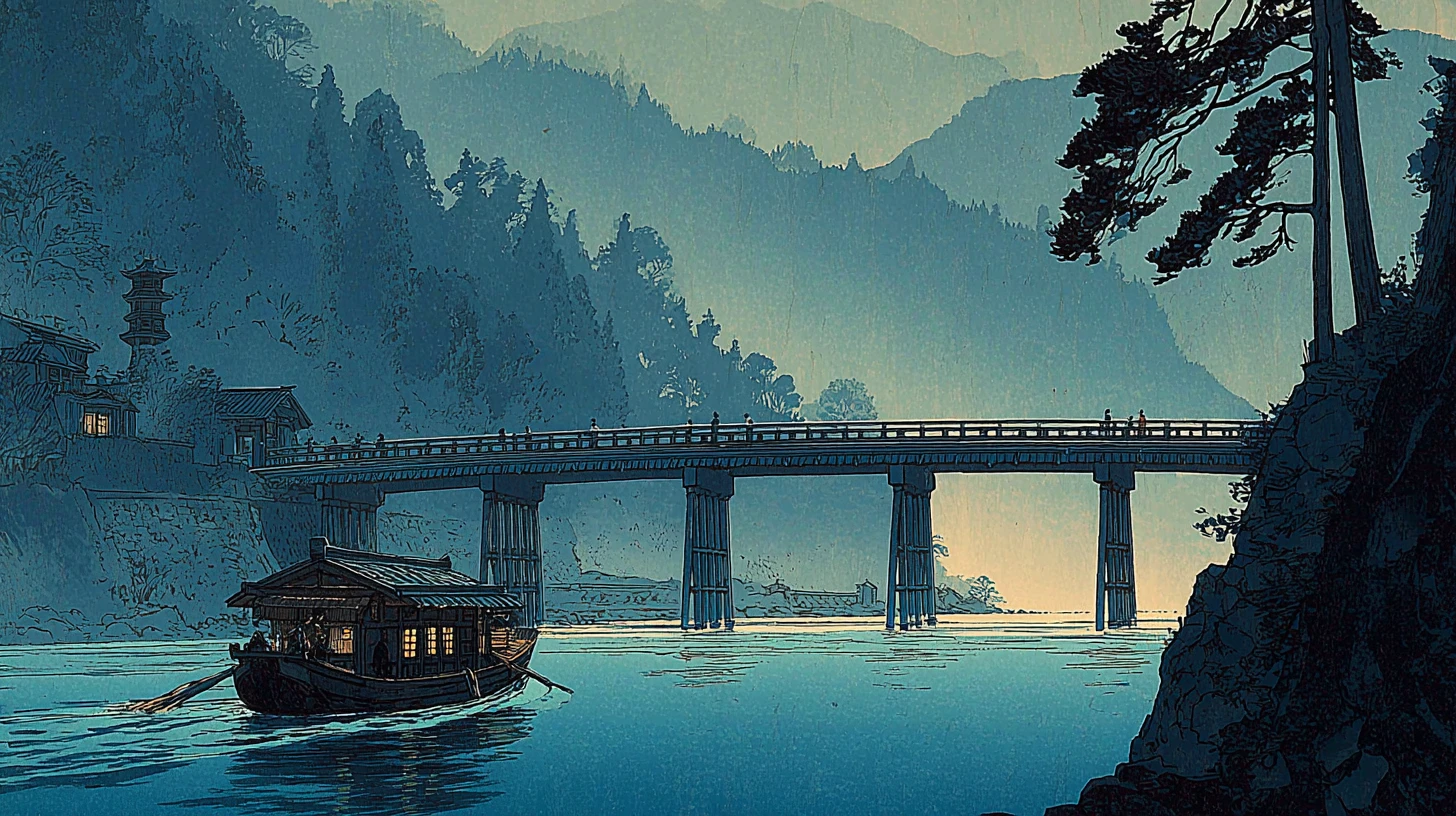
But Arashiyama is more than the bamboo. The Togetsukyō Bridge crosses the Katsura River with the mountain rising directly behind it; the bridge’s name — “moon-crossing” — comes from a thirteenth-century moment when Emperor Kameyama said the moon appeared to be crossing it. Tenryū-ji, the head temple of one of Kyoto’s main Zen schools, was founded in 1339 by the first Ashikaga shōgun to appease the ghost of an exiled emperor he had betrayed. Its garden, designed by the Zen master Musō Soseki, is still considered one of the most influential examples of Japanese landscape design 670 years later.
Upstream from the Togetsukyō Bridge, the river changes its name to the Hozu River, and a two-hour boat ride down its gorge to Arashiyama has been operating in some form since 1606. A Kyoto merchant named Suminokura Ryōi blasted the river’s boulders with chisels and gunpowder to make it navigable for cargo. Today the boats carry tourists. Most visitors take the Sagano Romantic Train — a vintage trolley line on an abandoned section of the JR San’in Line — up to Kameoka, then float back down on the boat.
A 20-minute hike from the Togetsukyō Bridge leads to the Iwatayama Monkey Park, where roughly 120 wild Japanese macaques live with one of the best panoramic views of central Kyoto. Many travelers report finding the monkey park more memorable than the bamboo grove.
Read the full story: Arashiyama — Bamboo Grove, Hozu River, and the Temple Born from a Dream →
Gion — The Geiko Districts
East of the Kamo River, on the northern slope of Higashiyama, lies Kyoto’s most famous historic district. Gion developed in the seventeenth century as the entertainment quarter that served pilgrims to the nearby Yasaka Shrine. The teahouses (ochaya) and traditional inns that line its narrow stone-paved lanes are where Kyoto’s geiko and maiko — the senior and apprentice geisha of Kyoto’s distinct tradition — perform classical music, dance, and conversation for a small number of private guests each night.
A piece of vocabulary worth learning: in Tokyo and most of the rest of Japan, the word is geisha. In Kyoto, the senior performers are called geiko, and their apprentices are maiko. The Kyoto tradition is older, more rigorous, and far more closed to outsiders than most foreign visitors realize. The teahouses operate on a strict introduction-only basis (ichigen-san okotowari — “first-time guests not accepted”). Walking through Gion in the early evening, you may catch a glimpse of a maiko hurrying between appointments. Photographing them on the public street has been technically prohibited since 2019, after years of harassment from camera-wielding tourists.
The district to walk is the area south of Shijō Street called Gion Shirakawa, where wooden teahouses sit alongside a willow-lined canal. North of Shijō, Hanamikōji — “the path of cherry blossoms” — is the most photographed street, but also the most crowded; come at dusk if you want to see it without the daytime tour groups.
If you want to see geiko and maiko perform without the years-long process of becoming an introduced guest at a teahouse, two annual public events are open to anyone: Miyako Odori (the spring dance, held throughout April) and Kamogawa Odori (the autumn dance, held in October–November). Tickets are available online weeks in advance.
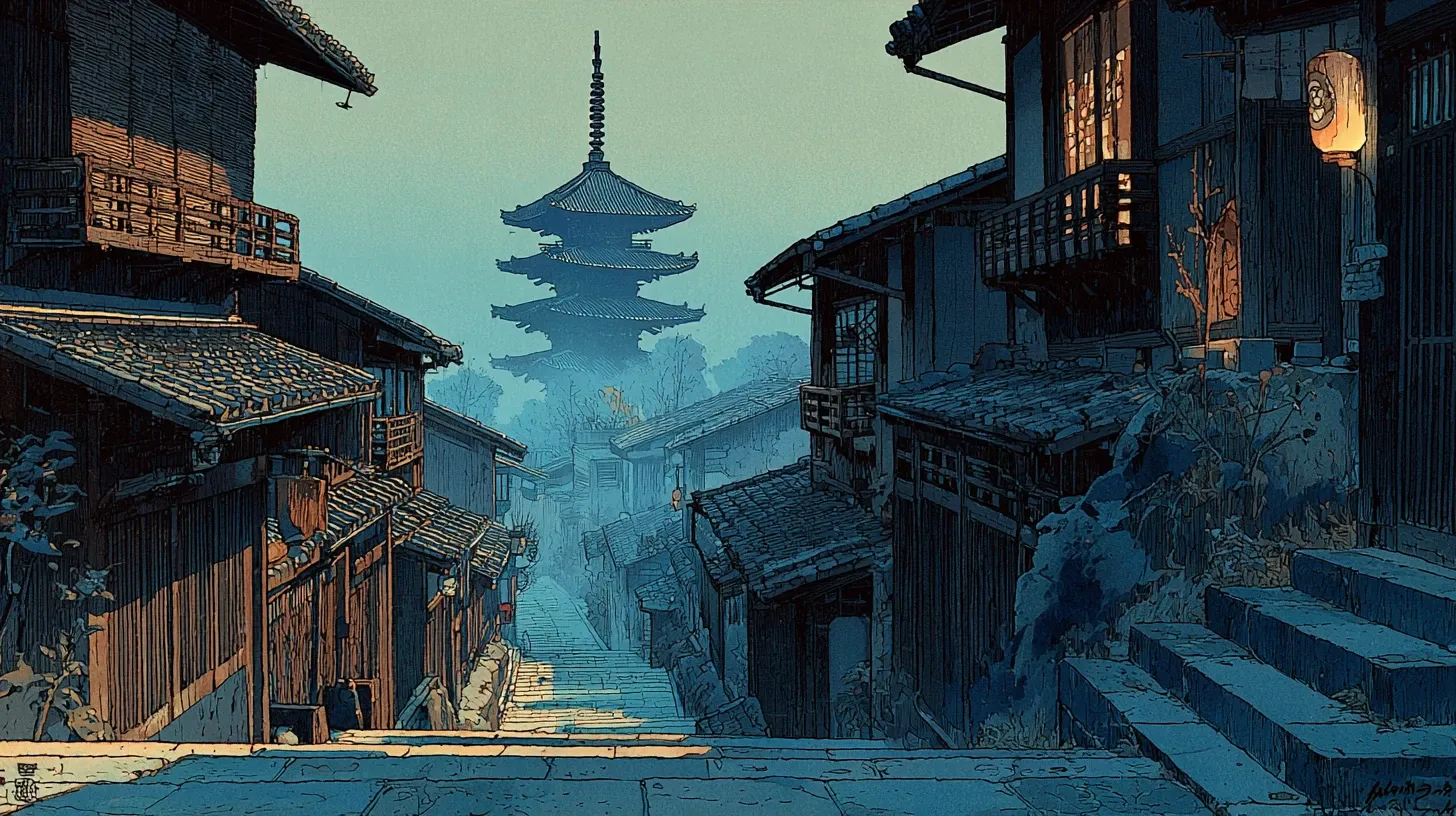
The Northern Temples — Kinkaku-ji, Ginkaku-ji, Ryōan-ji
The northwestern hills of Kyoto hold three of the city’s most famous Zen temples, each linked by the city bus route 50 or 59 from Kyoto Station.
Kinkaku-ji, the Golden Pavilion, was built in 1397 as the retirement villa of the third Ashikaga shōgun, Yoshimitsu. Two of its three stories are entirely covered in gold leaf, and the building is mirrored in the Kyōko-chi pond at its base — when conditions are right, the doubled gold reflection is one of the most extraordinary sights in Japan. The current building dates from 1955; the original was destroyed in 1950 by a young monk who set it on fire, an event that became the subject of Yukio Mishima’s novel The Temple of the Golden Pavilion.
Ginkaku-ji, the Silver Pavilion, was built in 1482 by Yoshimitsu’s grandson Yoshimasa as a counterpart. He intended to cover it in silver leaf, but financial collapse during the Ōnin War prevented this. The result — a quiet, unfinished, deliberately understated wooden building — became the founding aesthetic statement of wabi-sabi, the Japanese embrace of imperfection. Two famous sand sculptures sit in the garden: Kōgetsudai, a perfect cone of white sand, and Ginshadan, a flat expanse raked into wave patterns. Both are designed to reflect moonlight.
Ryōan-ji holds Japan’s most famous rock garden: a rectangle of raked white sand 25 meters wide and 10 meters deep, with fifteen stones arranged in five groups. From any single vantage point on the wooden veranda, only fourteen stones are visible. The fifteenth is always hidden by another. The arrangement is interpreted in many ways — the impossibility of complete enlightenment, a tigress carrying her cubs across a river, mountain peaks rising above clouds — and the temple does not endorse any single reading. The garden was probably created in the late fifteenth or early sixteenth century. Its designer is unknown.
These three temples cover three completely different aesthetic traditions: Yoshimitsu’s golden display of power, Yoshimasa’s silent acceptance of imperfection, and Ryōan-ji’s wordless meditation on the limits of vision. A morning that visits all three is one of the best introductions to Kyoto’s Zen tradition you can have.
Beyond the Famous — Where Locals Find “Kyoto”
Talk to Kyoto residents about the famous temples and they will be polite. Talk to them about where they actually feel Kyoto, and the conversation gets quieter.
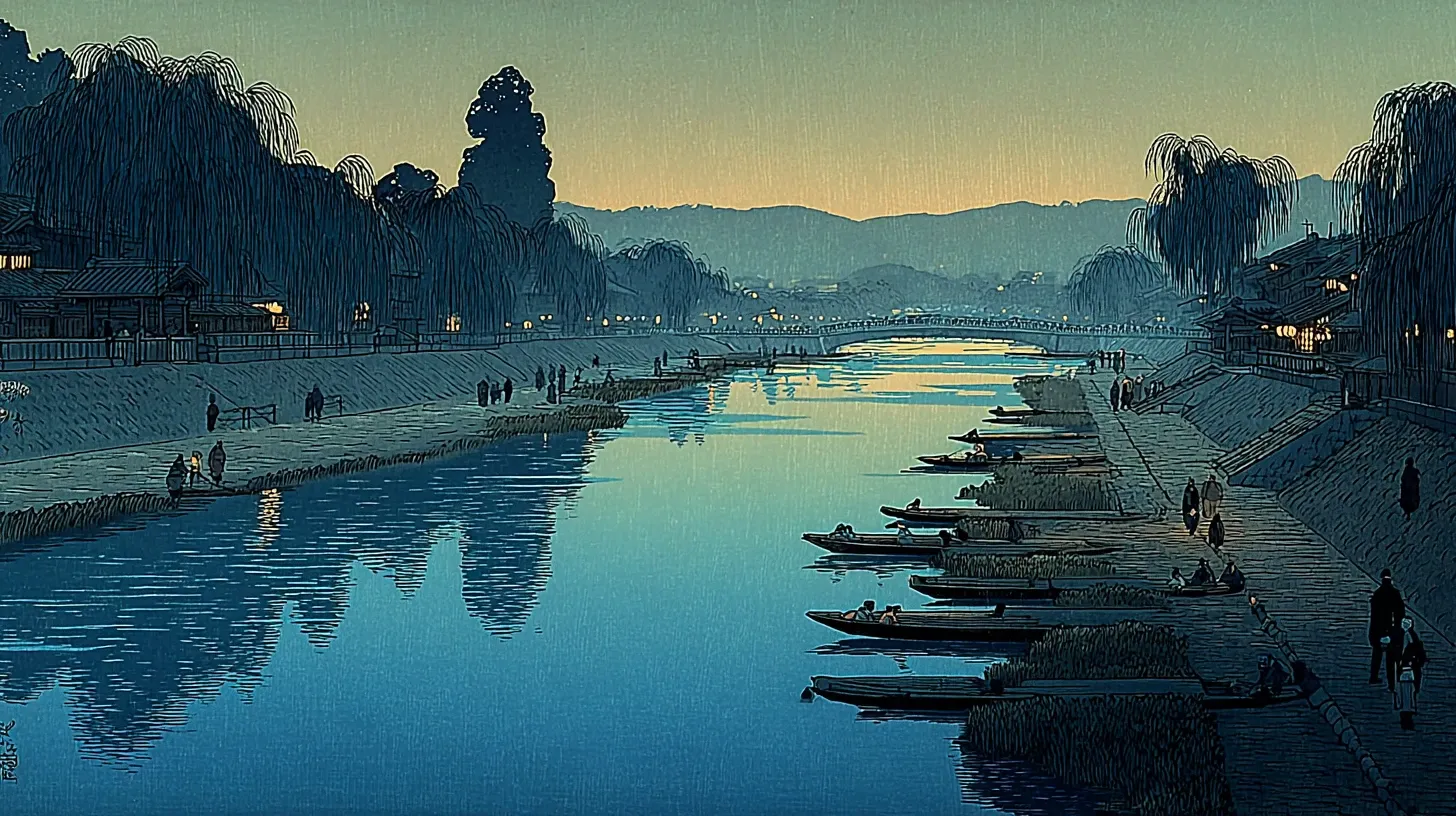
The Kamo River. The wide riverbank that runs north–south through the eastern half of the city is where Kyoto residents go after work. In summer, restaurants along Pontochō and Kiyamachi build wooden platforms (kawadoko) out over the river. On any warm evening, the grass terraces beside the water are full of people sitting in pairs at evenly spaced intervals — couples, friends, students reading. The river is free, public, and completely unmarketed to tourists. It is also where residents return to feel that they live in Kyoto, not in a museum.
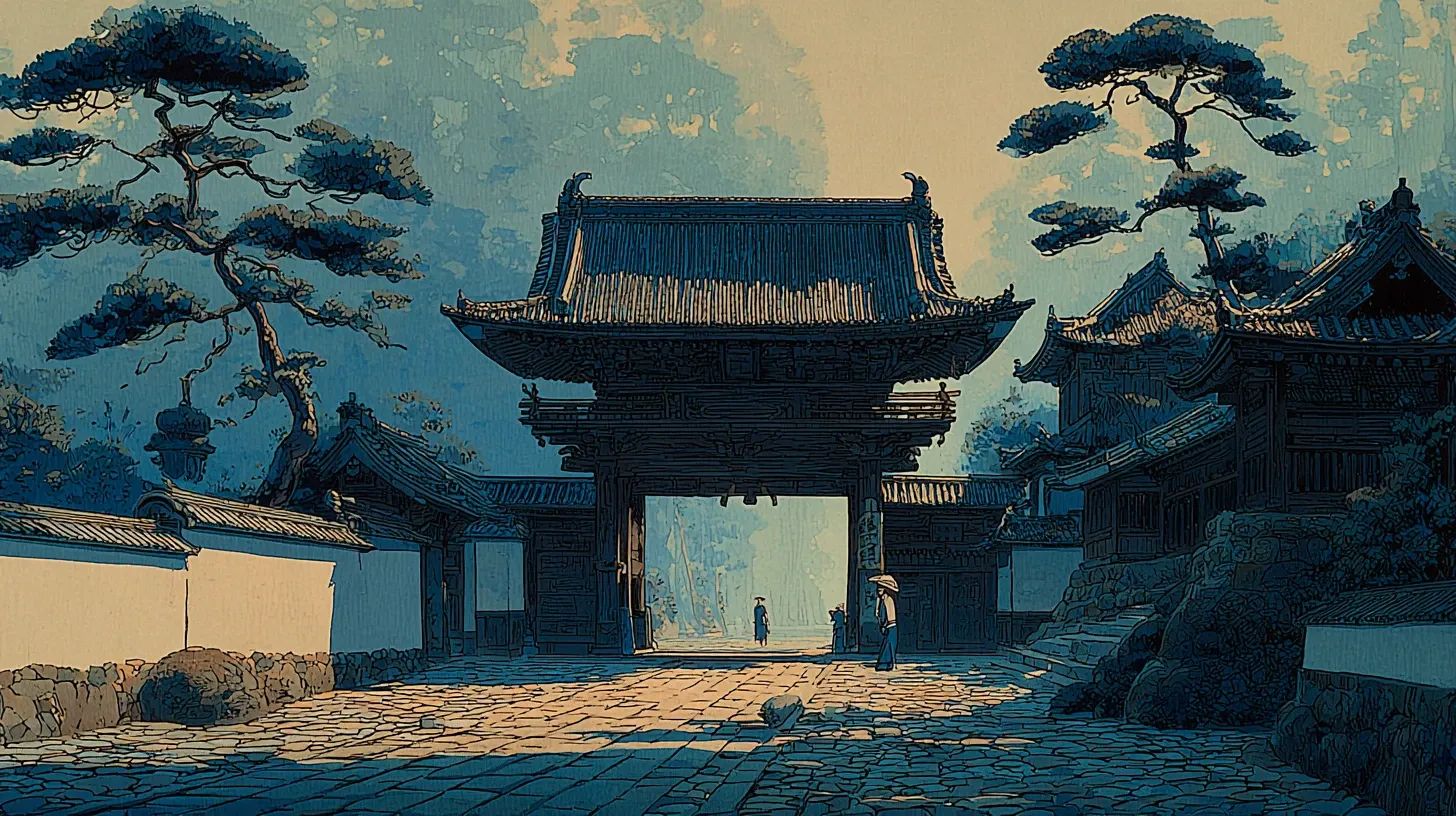
The morning sweep. A few minutes before the visitors arrive, someone is sweeping the temple gate. At Kennin-ji, Tōfuku-ji, Daitoku-ji — any of the major Zen temples — the morning ritual of sweeping the stone path is performed before sunrise. Walk through one of these gates between 6:30 and 7:30 AM and the sound level around you drops by an entire octave. The path is impossibly clean. Someone is there, gently working. There is human presence and complete silence at the same time. Many Kyoto residents will tell you that this contradiction — people there, but quiet — is the closest they can come to defining the spiritual character of the city.
The local sentō. Kyoto’s neighborhood public bathhouses are still active, and several are architectural landmarks in their own right. Funaoka Onsen in Murasakino, designated a Tangible Cultural Property, has hand-carved wooden ranma panels, decorative tilework, and an outdoor bath behind a beautifully preserved wooden facade. Entry is around 500 yen. The experience — taking off your clothes and sitting in hot water alongside Kyoto residents who have been coming to the same bathhouse for decades — is an entirely different cultural register from a temple visit.
Uji and Ohara. Twenty minutes south of Kyoto Station by train, the town of Uji is famous for two things: it is the historical home of Japanese matcha, and it contains Byōdō-in, the eleventh-century Phoenix Hall whose image appears on the Japanese ten-yen coin. An hour to the north, in the mountains, sits Ohara — a quiet farming village with several small temples (Sanzen-in, Jakkō-in) whose moss gardens and thatched-roof structures feel centuries removed from central Kyoto. Both make excellent half-day escapes from the famous-temple circuit.
If you only have three days in Kyoto, you may not have time for these. But if you have four or more, a single day spent on the Kamo River, in a sentō, or in Uji and Ohara will change how you remember the rest of the trip.
When to Come — Seasons and Crowd Avoidance
Kyoto has four very distinct seasons, each with its own visual character and its own crowd profile.
Spring — Cherry Blossoms (late March to mid-April). The most famous season and the most crowded. Peak bloom in central Kyoto typically falls in the first week of April, but exact timing shifts year to year. The famous viewing spots — Maruyama Park, the Philosopher’s Path, the Kamo River banks, and the gardens of Heian Shrine and Daigo-ji — are densely packed during the day. Come at sunrise, around 6:00 AM, if you want the photographs without the crowds. A useful note: the second week of April, when the petals are falling and being replaced by the bright green of spring, is often more visually striking than peak bloom and significantly less crowded.
Summer — The Gion Festival and Riverside Dining (June to August). Hot, humid, and crowded only at specific event peaks. The Gion Festival in July is one of Japan’s three great festivals — over a thousand years old, organized and funded entirely by the local merchant community. Its main events fall on July 17 and July 24. Outside of festival days, summer is often a quieter time to visit central Kyoto, with the kawadoko riverside dining platforms in operation and many shrines hosting quieter local festivals throughout the season.
Autumn — Maple Foliage (mid-November to early December). Often considered the best season to visit Kyoto. The maples in the eastern hills, in Arashiyama, and at temples like Tōfuku-ji, Eikan-dō, and Nanzen-ji turn extraordinary shades of red. Autumn is busy but not as crushing as cherry blossom season; still, book accommodation well in advance. Several major temples — including Kiyomizu-dera, Kōdai-ji, and Eikan-dō — hold special evening illuminations during peak foliage.
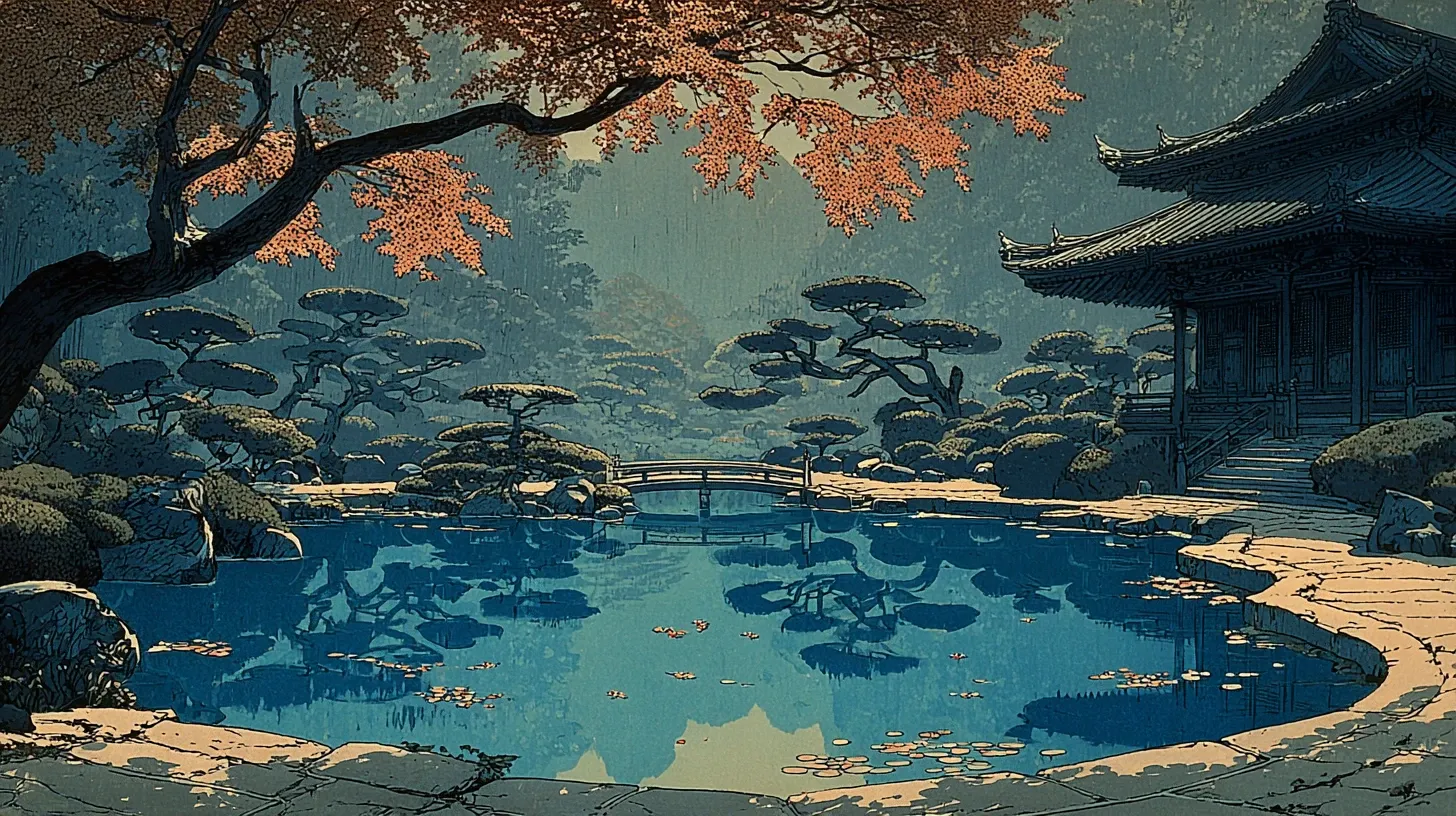
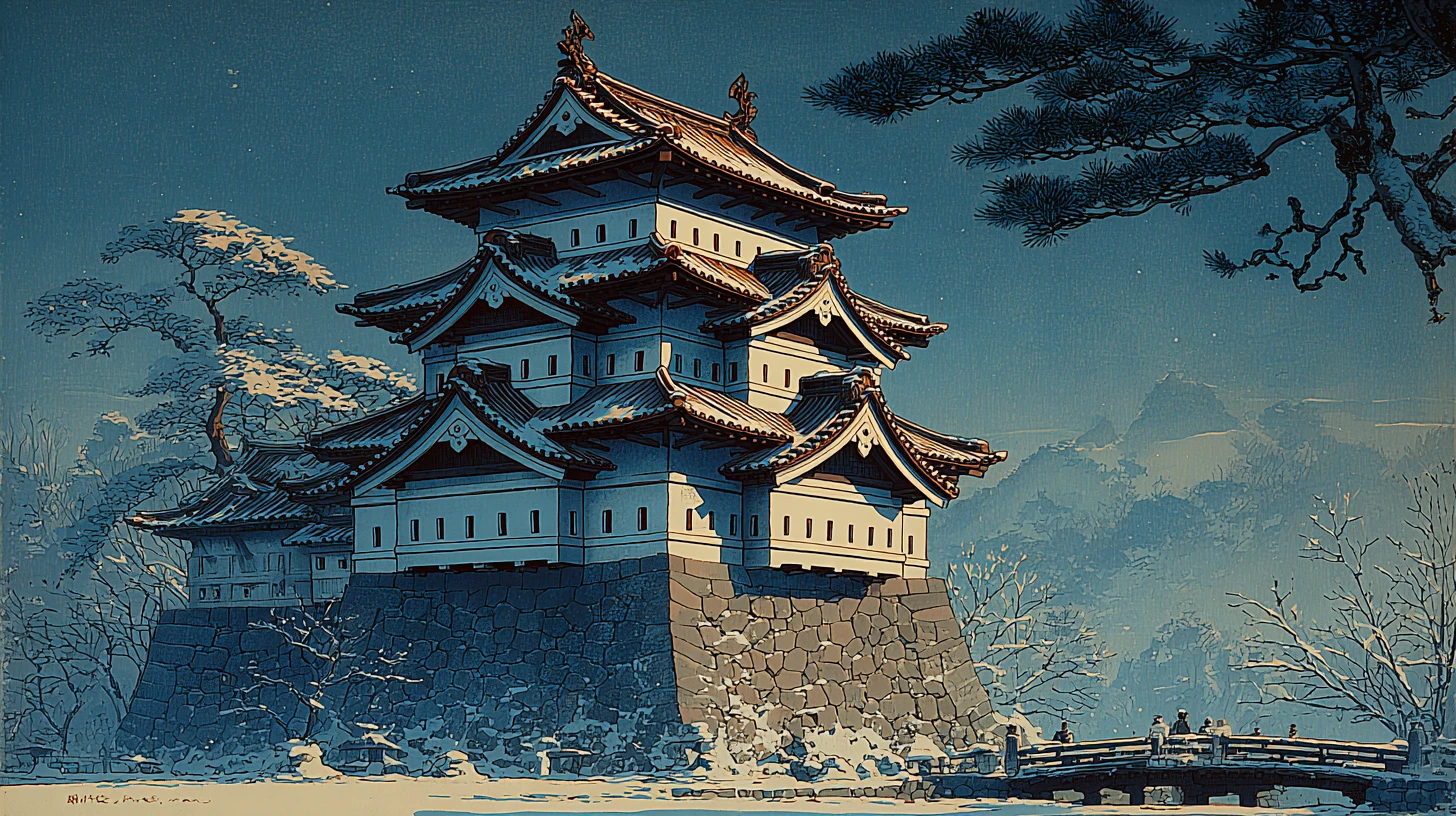
Winter — Snow on the Temples (December to February). Kyoto’s quietest tourist season. Snowfall is occasional rather than guaranteed, but when it comes, the sight of fresh snow on the Golden Pavilion or the rock garden at Ryōan-ji is one of the most memorable images in all of Japan. Mid-January through mid-February is the lowest-crowd window of the year.
The single best month, by general consensus among locals and long-time visitors, is mid-May after Golden Week — the late-spring window when temperatures are mild, the cherry crowds have left, the foliage is its brightest green, and accommodation prices have dropped.
Planning Your Visit
How many days. Three days is the minimum for first-time visitors. Four days is much more comfortable and lets you add Uji, Ohara, or a half-day of unstructured time on the Kamo River. Five days or more is ideal if you want to include day trips to nearby Nara (the ancient capital with the giant Buddha and the deer park) or Hikone (the well-preserved Edo-period castle on Lake Biwa).
Where to stay. The most convenient area is Gion or central Higashiyama, which puts you in walking distance of Kiyomizu-dera, Yasaka Shrine, and the Kamo River, with quick bus or subway access to everywhere else. Around Kyoto Station is more practical for day trips by train but has less character. Northern Kyoto (Imadegawa or Demachiyanagi) is quieter and closer to Ginkaku-ji and the Philosopher’s Path. Booking 3–6 months ahead is strongly recommended for cherry blossom and autumn foliage seasons.
Getting around. Kyoto’s bus system is more useful than its subway for tourists, since most major temples are not near subway stations. A single bus ride is ¥230. The one-day bus pass (¥700) pays for itself with three rides. Use a transit IC card (ICOCA or Suica) to tap on and off without buying paper tickets each time. The Randen (Keifuku) tram line is the most atmospheric way to reach Arashiyama from central Kyoto, though slower than the JR Sagano Line.
Eating. Kyoto’s food culture grew out of being far from the sea — preservation techniques, fermented foods, dried ingredients, and refined vegetable cooking all developed because fresh fish was historically scarce. The result is a cuisine of extreme subtlety: tofu (the most famous example), pickled vegetables (tsukemono), and the formal multi-course meal called kaiseki. Nishiki Market (“Kyoto’s kitchen”) in the city center is the easiest place to taste Kyoto’s specialty ingredients without committing to a kaiseki dinner.
Travel essentials. Mobile data is far cheaper through a Japan eSIM purchased before arrival than through international roaming. Travel insurance with overseas medical coverage is strongly recommended. ATMs at 7-Eleven and Japan Post offices accept foreign cards reliably; many smaller temples and restaurants are still cash-only.
Continue Reading
If Kyoto is one stop on a longer Japan trip, you might also be planning:
- Mount Fuji: The Complete Guide — the volcano on the Shinkansen route between Kyoto and Tokyo.
- Japanese Onsen: The Complete Guide — the bathing culture you should experience on the way.
- Your First Ryokan Stay — Kyoto has some of the oldest ryokan in the country.
- Japanese Food History — Kyoto is the home of kaiseki cuisine.
FAQ
How many days do I need in Kyoto?
Three days is the minimum to cover the famous sites — Fushimi Inari, Kiyomizu-dera, Arashiyama, Gion, and at least one of the northern temples — at a reasonable pace. Four days is much more comfortable and lets you add a quieter destination like Uji or Ohara, or unstructured time on the Kamo River. Five or more days lets you add day trips to Nara or Hikone. Most visitors who only spend two days leave feeling rushed.
Is Kyoto overrated?
The famous sites are crowded, especially from late morning onward, and visitors who arrive expecting an empty traditional city based on their Instagram feed sometimes leave disappointed. But the city itself is not overrated — it is overcrowded in specific places at specific hours. Visit the famous temples in early morning (before 9:00 AM), spend the afternoon in less-visited neighborhoods, and the experience changes completely. The bamboo grove at Arashiyama at 7:00 AM and the bamboo grove at noon are essentially two different places.
What is the best time of year to visit Kyoto?
The two famous seasons are cherry blossoms (late March to mid-April) and autumn foliage (mid-November to early December). Both are stunning. Both are crowded. By local consensus, the best single month is mid-May after Golden Week — mild temperatures, departed crowds, vivid green foliage, and lower accommodation prices. Mid-January through mid-February is the quietest window of the year, with occasional snow on the temples.
Where should I stay in Kyoto?
Gion or central Higashiyama is the most convenient area for first-time visitors — walking distance to Kiyomizu-dera and Yasaka Shrine, with quick bus access to everywhere else. Around Kyoto Station is best for day trips by train but has less character. Northern Kyoto (Imadegawa or Demachiyanagi) is quieter and closer to Ginkaku-ji. Book 3–6 months ahead for cherry blossom and autumn foliage seasons.
How do I avoid the crowds at Kyoto’s famous temples?
Three rules: (1) Arrive early — most temples open between 6:00 and 9:00 AM, and the difference between 7:00 and 10:00 is enormous. (2) Visit the famous temples in the morning, the lesser-known temples in the afternoon. (3) Consider quieter alternatives — Adashino Nenbutsu-ji instead of Arashiyama bamboo grove, Honen-in instead of Ginkaku-ji, Tōfuku-ji instead of central Higashiyama temples. The city is full of beautiful, less-visited places that get overlooked because they are not on the standard tour bus routes.
Can I see geisha (geiko) in Gion?
You may catch glimpses of geiko (the Kyoto term for senior geisha) and maiko (apprentices) hurrying between appointments in Gion in the early evening, particularly along Hanamikōji and Gion Shirakawa. Photographing them on the public street has been technically prohibited since 2019, after years of harassment from tourists. To see them perform without years of introduction-based access to a teahouse, attend the public Miyako Odori (April) or Kamogawa Odori (October–November) — tickets are available online to anyone.
What food should I try in Kyoto?
Kyoto’s signature foods grew out of the city’s distance from the sea. Tofu (especially yudōfu, simmered tofu in kelp broth) is the most famous example. Tsukemono (pickled vegetables) and kaiseki (the formal multi-course meal) are both born from the same conditions. For a less expensive introduction, walk through Nishiki Market in the city center, where you can taste pickles, sweets, and seasonal specialties from individual stalls. For something genuinely Kyoto-specific that few foreign guides mention: try a Kyoto coffee house. The city has the highest per-capita coffee consumption in Japan, and traditional kissaten like Inoda Coffee have been serving the same blend in the same wood-paneled rooms since the early twentieth century.
Sources
- Kyoto City Tourism Association — Official Kyoto tourism site
- Imperial City: Kyoto’s Millennium as Japan’s Capital — Nippon.com
- Historic Monuments of Ancient Kyoto — UNESCO World Heritage Centre
- Kiyomizu-dera Official Site — Kiyomizu-dera Temple
- Fushimi Inari Taisha Official Site — Fushimi Inari Taisha
- Tenryū-ji Official Site — Tenryū-ji Temple
- Kinkaku-ji (Shokoku-ji) — Shokoku-ji
- Ryōan-ji — Ryōan-ji Temple
- Nishiki Market Association — Kyoto Nishiki Market