Fushimi Inari Shrine: It's Not 1,000 Gates — It's 10,000, and They Are Quietly Rebuilt Every 5 Years
- Sleepy Tales of Japan
- 11 min read
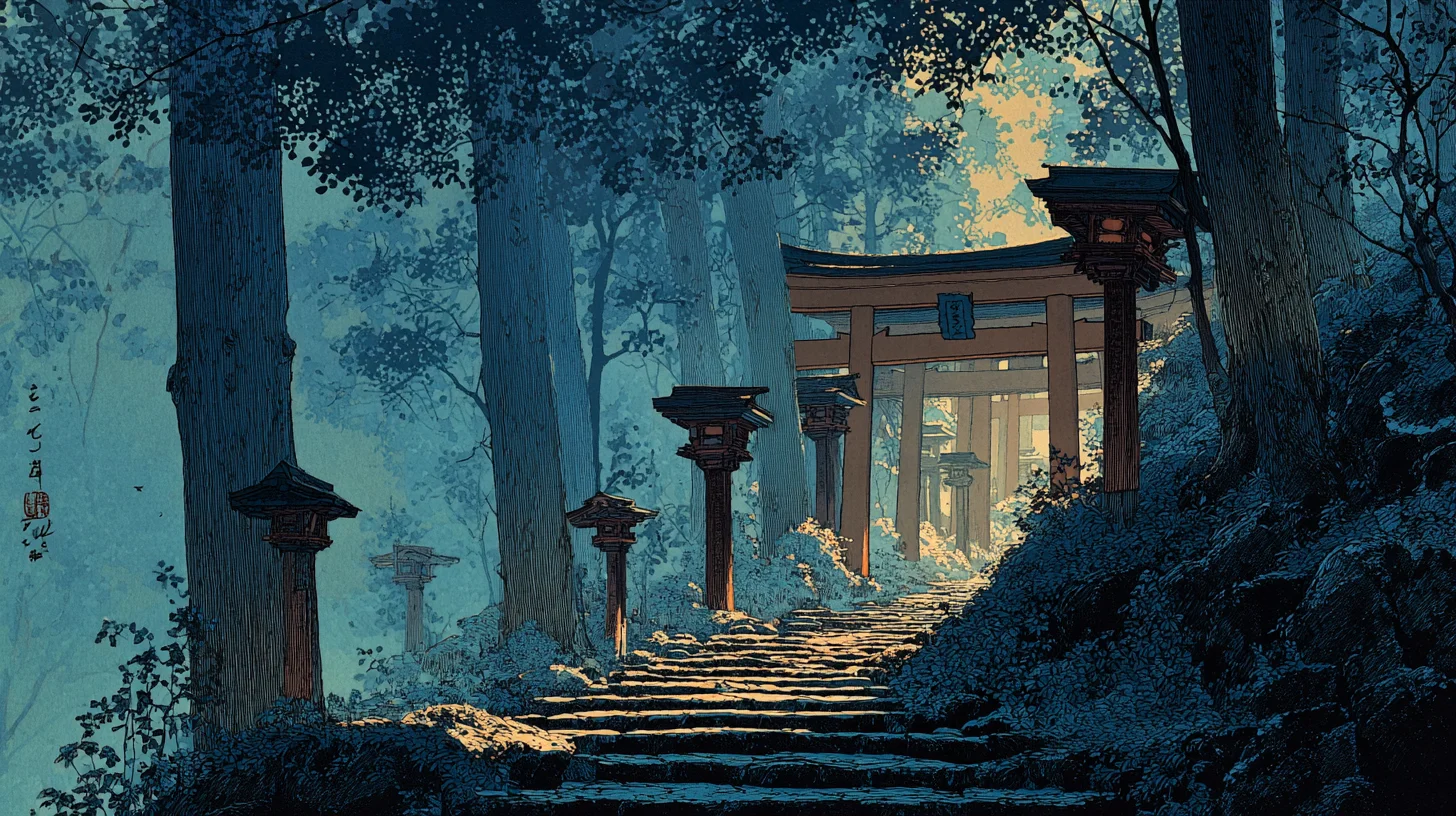
The most photographed tunnel in Japan is called senbon torii — the “Thousand Gates.” The name is wrong by an order of magnitude. There are roughly ten thousand. Painted a deep reddish-orange and packed tight enough to block out sunlight, they climb a mountain just two stops south of Kyoto Station — and each one rots, fades, and is quietly replaced every five to ten years. The tunnel you walk through today is not the same one that existed last year. The mountain it climbs has been considered sacred for more than 1,300 years.
Table of Contents
Open Table of Contents
The Legend That Started It All
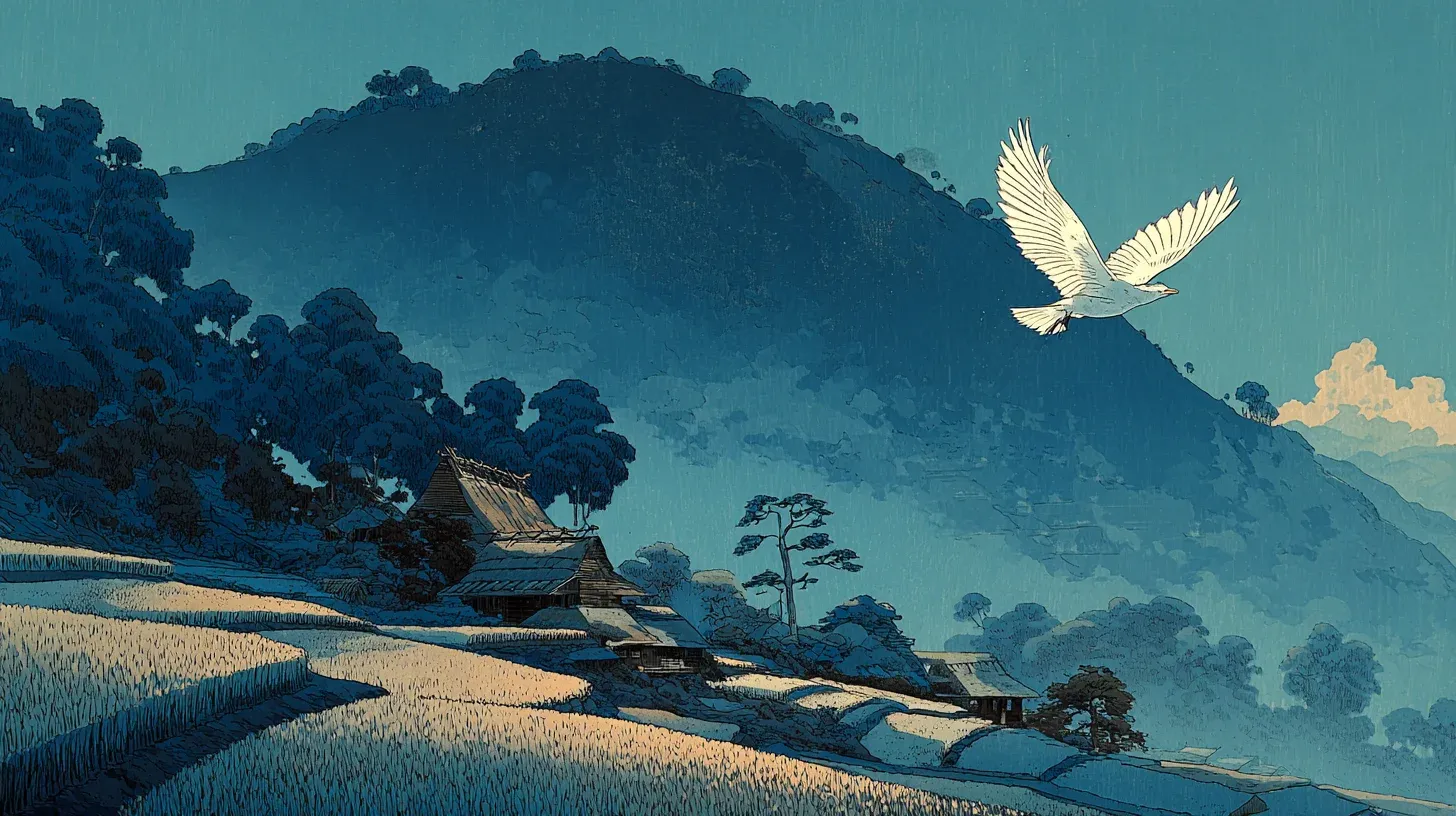
In the year 711, a wealthy landowner named Hata no Irogu did something careless. According to an old chronicle called the Yamashiro no Kuni Fudoki, he was so rich that he used a rice cake as a target for archery practice. When his arrow struck, the cake transformed into a white bird and flew to the peak of a mountain south of Kyoto. Where the bird landed, rice began to grow.
Irogu, shaken by the miracle, climbed the mountain and built a small shrine on the spot. He named it Inari — from ine nari, meaning “rice grows.” That shrine is the origin of Fushimi Inari Taisha, and the mountain where the bird landed is still considered sacred ground thirteen centuries later.
The Hata clan, Irogu’s family, were immigrants. They had arrived in Japan from the Korean Peninsula around the fifth century, bringing advanced techniques in irrigation, silk production, and brewing. The shrine they founded would eventually become the headquarters of more than 30,000 Inari shrines scattered across Japan — by some counts as many as 40,000 — making it the largest network of shrines dedicated to a single deity in the country. You can find Inari shrines on rooftops, in shopping arcades, and tucked into the corners of corporate headquarters. But all of them trace their origin back to one man, one arrow, and one rice cake that became a bird.
From Rice God to Business God
The deity at Fushimi Inari began as a god of the harvest. For centuries, farmers prayed here for good rice crops, and the shrine’s rituals revolved around planting, growing, and giving thanks after the autumn harvest.
Then Japan’s economy changed. During the Edo period (1603–1868), the country shifted from a rice-based economy to one driven by cash and commerce. As cities grew and a merchant class rose to power, people started praying to Inari not for good harvests but for good business. The god of rice quietly became the god of prosperity.
No edict declared the change. The Tokugawa government still measured taxes in rice (koku), but the daily lives of urban merchants ran on coins. Inari — the god of rice — was already the god of accumulation. Expanding that domain to silver, gold, and ledgers required no new theology, only new prayers. By the height of the Edo period, there were so many small Inari shrines in the city of Edo — modern-day Tokyo — that a popular saying went: “Everywhere you look, it’s Iseya shops, Inari shrines, and dog droppings.”
Today, Inari’s portfolio has expanded even further. People pray for success in exams, safe childbirth, good health, and career advancement. The shrine’s appeal is universal in the most literal sense — whatever you need, Inari is said to listen. The deity that once watched over rice paddies now watches over stock portfolios.
Foxes Are Not What You Think
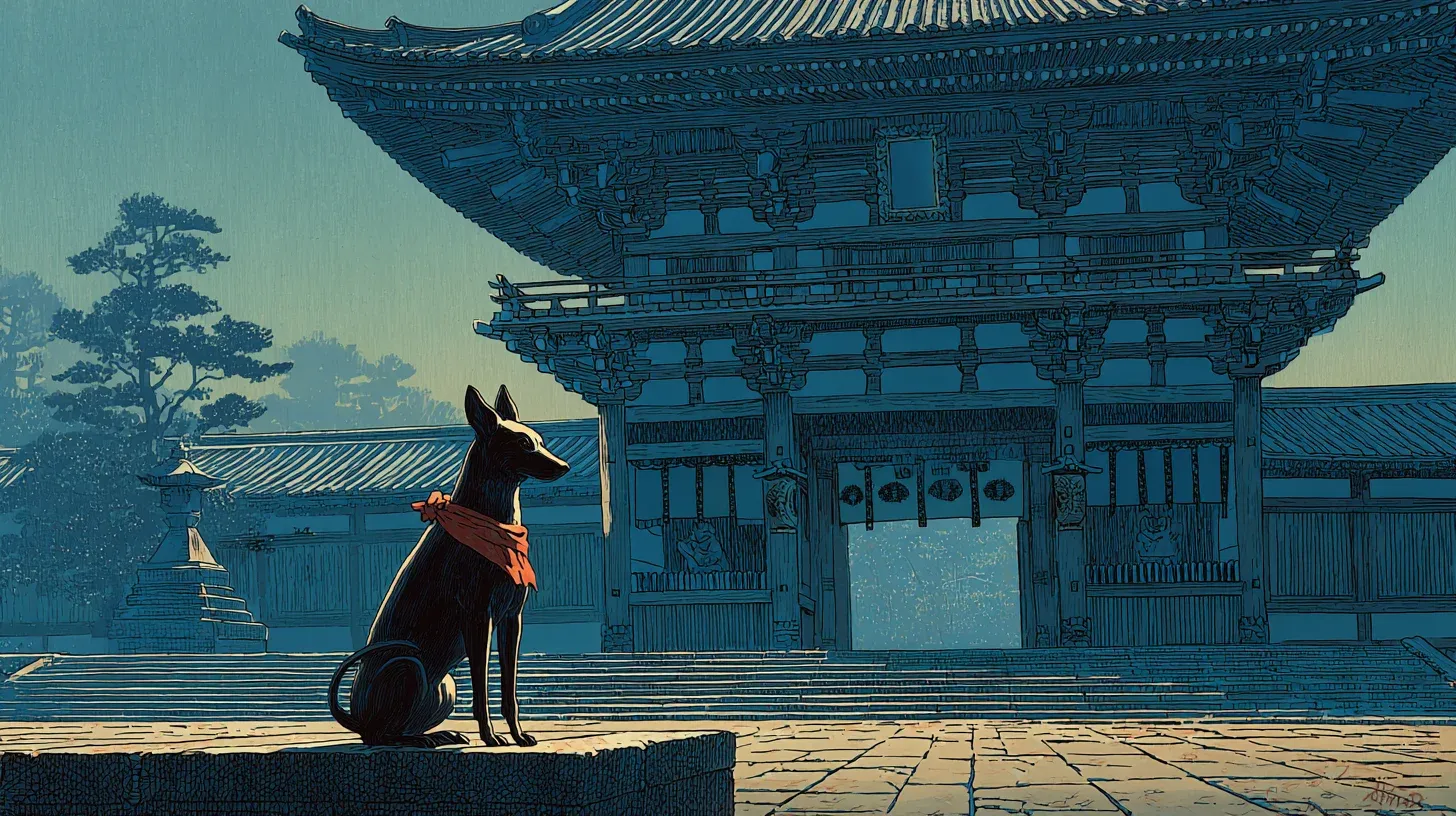
If you’ve seen photos of Fushimi Inari, you’ve noticed the foxes. Stone fox statues flank every path, guard every gate, and sit at attention before every altar. Many visitors assume the fox is the god. It is not.
This is probably the most common misunderstanding about Inari shrines, and it matters because the truth is more interesting. The fox — kitsune in Japanese — is the deity’s messenger. Think of it as a divine postal service: the fox carries prayers from humans to the god and delivers the god’s responses back. The fox is sacred, but it is an employee, not the boss.
Look closely at the fox statues and you’ll notice they hold objects in their mouths or paws. A key represents access to the rice granary — wealth. A jewel represents spiritual power. A sheaf of rice represents the harvest. A scroll represents wisdom. Each fox carries something different, and each one is doing a job.
Here’s a detail that surprises many Western visitors: in European folklore, foxes are tricksters — cunning, selfish, not to be trusted. Aesop’s fox flatters a crow to steal its cheese. In Japanese tradition, the opposite is true. Inari foxes are loyal, dutiful, and honored. They are closer to guardian angels than con artists. If you grew up with a culture that cast the fox as a villain, walking through a shrine where thousands of fox statues are treated with reverence is a small but genuine culture shock.
There is one more thing worth knowing. The connection between foxes and rice farming has a practical origin. Foxes eat the mice and rats that destroy rice crops. For farmers, a fox near the fields was good news — a sign that the harvest was protected. Over centuries, that practical gratitude became spiritual belief. The pest controller became the divine messenger.
Ten Thousand Gates, Always Changing
The torii — the wooden gates painted in that unmistakable reddish-orange — are the reason most people visit Fushimi Inari. The most photographed section is a pair of parallel tunnels leading from the main shrine to a prayer hall deeper in the forest, where roughly 800 gates stand so close together they form a nearly solid canopy.
But the gates continue far beyond that famous stretch. They climb the entire mountain — up stone steps, through cedar groves, along narrow ridgelines — all the way to the summit at 233 meters. The total count across the mountain is roughly 10,000, though no one knows the exact number because it changes constantly.
Each gate was donated by someone. Flip a gate around and you’ll find the donor’s name and date painted on the back in black ink. Most donors are Japanese companies, because the cost is significant: a small gate costs several hundred thousand yen (roughly $1,300 to $2,600), and a large one can cost over a million yen ($6,500 or more). Each gate is an act of gratitude — a business that prospered, a prayer that was answered — made physical in wood and paint.
Here is the detail that changes how you see the tunnel: wooden gates do not last. Rain, humidity, and insects take their toll. A small gate lasts about five years. A large one might survive ten. According to records from Japan’s National Diet Library, roughly three gates are replaced or repaired every single day. The tunnel is not a monument frozen in time. It is a living thing — constantly decaying and constantly being renewed, like a coral reef made of prayer.
The color itself carries meaning. The reddish-orange paint is called shu-iro, and traditionally, the pigment came from cinnabar — a mineral containing mercury. The builders chose it for its sacred associations. The mercury sulfide it contained killed the fungi and beetles that would otherwise have eaten the wood within a decade.
The Warlord Who Prayed for His Mother
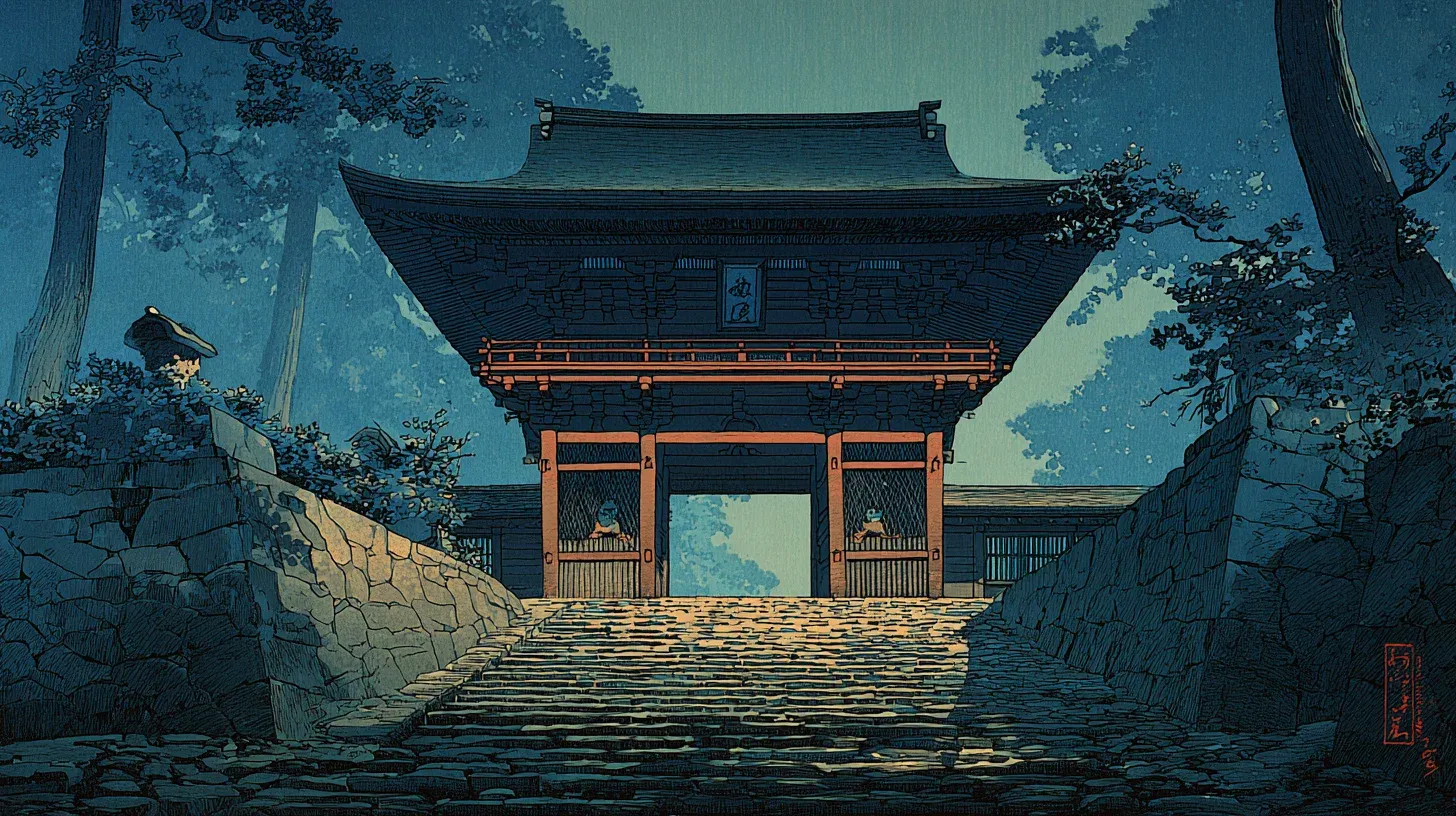
In 1589, the most powerful man in Japan knelt before this shrine and asked for help. Toyotomi Hideyoshi — the warlord who had risen from peasant origins to unite the entire country — was not praying for victory in battle or dominion over rivals. He was praying for his mother.
Hideyoshi’s mother, known as Ōmandokoro, had fallen seriously ill. The man who commanded armies and reshaped nations could do nothing. So he turned to Inari and made a deal: if his mother recovered, he would build a gate worthy of the god’s power.
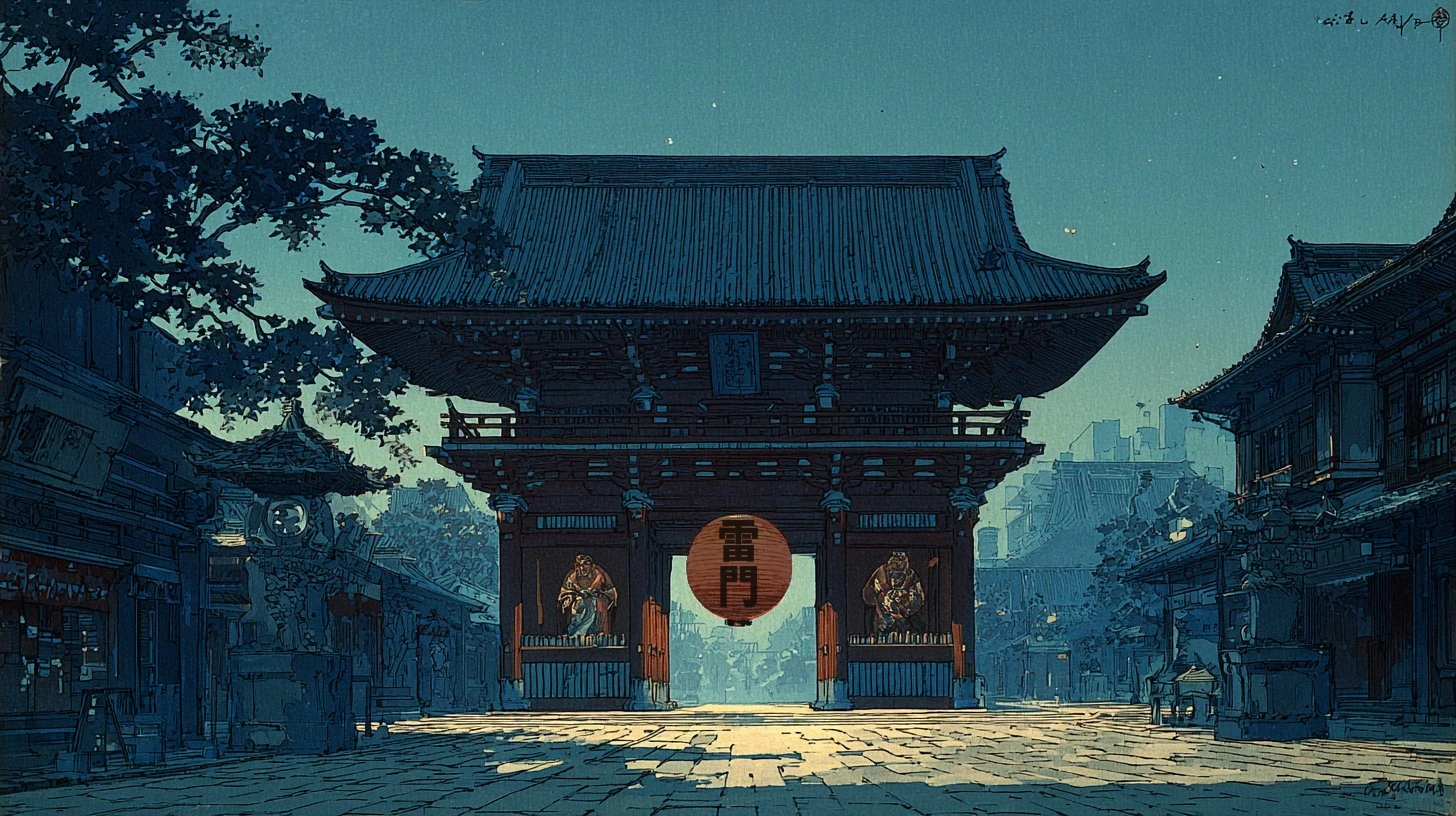
She recovered. And Hideyoshi kept his promise. The towering two-story gate he donated — called the rōmon — still stands at the shrine’s entrance today. It is one of the largest and oldest gates of its kind in Kyoto, designated as an Important Cultural Property of Japan. Its vermilion pillars and cypress-bark roof reflect the grand, confident style of the Momoyama period, when Japan’s rulers expressed their power through architecture.
Here was a man who had conquered everything — and yet the one thing he could not control sent him to a shrine to beg, just like anyone else.
Power has limits. The rōmon is what those limits look like in cypress and vermilion.
A Mountain of Personal Gods
Most visitors turn around after the famous gate tunnels. If you keep climbing, you enter a different world.
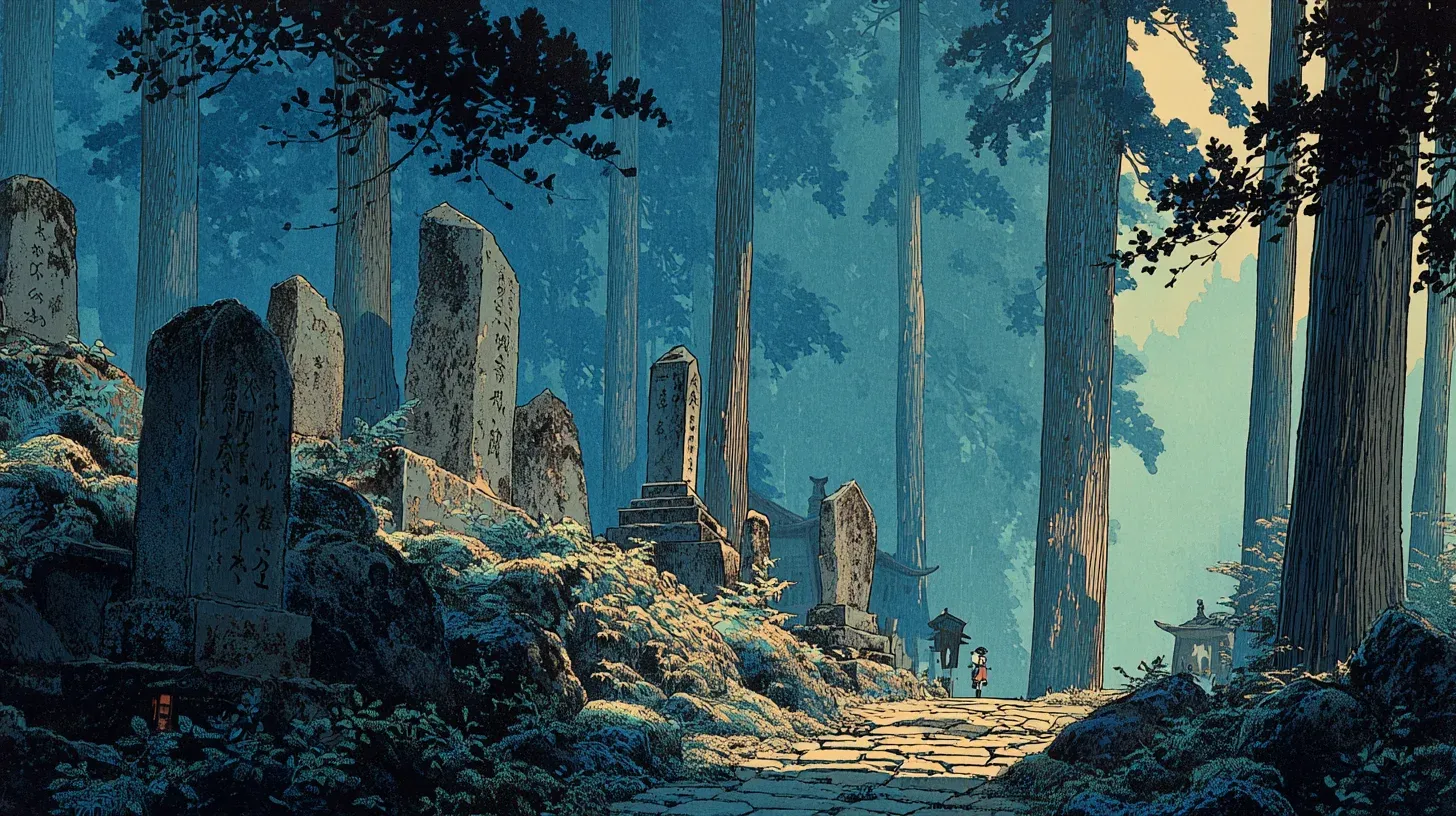
The upper slopes of Mount Inari are covered with roughly 10,000 small stone monuments called otsuka. Each one was placed there by an individual, a family, or a small group of believers who gave their own personal name to the Inari deity and carved it into stone. These are not official shrines. They are private ones — homemade gods, if you like.
The practice took off in the Meiji era (1868–1912), when the government designated seven spots on the mountain as sacred sites and erected marker stones called “parent mounds.” Inspired by these, ordinary believers began carving their own. Over the decades, the stones multiplied until the mountain’s upper reaches became a dense forest of personal monuments, each one representing someone’s individual relationship with the divine.
Walking through the otsuka area is a strange and moving experience. The stones are weathered and mossy. Some have fresh offerings — a cup of sake, a small dish of rice. Others look untouched for decades. The names carved on them belong to people long dead, whose prayers are still standing on a mountainside in Kyoto, visited by strangers from the other side of the world.
If the torii gates are collective faith — thousands of businesses and individuals all contributing to the same tunnel — then the otsuka stones are faith at its most personal. The official gods weren’t enough. People needed their own.
The next time you see a photograph of those reddish-orange gates, you’ll know something the photographer probably didn’t. The tunnel is not ancient. It is alive — rotting, rebuilding, always changing. Every gate has a name on its back and a story behind it. The foxes standing guard are not gods but messengers, carrying thirteen centuries of human wishes up and down a mountain that never closes its doors.
Fushimi Inari is free to enter, open twenty-four hours a day, and five minutes from Kyoto Station. You could spend fifteen minutes walking through the famous tunnel, or three hours climbing to the summit. Either way, you’ll be walking through ten thousand prayers — some brand new, some quietly crumbling, all of them someone’s way of saying thank you or please.
Continue Reading
- Kyoto Travel Guide — the complete hub article on Kyoto and its districts.
- Arashiyama: The Truth About the Bamboo Grove — the other Kyoto place everyone wants to see.
- Kiyomizu-dera: The 13-Meter Wooden Stage — 1,200 years of history on a cliff.
- Why Kyoto Was Japan’s Capital for 1,074 Years — the historical context behind every Kyoto shrine.
FAQ
How many torii gates are at Fushimi Inari?
There are roughly 10,000 torii gates across the entire mountain, though the number changes constantly as old gates decay and new ones are donated. The most famous section — the “Thousand Gates” tunnel near the main shrine — contains about 800 gates packed tightly together.
Is the fox the god at Inari shrines?
No. The fox (kitsune) is the messenger of the deity, not the deity itself. The fox carries prayers between humans and the god Inari. This is one of the most common misunderstandings about Inari shrines. The fox statues you see are divine servants, not the object of worship.
How long does it take to walk to the top of Mount Inari?
The full hike from the main shrine to the summit (233 meters) and back takes roughly 2 to 3 hours at a relaxed pace. You can turn around at any point. The famous gate tunnels are about 15 to 20 minutes from the main hall. The halfway viewpoint at Yotsutsuji — with panoramic views over Kyoto — is about 45 minutes up.
Why are the torii gates orange-red?
The color, called shu-iro in Japanese, symbolizes protection against evil and the vitality of life. Traditionally, the pigment came from cinnabar, a mineral that also acts as a natural wood preservative. The color serves both a spiritual and practical purpose.
Is Fushimi Inari free to visit?
Yes. There is no admission fee, and the shrine grounds are open 24 hours a day, 365 days a year. There is no closing time and no gate. The shrine office operates from roughly 7:00 to 18:00 for charms and blessings, but the mountain trails and torii tunnels are always accessible.
Sources
- Fushimi Inari Taisha — Official Website — Fushimi Inari Taisha
- Fushimi Inari Taisha — History — Fushimi Inari Taisha
- Inari Ōkami — World History Encyclopedia — World History Encyclopedia
- Fushimi Inari Shrine — Japan Guide — Japan Guide
- Vermilion Tunnels of Thanks — Highlighting Japan — Government of Japan
- Foxes, Inari Shrines, and Abe no Seimei — Nippon.com — Nippon.com
- 千本鳥居の由来と数 — レファレンス協同データベース — National Diet Library