Kiyomizu-dera, Kyoto: The 13-Meter Wooden Stage People Actually Used to Jump From (And When to Visit Without the Crowds)
- Sleepy Tales of Japan
- 15 min read
The walk up to Kiyomizu-dera — Kyoto’s most-visited Buddhist temple, founded in the year 778 — is honest about what it is. The narrow stone-paved streets that lead to the temple — Sannenzaka and Ninenzaka — are lined with souvenir shops, matcha ice cream stands, and rental kimono studios. By mid-morning, the path is shoulder-to-shoulder with visitors, most of them holding cameras, some of them dressed in rented kimono trying to take photographs in a crowd of other people doing exactly the same thing. Kyoto residents will tell you, plainly, that they don’t really go to Kiyomizu-dera. It is, in their words, a tourist place.
And yet.
If you arrive before 8:00 AM, before the crowds and the school buses and the rented kimono, the temple gives you something almost no other place in Kyoto can. The same wooden stage that bears 13 meters of empty air beneath it has stood there in some form for over 1,200 years — and it was built without a single nail. The same three waterfalls have been pouring out of the same cliff face since the eighth century. A Japanese idiom that millions of people still use today — kiyomizu no butai kara tobiori, “to jump from the stage at Kiyomizu” — means to take a brave leap, and it comes from this exact wooden platform, and from Edo-period records of 234 people who actually jumped.
Kiyomizu-dera, the locals quietly admit, is a tourist place that earns its crowds. With one important condition. You have to come at the right time of day.
Table of Contents
Open Table of Contents
- The Pure Water and the Dream
- The Wooden Stage Above the Hillside
- The 234 Who Jumped
- The Three Waterfalls and the Rule You Probably Don’t Know
- The Climb: Sannenzaka and Ninenzaka
- Night Illuminations: When the Temple Stays Open After Dark
- Practical Tips for Visiting Kiyomizu-dera
- How to Get to Kiyomizu-dera
- The Tourist Place That Earns Its Crowds
- Continue Reading
- FAQ
The Pure Water and the Dream
Kiyomizu-dera takes its name from the Japanese word for pure water. The temple was founded in 778, when a wandering monk named Enshin (later renamed Enchin) had a dream that led him north from his home temple in Nara to the slopes of Mount Otowa, where a single waterfall fell in three streams from a cliff face. Enshin built a small hut beside the falls and began to carve an image of the Kannon, the bodhisattva of compassion, from a sacred piece of timber given to him by a hermit he met there.
Two years later, in 780, a samurai named Sakanoue no Tamuramaro — later one of the most important military commanders in early Japanese history — entered Mount Otowa to hunt deer. He was looking for deer blood, which was believed at the time to have medicinal properties that might help his pregnant wife. Instead of a deer, he encountered Enshin. The monk persuaded the warrior that killing in a sacred place was wrong. Tamuramaro listened. He became a patron of the temple, and in 798 he expanded the small hut into a proper hall.
In 810, Emperor Saga formally recognized the temple. The name Kiyomizu — pure water — came from the springs that fall from the cliff face directly behind the main hall, and continue to fall today.
A monk’s dream. A samurai’s hunt. A spring of clean water on a hillside above Kyoto. These are not metaphors. They are the recorded origins of the temple, set down in the temple’s own chronicles. Whether you believe the dream is up to you. The water is verifiable.
The Wooden Stage Above the Hillside
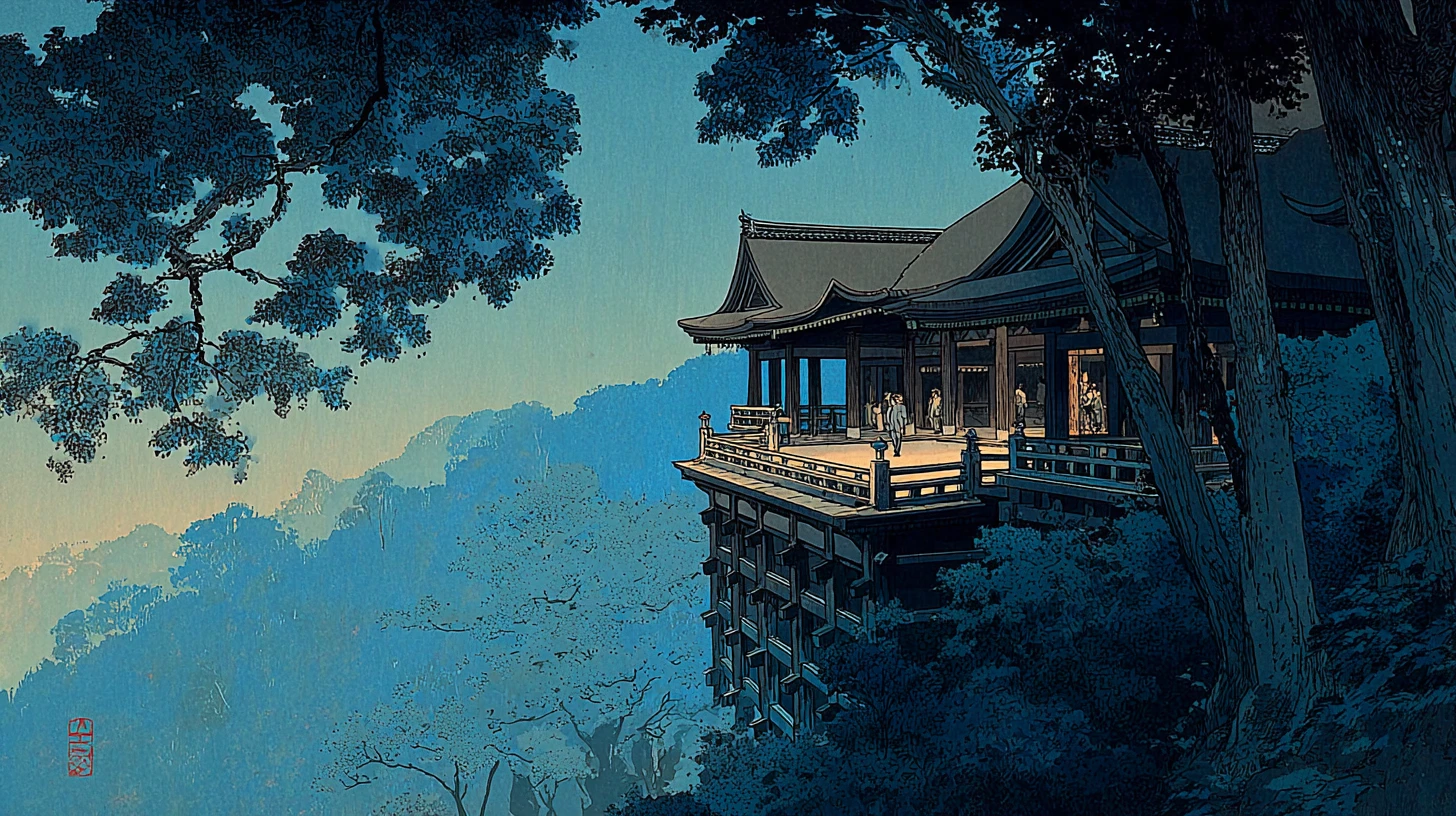
The thing most visitors come to see is the wooden veranda that extends from the main hall and projects out over the hillside. It is called the butai — the stage — and it is one of the most recognized pieces of architecture in Japan.
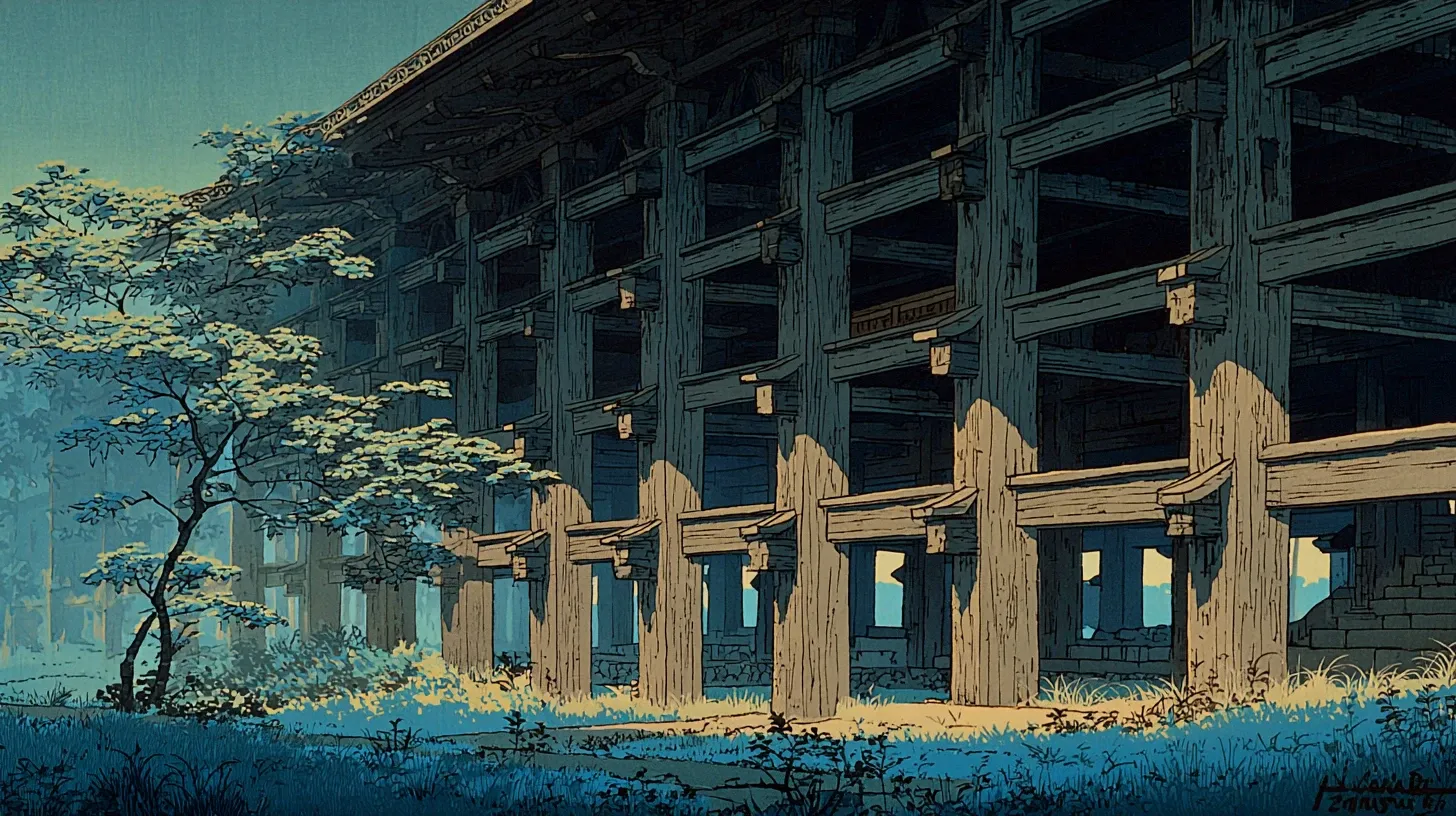
The stage stands roughly 13 meters above the slope below it. It is supported entirely by 139 wooden pillars, most of them made from Japanese zelkova (keyaki) trees that were over 400 years old when they were cut. The pillars are joined to the platform by interlocking wooden beams, with not a single iron nail used in the entire structure. The 410 cypress planks that form the stage floor are similarly fit together by traditional joinery.
This is not a romantic exaggeration. It is a structural fact, and it is the reason the stage has survived multiple major earthquakes in nearly 400 years.
The stage you see today was built in 1633, after a fire destroyed the previous main hall in 1629. The reconstruction was funded by Tokugawa Iemitsu, the third shōgun of the Tokugawa shōgunate — a striking gesture from a military government that had moved its political capital to Edo (modern Tokyo) decades earlier. The shōgun in Edo paid to rebuild a temple in Kyoto because Kiyomizu-dera, by the early 1600s, was already a national symbol.
The stage was not designed primarily as a viewpoint, even though that is how visitors use it today. It was a performance platform — a stage in the literal sense — used for sacred dances and ceremonies dedicated to the Kannon enshrined in the main hall. When you stand on it now and look out over the cherry trees in spring, or the burning maples in November, or simply the quiet sea of cedar in summer, you are standing on the same wood that performers stood on four centuries ago, watching nothing more than the slow theatre of the seasons.
The 234 Who Jumped
There is a Japanese idiom that comes from this exact stage. Kiyomizu no butai kara tobioriru — to jump from the stage of Kiyomizu — means to make a brave, irreversible decision. It is still used in modern Japanese, though as an old-fashioned expression rather than an everyday one. When someone says they “jumped from the stage of Kiyomizu,” they mean they finally bought the apartment, quit the stable job, told the person how they felt.
The phrase is not a metaphor that drifted into the language by accident. It comes from a specific Edo-period belief: if you survived a leap from the Kiyomizu stage, your wish — usually a wish for the recovery of a sick relative, or for a romantic prayer to be answered — would come true. People did jump.
The temple’s own records, kept between 1694 and 1864, document 234 jumps. The survival rate, perhaps surprisingly, was 85.4 percent — the steep slope below the stage was thickly forested in those centuries, and the trees broke many falls. More than seventy percent of those who jumped were teenagers, mostly between 10 and 20 years old. Many of them were praying for the recovery of an ailing parent.
In 1872, the new Meiji government banned the practice. The leap was outlawed. But the phrase remained.
It is one of the strangest legacies any building has ever produced — an architectural feature that became a phrase that became part of the everyday speech of an entire country, surviving long after the practice it described was made illegal. When a Japanese person today uses the expression, most are not thinking about the actual leap. The idiom has become almost detached from its origin, the way English speakers say Achilles’ heel without thinking about the Iliad. But the wooden stage is still there, and on a quiet morning, when you can hear the wind in the trees below, you can think about the 234 names in the temple’s records, and the family members each of them was leaping for.
The Three Waterfalls and the Rule You Probably Don’t Know
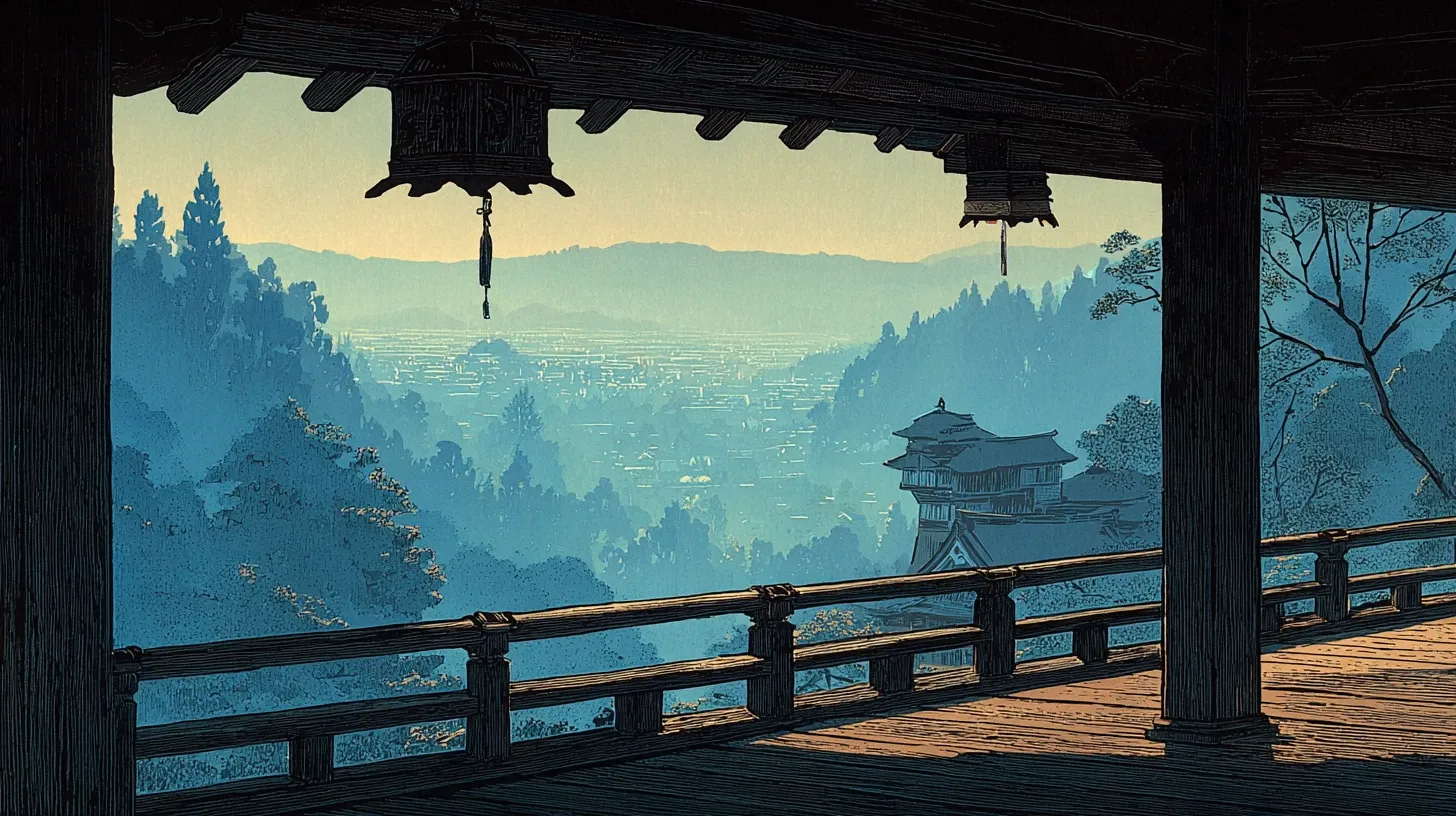
Walk down the steps from the main stage and follow the path around to the back of the temple, and you will reach the Otowa-no-taki — the Otowa Waterfall — the spring that gave the temple its name. The water falls from the cliff face in three separate streams, each one falling into a stone basin below.
Visitors line up to drink. Long-handled metal cups hang on a rack. You take one, hold it under one of the three streams, drink the water, and put the cup back into a sterilizer.
Most visitors do not know the rule. The three streams are said to grant three different blessings: one for success in love, one for success in studies, and one for good health and longevity. You are supposed to choose only one to drink from. The Kyoto tradition is clear about this: drinking from all three streams out of greed will cause none of the wishes to be granted. One stream, one wish, one prayer at a time.
You will see people drinking from all three. They have not been told the rule. The temple does not post a sign in English explaining it, and most foreign-language guidebooks do not mention it. If you want to drink from the Otowa Waterfall, choose the one stream that matters most to you, and leave the other two for someone else.
This is not a strict religious doctrine. It is a piece of folk practice that has been passed down in Kyoto for centuries — the kind of thing locals know without being told and assume that everyone else knows too. Now you know.
The Climb: Sannenzaka and Ninenzaka
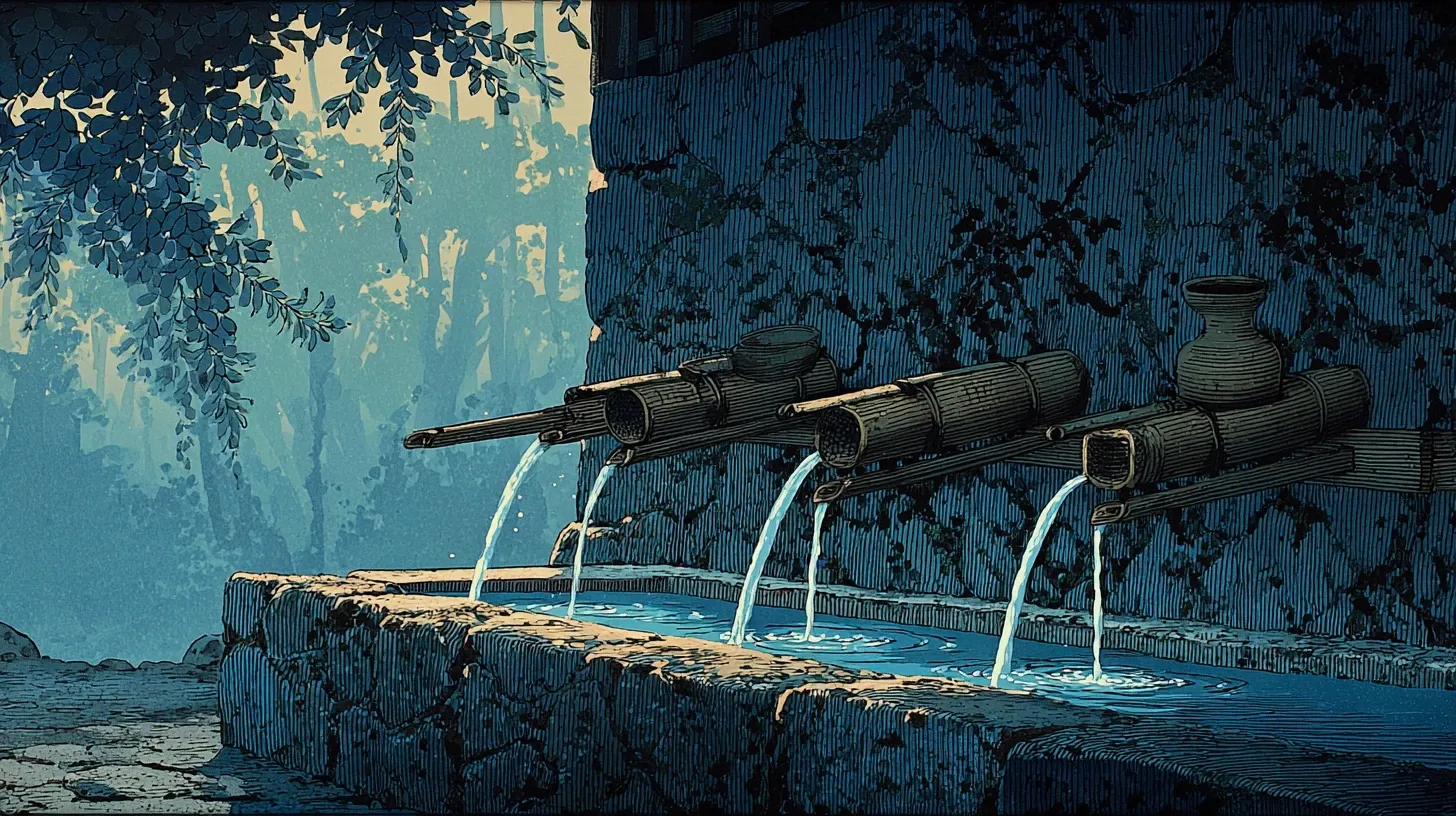
The path that leads up to Kiyomizu-dera is itself a designated cultural site. Sannenzaka (“the three-year slope”) and Ninenzaka (“the two-year slope”) are stone-paved pedestrian streets lined with two-story wooden buildings, most of them dating from the late Edo or Meiji periods. The architecture is preserved by local ordinance — modern signage, vending machines, and overhead power cables are restricted or hidden — and the streets have been designated a Preservation District for Groups of Traditional Buildings since 1976.
A piece of Kyoto folklore says that if you trip and fall on Sannenzaka, you will die within three years. If you trip on Ninenzaka, you have two. The names predate the superstition by centuries, but the warning sticks. Watch your footing. The stones are uneven and worn smooth by centuries of pilgrims.
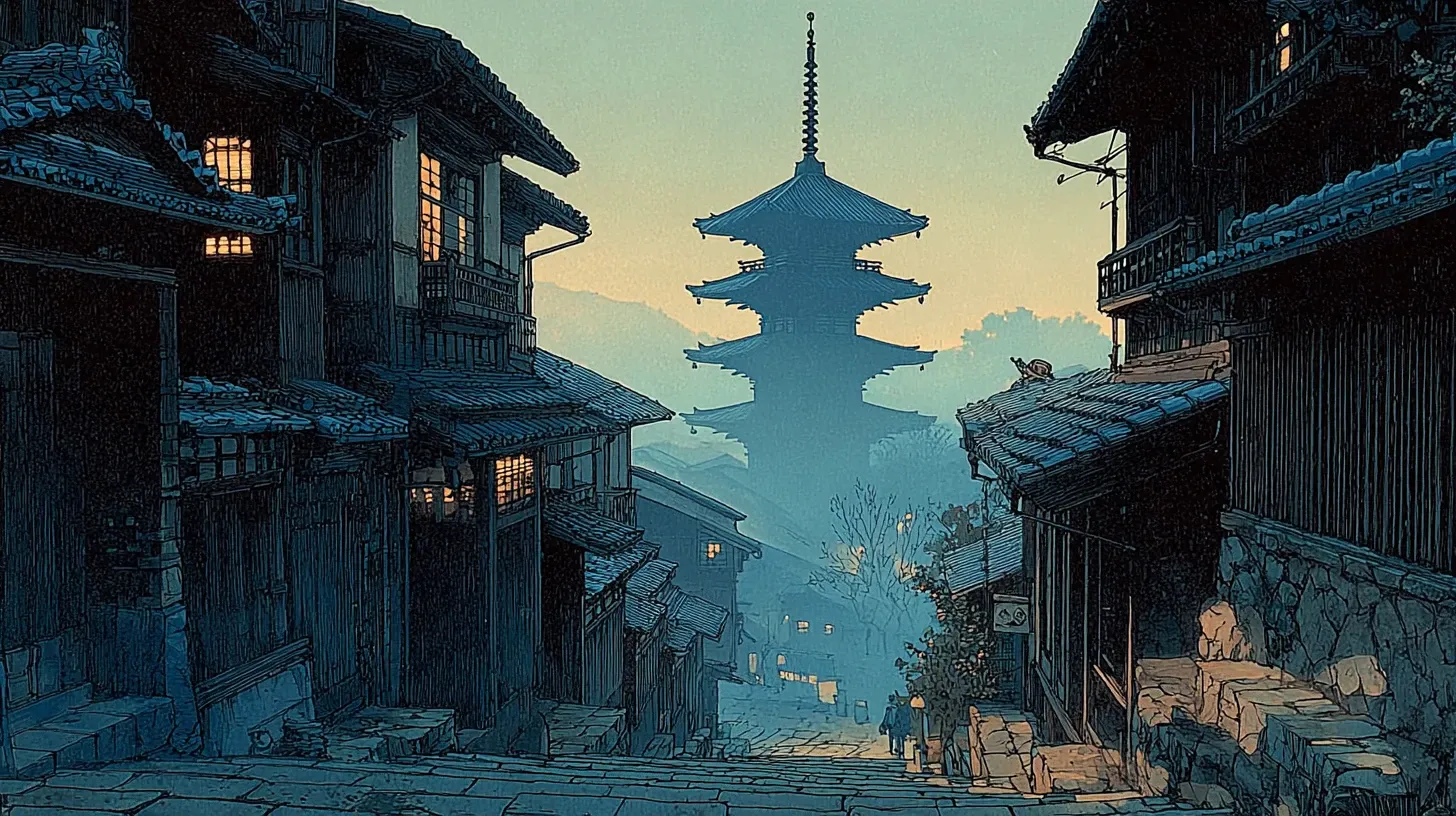
By mid-morning, both streets are densely crowded. By late afternoon, they are worse. If you want to actually see the architecture rather than the back of someone’s head, walk these slopes early — ideally before 9:00 AM. They are also worth a second visit at night, after most visitors have gone, when the streetlamps light up the wooden facades and the path becomes nearly empty.
Night Illuminations: When the Temple Stays Open After Dark
Three times a year, Kiyomizu-dera holds special evening illuminations — yakan tokubetsu haikan — in which the temple grounds remain open after dark, with floodlights illuminating the main hall, the cherry trees, and the maple foliage.
The schedule:
- Spring: late March through early April, during cherry blossom season
- Summer: a single week in mid-August, during the Obon festival
- Autumn: mid-November through early December, during peak maple foliage
During these periods, the temple stays open until roughly 21:30, and the standard admission fee (¥500) covers entry. No special ticket is required. A single blue beam of light projects from the temple grounds into the night sky, signaling to the rest of Kyoto that the illumination is on.
The autumn illumination, in particular, is one of the most photographed events in Japan. From the Kiyomizu stage, you look down across a valley called Nishiki-un-kyō — the brocade-cloud valley — where the maples turn so red they appear lit from within. On a clear night, Kyoto Tower is visible in the distance.
If you have the choice, the autumn illumination is the more striking of the two seasonal evenings, partly because the maples last longer than the cherry blossoms and partly because the November air is cool enough to make the wait in line genuinely pleasant.
Practical Tips for Visiting Kiyomizu-dera
When to come. Early morning, no exceptions. The temple opens at 6:00 AM and the difference between arriving at 6:30 and arriving at 9:30 is enormous — by mid-morning, the main hall is shoulder-to-shoulder, and the views from the stage are obscured by other visitors trying to take the same photograph. Multiple visitor accounts describe the same experience: arrive at 6:30 AM, find the stage nearly empty, and have an experience that justifies the trip. Arrive at noon, and you are queueing through what feels like a theme park.
The May problem. May is peak season for Japanese school field trips, and Kiyomizu-dera is one of the most visited destinations in the country for student groups. Mid-day in May is essentially impossible. If you visit in May, the early morning rule becomes absolutely non-negotiable.
The interior is small. Kiyomizu-dera is not a temple where the interior is the main attraction. The Hondō (main hall) interior is darker, smaller, and quieter than the architecture outside might suggest, and some travelers leave feeling that the famous wooden stage is more impressive from the outside looking up than from the stage looking down. Manage expectations: the value here is the architecture, the setting, and the views — not a vast interior collection of art.
Choose one waterfall. As described above. Choose love, study, or health. Drink from one stream only.
Travel essentials. Pay your ¥500 admission in cash if possible — credit cards are accepted at the main entrance now, but smaller temples and souvenir stalls in the area are still cash-only. A transit IC card (ICOCA or Suica) is the simplest way to get to the temple by city bus from Kyoto Station. If you are traveling internationally, mobile data is far cheaper through a Japan eSIM purchased before arrival than through international roaming, and travel insurance with overseas medical coverage is strongly recommended given how quickly Japanese hospital bills can add up for visitors without coverage.
How to Get to Kiyomizu-dera
The temple is on the eastern hills of Kyoto, about 4 kilometers from Kyoto Station. The two main routes:
- By bus: From Kyoto Station, take Kyoto City Bus number 100 or 206 to either Gojō-zaka or Kiyomizu-michi. The journey takes 15–20 minutes and the fare is ¥230. From the bus stop, it is a 10-minute uphill walk on Sannenzaka and Ninenzaka.
- By train: Take the Keihan line to Kiyomizu-Gojō Station, then walk east for about 20 minutes (also uphill).
Walking up from the river, particularly on the Keihan side, is the more atmospheric approach. You pass through Gion’s southern edge before reaching the foot of the slopes.
The Tourist Place That Earns Its Crowds
Kyoto residents will quietly tell you that Kiyomizu-dera is kankōchi — a tourist place. They are not entirely wrong. The path up is full of souvenir shops. The stage is photographed millions of times a year. The rented kimono industry has built much of its business around exactly this two-kilometer stretch of stone-paved street.
But the temple itself was built before the tourists, and it will be there after this generation of visitors moves on to the next destination. A monk had a dream. A samurai chose mercy over a hunt. A wooden stage was built without nails, rebuilt by a shōgun, walked across by 234 people who jumped from it for someone they loved, and used as the source of a phrase that an entire country still speaks.
If you come at the right hour — before the souvenir shops open, before the kimono studios fill, before the school groups arrive — Kiyomizu-dera gives you something quieter than its reputation suggests. The water is still falling from the cliff. The stage is still standing on its 139 wooden pillars. The three streams are still waiting for you to choose one.
(For the wider story of how Kyoto built and rebuilt itself across a thousand years, see our history of the imperial capital. For another half-day of slow walking on the western side of the city, Arashiyama is a quieter alternative for the afternoon.)
Continue Reading
- Kyoto Travel Guide — the complete hub article on Kyoto.
- Arashiyama: The Truth About the Bamboo Grove — Kyoto’s western district, with the same crowd-timing problem.
- Fushimi Inari Shrine: 10,000 Gates — open 24 hours, so you can beat the crowds at any time.
- Why Kyoto Was Japan’s Capital for 1,074 Years — the historical context.
FAQ
What is Kiyomizu-dera famous for?
Kiyomizu-dera is famous for three things: a 13-meter-high wooden stage that extends from the main hall over the forested hillside, supported entirely by 139 wooden pillars without a single nail; the Otowa Waterfall, three streams of pure spring water that gave the temple its name in 778; and the historic Sannenzaka and Ninenzaka pedestrian streets that lead to the temple. The temple is part of the UNESCO World Heritage Site “Historic Monuments of Ancient Kyoto,” inscribed in 1994.
Is Kiyomizu-dera worth visiting?
It depends entirely on your timing. Kiyomizu-dera is one of the most crowded temples in Kyoto by mid-morning, and many visitors who arrive after 9:00 AM leave underwhelmed and post about it online. Visit between 6:00 and 8:00 AM, however, and the experience is consistently described as one of the highlights of any Kyoto trip. The temple itself rewards the early start; the crowd-driven version of the experience does not.
What does the Japanese idiom about jumping from Kiyomizu mean?
Kiyomizu no butai kara tobioriru — “to jump from the stage of Kiyomizu” — is a Japanese expression meaning to make a brave, irreversible decision. It originates from an Edo-period belief that if you survived a leap from the temple’s wooden stage, your wish would be granted. Temple records document 234 actual jumps between 1694 and 1864, with an 85.4% survival rate. The practice was banned in 1872, but the idiom remains in use today, though it is treated as a slightly old-fashioned expression rather than everyday speech.
Can you drink from all three streams of Otowa Waterfall?
Technically yes, but Kyoto tradition advises against it. The three streams are said to grant blessings of love, academic success, and health. The local rule is that you should choose only one stream — drinking from all three out of greed is believed to cancel all the wishes. Most foreign-language guidebooks do not mention this, so many visitors drink from all three without realizing. Choose the one that matters most to you.
When is the best time to visit Kiyomizu-dera?
Early morning, ideally between 6:00 and 8:00 AM, year-round. Kiyomizu-dera opens at 6:00 AM (rare among Kyoto temples) specifically to give visitors a quieter window before the crowds arrive. The temple is also open during seasonal evening illuminations: late March to early April (cherry blossoms), mid-August (Obon), and mid-November to early December (autumn maples). The autumn illumination is the most spectacular.
Is the inside of Kiyomizu-dera worth the admission fee?
The 500-yen admission is good value for the architectural experience — walking on the wooden stage, visiting the Otowa Waterfall, and exploring the surrounding pagodas and shrines on the temple grounds. The Hondō interior itself is small and dark, and visitors expecting a major collection of religious art often leave disappointed. The value is the setting and the architecture, not the indoor displays.
Sources
- Kiyomizu-dera — Official Website — Kiyomizu-dera Temple
- Learn — History of Kiyomizu-dera — Kiyomizu-dera Temple
- Kiyomizu-dera — Wikipedia
- Kiyomizu-dera — World History Encyclopedia
- Historic Monuments of Ancient Kyoto — UNESCO World Heritage Centre
- Kiyomizudera Temple — Travel Guide — Japan Guide