Ueno: The Last Stand of the Shōgitai, Japan's First Public Park, and the Akihabara Next Door
- Sleepy Tales of Japan
- 24 min read In-depth
In May 1868, roughly two thousand samurai of a militia called the Shōgitai made the last organized stand of the Tokugawa shogunate. They fought from the wooded precincts of Kan’ei-ji, the Tokugawa family temple, on a low hill in northeastern Edo. Within ten hours they were destroyed by imperial troops from Satsuma and Chōshū firing Western artillery across the temple grounds. The temple burned. Most of the wounded escaped through the back gate. The hill — for two and a half centuries one of the most sacred sites in feudal Japan — sat in silence for five years.
Then, in 1873, the new Meiji government did something nobody had ever done in Japanese history. They took the ruined temple precincts and declared them a park — open to the public, free of charge, the first such place in the country.
Today that hill is called Ueno Park, and most visitors who walk through it on a Sunday afternoon do not realize they are standing on a battlefield. They come for the cherry trees, the museums, and the zoo. The park holds Japan’s oldest national museum, Japan’s oldest zoo, the only Tokugawa family shrine that survived the fire, the graves of the Shōgitai who died in 1868, and a famous statue of the samurai who led the army that defeated them. Within five minutes’ walk to the south, the postwar black market called Ameyoko still operates in the same alleys where it began in 1945. Within ten minutes’ walk further south, the electronics-and-anime district of Akihabara continues a story that started in those same postwar years and has not yet stopped.
Table of Contents
Open Table of Contents
- The Hill Before the Park — Kan’ei-ji and the Tokugawa Mausoleum
- The Battle of Ueno — Ten Hours That Ended an Era
- Japan’s First Public Park
- The Tokyo National Museum — Japan’s Oldest National Museum
- Tōshō-gū Shrine — The Tokugawa Survivor
- The Saigō Takamori Statue and Its Quiet Irony
- Shinobazu Pond and the Bentendō
- Ueno Zoo — Japan’s Oldest
- Ameyoko — The Black Market That Stayed
- Akihabara Next Door — From Electric Town to Otaku Capital
- Practical Tips for Visiting
- How to Get There
- FAQ
The Hill Before the Park — Kan’ei-ji and the Tokugawa Mausoleum
In 1625, the priest Tenkai, advisor to three successive Tokugawa shōguns, founded a Buddhist temple on a low hill in the northeastern part of the newly built city of Edo. The temple was called Kan’ei-ji (寛永寺), and it was located in a geographically meaningful spot. Edo Castle, the shōgun’s residence, sat in the city’s center. The northeast direction — from any feudal castle in Japan — was considered the kimon, the “demon gate” through which evil spirits were believed to enter. The conventional defense against this threat was to place a powerful Buddhist temple along that axis. Tenkai placed Kan’ei-ji exactly there.
Over the next two centuries, Kan’ei-ji grew into one of the two principal family temples of the Tokugawa shogunate (the other being Zōjō-ji, near present-day Tokyo Tower). Six Tokugawa shōguns were buried in Kan’ei-ji’s mausoleum complex. At its peak, the temple covered most of what is now Ueno Park, with dozens of subsidiary temples, pagodas, and gardens spread across the hill. It was one of the wealthiest religious institutions in Edo and a regular site of pilgrimage for shogunal officials and the families of the high samurai class.
This is the hill the Shōgitai chose to defend in 1868. They chose it for symbolic reasons — it was Tokugawa ground — and for tactical ones: the temple precincts gave them high terrain, walls, and dense vegetation against an attacker advancing from the south.
The Battle of Ueno — Ten Hours That Ended an Era
By early 1868, the Tokugawa shogunate had already lost. The last shōgun, Tokugawa Yoshinobu, had abdicated, and in March of that year the city of Edo had been peacefully surrendered to the new imperial government in a now-famous two-day negotiation between Saigō Takamori (representing the imperial side) and Katsu Kaishū (representing the Tokugawa). The handover saved a city of more than a million people from a destructive siege.
But a substantial group of former Tokugawa retainers refused to accept the surrender. They formed a militia called the Shōgitai (彰義隊, “the Loyal League”), gathered at Kan’ei-ji where Yoshinobu had been confined under house arrest, and prepared to fight. By May, the Shōgitai numbered roughly 2,000 men. The imperial government, recognizing this as a serious threat to the legitimacy of the new regime, decided to attack.
On May 15, 1868 (Keiō 4, 5th lunar month, 15th day), the imperial forces — about 10,000 troops led by Saigō Takamori, with Satsuma and Chōshū infantry and a battery of Armstrong cannons — attacked the temple precincts. The first assault came from the south through the main gate; the Shōgitai held it. The battle stalled. Then a second imperial force opened up from the west and northwest with the artillery, firing across the precincts at long range.
The Shōgitai had swords and traditional firearms. The imperial side had British-supplied Armstrong guns. The battle lasted approximately ten hours. Most of the temple complex burned. The Shōgitai were destroyed as an organized unit, with roughly 300 killed; the survivors fled north toward Sendai. The mausoleums of the Tokugawa shōguns were damaged but the underground crypts and several outbuildings survived. The hill went silent.
In a gesture that still feels surprisingly humane, the new Meiji government permitted the families of the dead Shōgitai to bury their dead on the hill in 1874 — six years after the battle. The graves of the Shōgitai still stand today, in the southwest corner of Ueno Park, with a memorial stone added in 1880. Most park visitors walk past them without noticing what they are.
Japan’s First Public Park
After the battle, the hill belonged to the new government. The first proposals for what to do with it included rebuilding the temple, building a hospital, and selling the land for housing. In the early 1870s, a series of conversations among Meiji-era officials and the Dutch physician Anthonius Bauduin (who was working in Japan and is sometimes credited with making the original suggestion) led to a different idea: declare the entire hill a public park — kōen (公園), a Western concept that did not yet have a Japanese equivalent.
In January 1873, the Meiji government issued a proclamation establishing public parks throughout Japan, and Ueno was one of the first five sites designated. It is conventionally referred to as Japan’s first public park — the distinction is shared, but Ueno is generally listed first by virtue of its scale and prominence.
The park’s design proceeded in stages over the following decades. The Tokyo National Museum opened on the grounds in 1872 (actually one year before the formal park designation, originally as an exhibit hall for a Western-style exposition). The Ueno Zoo opened in 1882. The Tōshō-gū shrine — the Tokugawa family shrine that had survived the 1868 fire — was preserved. The Bentendō, a small temple on an island in Shinobazu Pond, was restored. Over a thousand cherry trees were planted, transforming what had been a battlefield into one of the city’s most photographed spring sites.
The fact that Japan’s first public park was created on the ruined site of a battle the new government had won is, in retrospect, a striking decision. It was also a quietly successful one. By the early 20th century, Ueno had become the cultural quarter of Tokyo, where museums, music schools, art schools, and the zoo clustered around a single hilltop park, in the same way that the Mall in Washington or Museumsinsel in Berlin would later host the cultural infrastructure of their own capitals.
The Tokyo National Museum — Japan’s Oldest National Museum
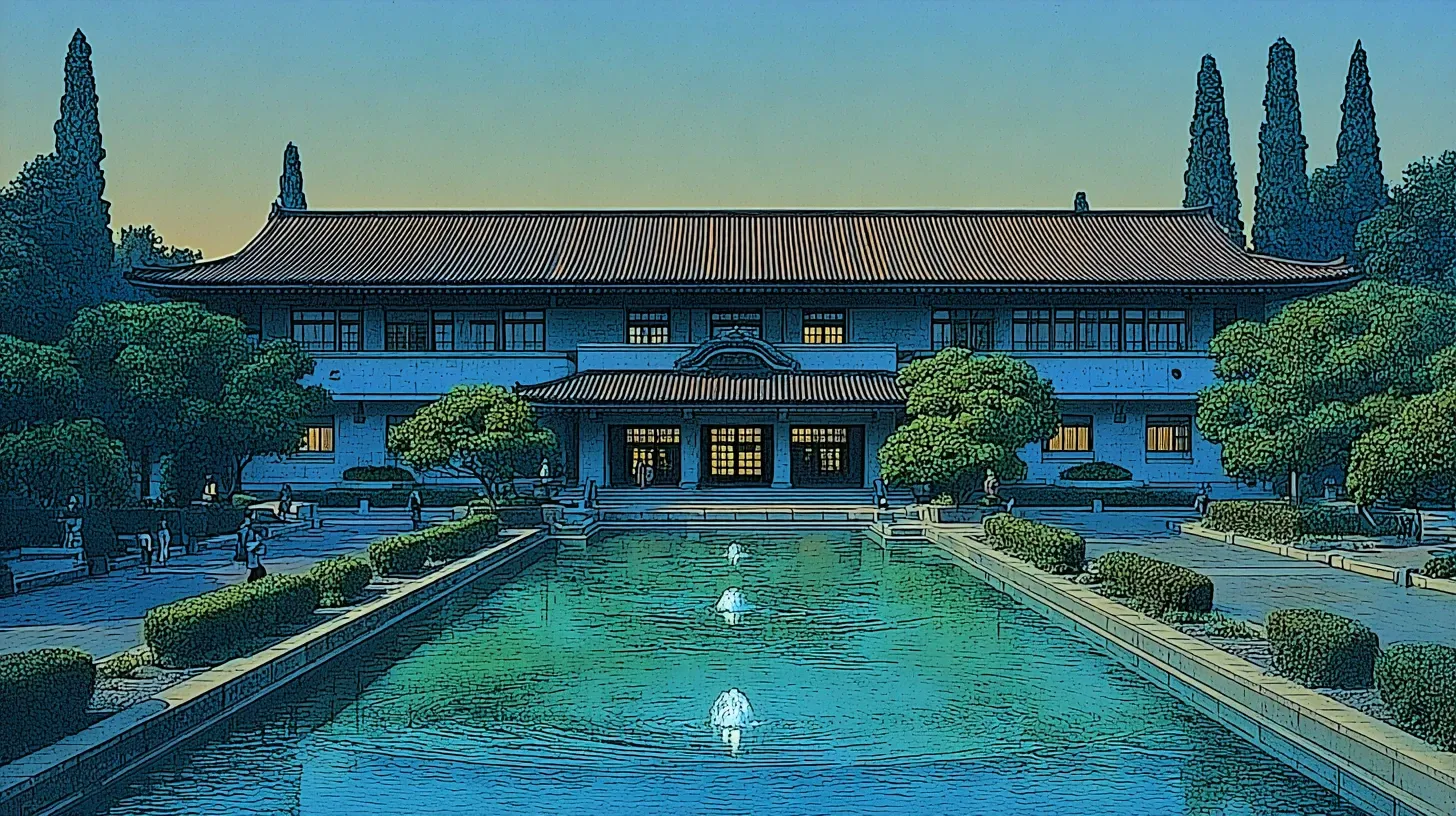
The largest building in Ueno Park is the Tokyo National Museum (Tōkyō Kokuritsu Hakubutsukan, 東京国立博物館), founded in 1872 as Japan’s first national museum. It is also the largest art museum in Japan, with a permanent collection of approximately 120,000 objects spanning Japanese, Chinese, Korean, and Central Asian art from the prehistoric to the early modern period.
The museum is organized into five main buildings, each with a distinct focus:
- Honkan (Japanese Gallery, 1938 building, designed by Watanabe Jin) — the main exhibition hall, covering Japanese art chronologically from prehistoric times through the Edo period. The most prestigious pieces in the collection — Buddhist sculptures, samurai armor, ukiyo-e prints, ceramics, and textiles — rotate through this building.
- Tōyōkan (Asian Gallery, 1968) — Asian art outside Japan: China, Korea, Central Asia, India, Egypt.
- Heiseikan (1999) — Japanese archaeology and special exhibitions.
- Hyōkeikan (1909) — a beautiful Meiji-era building used for special exhibitions and educational programs. Recognized as Important Cultural Property.
- Gallery of Hōryū-ji Treasures (1999, designed by Yoshio Taniguchi) — a separate purpose-built building housing 300 small Buddhist artifacts donated by the famous Hōryū-ji temple in Nara in 1878. The building itself, with its meditative architecture and quiet reflecting pool, is widely considered one of Taniguchi’s finest works.
The collection is enormous, only about 5% is on display at any time, and the museum operates on a rotation system that changes exhibits roughly every six weeks. This means every visit to the Tokyo National Museum is different, even for residents. The museum is widely considered one of the most foreigner-friendly major museums in Japan, with comprehensive English signage and an excellent audio guide.
Admission is ¥1,000 for adults for the regular collection; special exhibitions are extra. The museum is open every day except Mondays.
Tōshō-gū Shrine — The Tokugawa Survivor
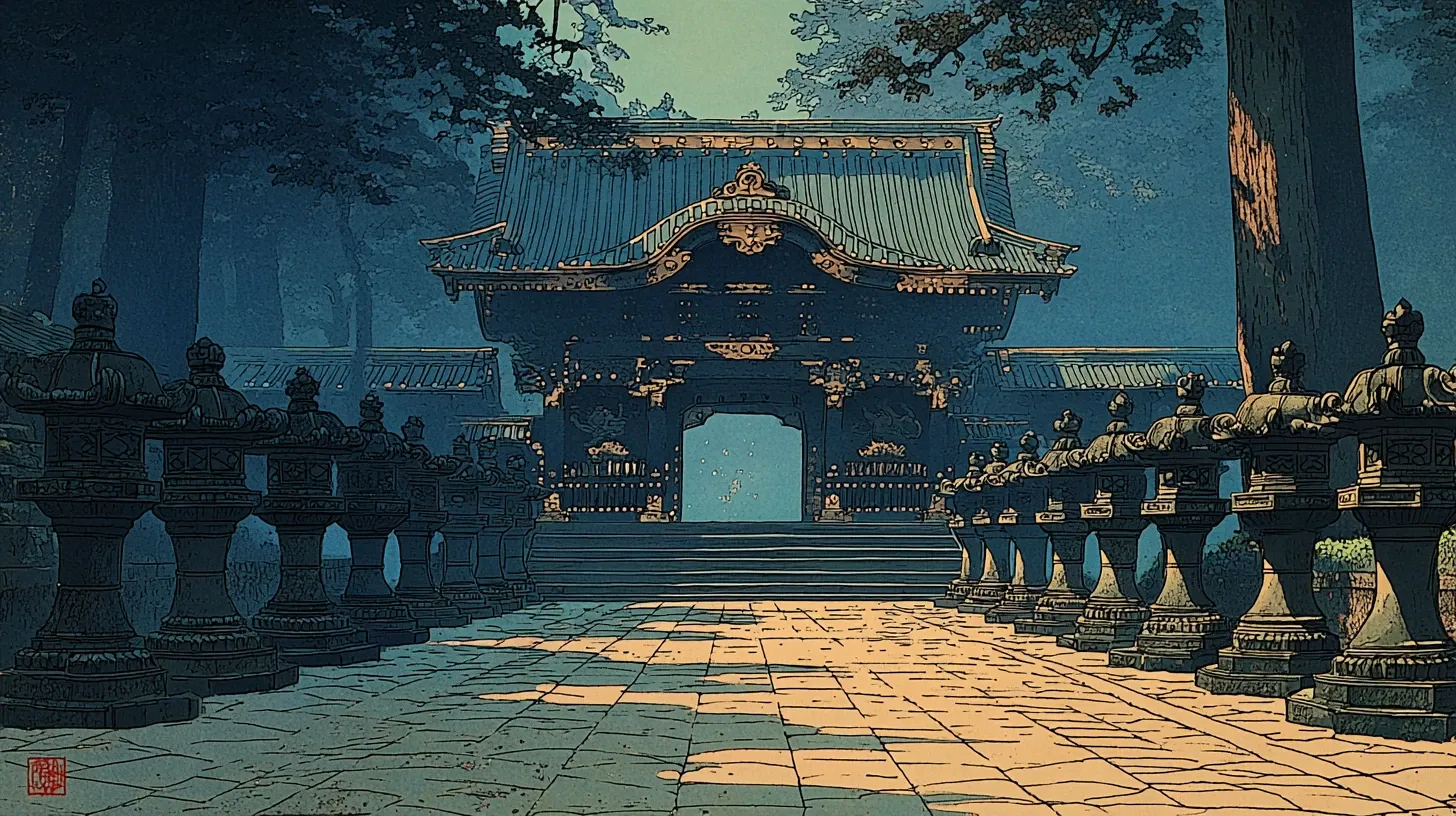
In the western part of Ueno Park, set back from the main paths and reached through a long stone-lantern-lined approach, sits the small but extraordinary Ueno Tōshō-gū (上野東照宮), a shrine dedicated to Tokugawa Ieyasu, the founder of the shogunate.
The shrine was originally built in 1627 by Tōdō Takatora at the request of Tenkai, with the explicit purpose of enshrining Ieyasu’s spirit as a guardian deity for the Tokugawa family. The current main hall (honden) dates from 1651, rebuilt by the third shōgun Iemitsu in a more elaborate “Gongen” style — gold-leafed walls, intricate carvings, and the distinctive curved roof of Shintō shrines for deified humans. The most famous element is the Karamon (Chinese-style gate), covered in gold leaf and elaborate bird and dragon carvings by the master craftsman Hidari Jingorō.
What is remarkable about Ueno Tōshō-gū is that it survived everything: the 1657 Meireki Fire that destroyed two-thirds of Edo, the 1868 Battle of Ueno that destroyed the surrounding temple, the 1923 Great Kantō Earthquake, and the 1945 firebombing of Tokyo that flattened most of the surrounding neighborhood. The 1651 building you can see today is the original. It is one of the very few Edo-period buildings still standing in central Tokyo.
The shrine grounds also contain a small botan-en (peony garden), open seasonally, with hundreds of peony varieties — a quiet, often-overlooked spot in the park. Admission to the shrine grounds is free; the inner sanctum requires a small fee (¥500 adults) and is well worth it.
The Saigō Takamori Statue and Its Quiet Irony
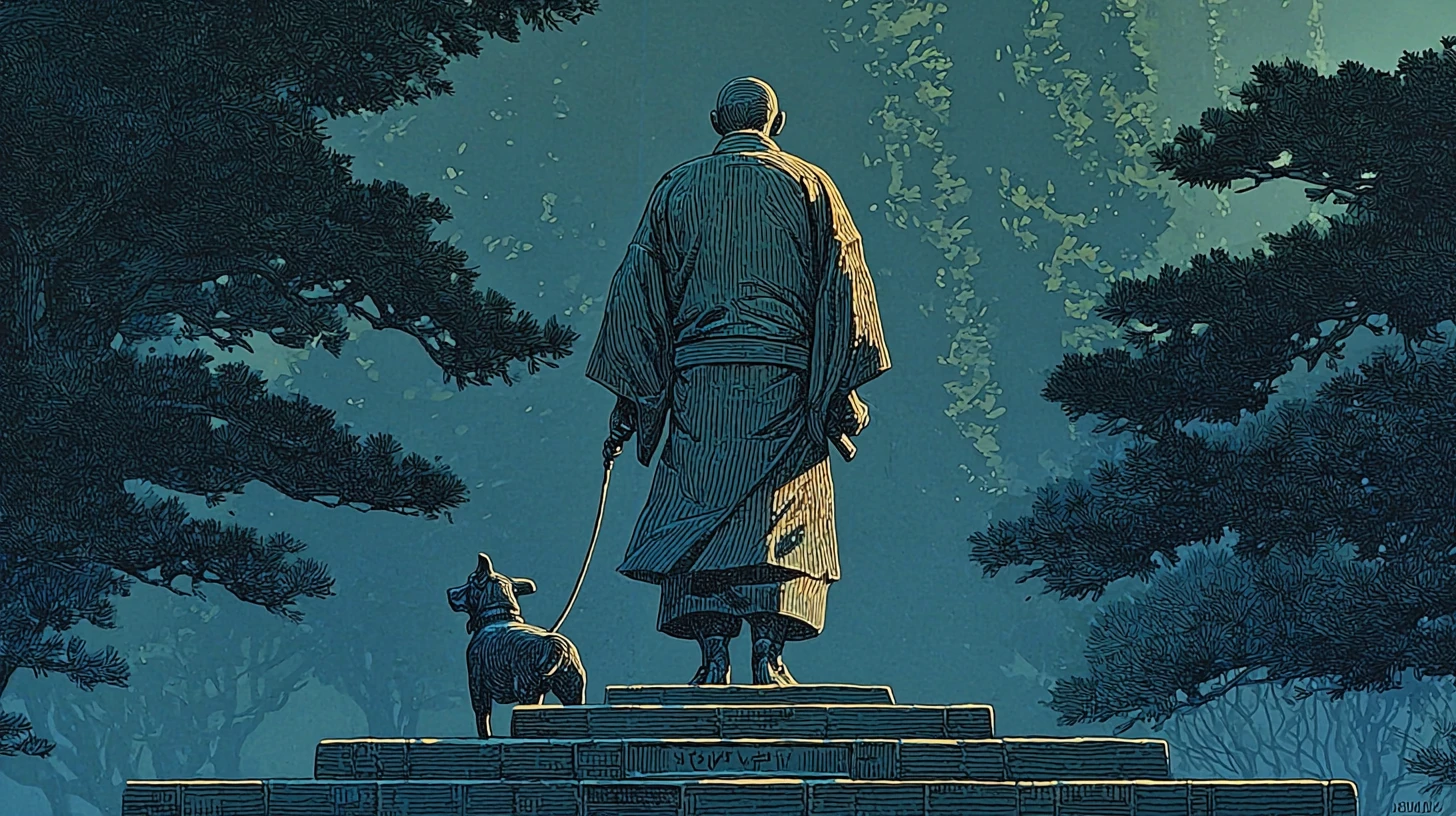
At the southern entrance to Ueno Park, atop the staircase that climbs up from Ueno Station, stands a bronze statue of a man in a simple cotton kimono with a small dog beside him. This is the most photographed statue in central Tokyo.
The man is Saigō Takamori, the samurai who commanded the imperial army that destroyed the Shōgitai on this exact hill in 1868. The statue was erected in 1898 by the sculptor Takamura Kōun (father of the poet Takamura Kōtarō), 21 years after Saigō’s death.
There are several layers of irony in this statue’s placement.
First, the obvious one: Saigō led the army that burned the temple that previously occupied this site. The statue stands within walking distance of the graves of the men he killed.
Second, the less obvious one: Saigō later turned against the very Meiji government he had helped establish, led the Satsuma Rebellion in 1877, and died by ritual suicide on a hill in Kagoshima after his forces were defeated by — among other units — the same modern imperial army he had originally helped create. The Meiji government posthumously pardoned him in 1889, and his statue was commissioned shortly afterward. The samurai who destroyed the Tokugawa shogunate, was rehabilitated by the same government he had later rebelled against, became permanently stationed at the southern entrance of the park created on the battlefield where he had won his first famous victory.
Third, the statue looks almost casual. Saigō stands in everyday hunting dress, accompanied by his dog Tsun. There is no sword, no formal uniform, no symbolic posture. The contemporary scholar Saigō’s brother reportedly objected to the statue’s informality after first seeing it — “He never went out dressed like that” — but the statue stayed. It is the rare public monument in Japan that depicts a national hero as a private man rather than a public figure.
For Cultural Travelers interested in the history of the Meiji Restoration, the statue is one of the most loaded public monuments in Tokyo. It is also, simply, a good landmark — easy to find, photographed by millions of visitors who never realize what they are looking at.
Shinobazu Pond and the Bentendō
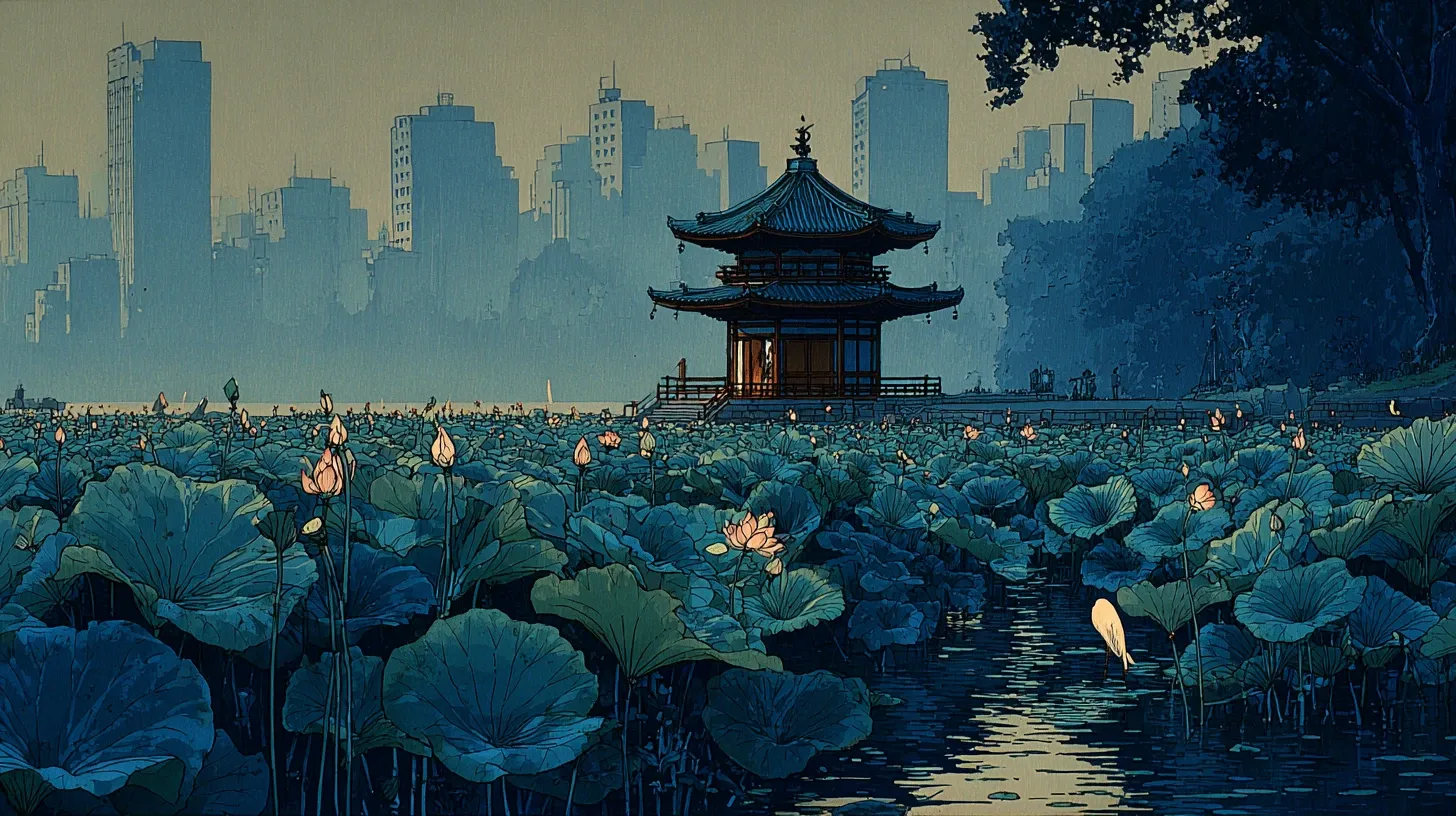
The western part of Ueno Park slopes down to a large natural pond called Shinobazu Pond (Shinobazu-no-ike, 不忍池). The pond was once part of an ancient inlet from Tokyo Bay; over centuries of sediment deposition, it became a freshwater lake.
In summer, the pond fills with lotus flowers — a vast spread of pink and white blooms that cover the surface from June through August. The lotus is sacred in Buddhism, and the pond’s connection to nearby temples is intentional: in the center of the pond sits a small artificial island with a temple called the Bentendō (弁天堂), dedicated to Benzaiten (the Buddhist goddess of water, music, and good fortune, and the Japanese equivalent of the Hindu Saraswatī).
The Bentendō was modeled on Chikubu-shima, an island in Lake Biwa near Kyoto — a deliberate visual reference to one of Japan’s most famous sacred sites. Visitors reach it across a stone causeway from the eastern shore. The temple is small but active, with prayer services and a steady flow of visitors throughout the day.
The pond also has rowboat and swan-boat rentals at the southern end, and during the lotus season (July–August), the early-morning view from the boat house pier is one of the most photographed scenes in Tokyo. Late August through early September brings the Ueno Summer Festival (Ueno Natsu Matsuri), with food stalls along the pond and traditional performances near the Bentendō.
Ueno Zoo — Japan’s Oldest
The northern third of Ueno Park is occupied by the Ueno Zoological Gardens (Ueno Dōbutsuen, 上野動物園), which opened in 1882 and is Japan’s oldest zoo. It is one of only three zoos in Japan housing giant pandas, which makes the panda enclosure one of the most-photographed spots in Tokyo.
The zoo’s collection includes approximately 3,000 animals across 400 species, organized across two zones (East and West) connected by an internal monorail (the monorail was retired in 2019 but the zone separation remains; visitors walk or take a small connecting tram). The park is family-oriented but not large by international standards — most visitors complete the full circuit in 2 to 3 hours.
Reviews of Ueno Zoo are mixed. Some visitors describe it as charming and historically significant; others, particularly those familiar with modern zoos in Singapore or the U.S., note that the enclosures are smaller than contemporary standards and that some sections feel dated. For most Cultural Travelers visiting Ueno, the zoo is optional rather than essential — the museums and the Tōshō-gū shrine are higher priorities — but if you are visiting with children, it remains a beloved Tokyo institution and the panda viewing alone is often worth the trip.
Admission is ¥600 for adults, ¥300 for students, free for children under 12. Open every day except Mondays.
Ameyoko — The Black Market That Stayed
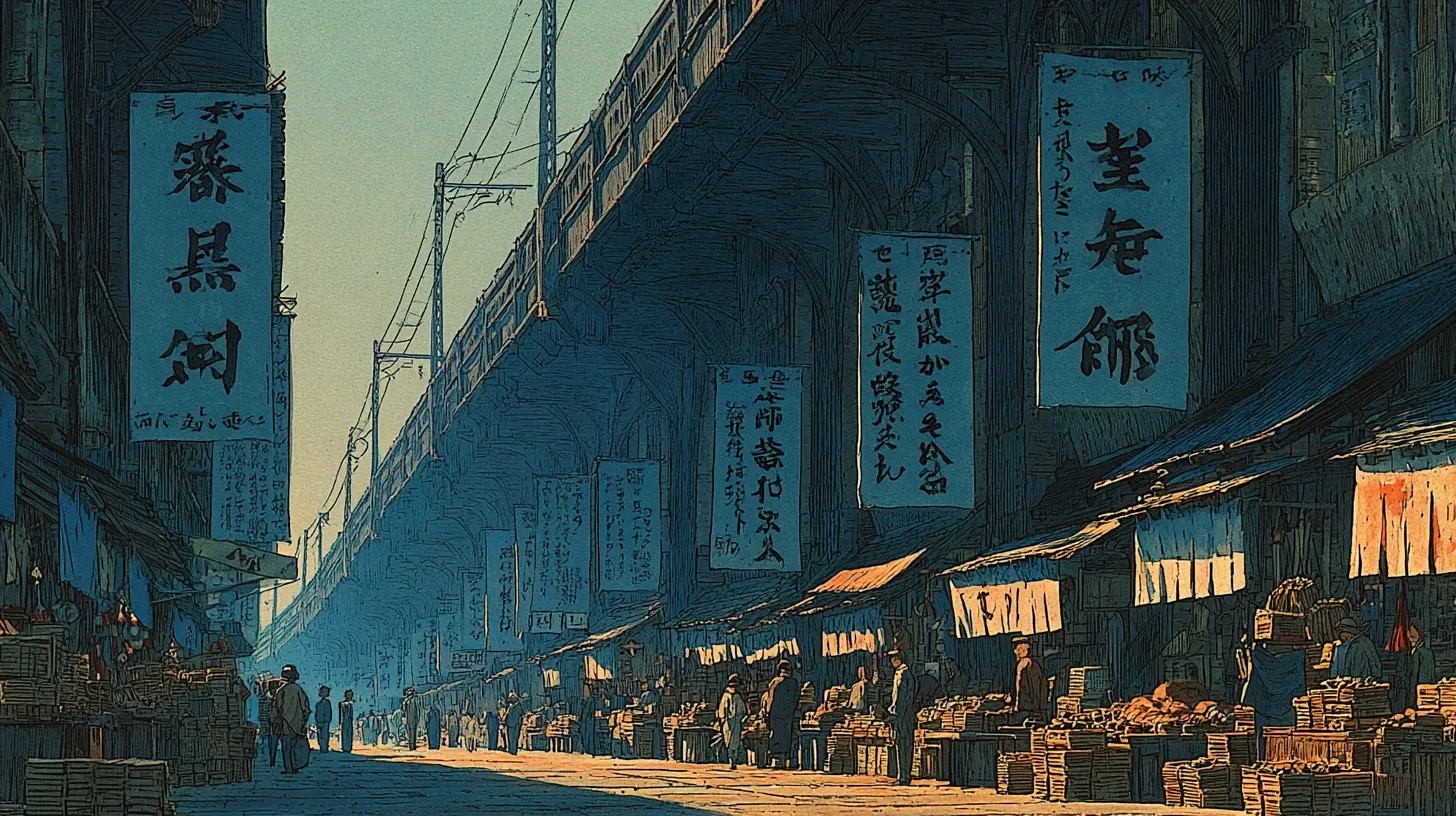
If you exit Ueno Park from the south, cross under the JR tracks, and walk five minutes downhill, you will enter a covered street called Ameyoko (アメ横, formally Ameya-Yokochō) — one of the most distinctive shopping streets in Tokyo, and the last visible remnant of the immediate postwar period in central Tokyo’s geography.
Ameyoko began in 1945, in the smoking ruins of the firebombed Ueno district. The Tokyo Air Raid of March 1945 had flattened most of eastern Tokyo, and the area around Ueno Station — already a major rail hub — became one of the city’s largest black markets in the food-and-clothing-shortage years that followed. Initially the goods sold here were American military surplus and food smuggled from rural Japan; by 1947, the street had become known for selling saccharin candy (ame) when sugar was unavailable. The name Ameya-Yokochō (“Candymakers’ Side Street”) dates from this era.
When the Korean War broke out in 1950 and American military supplies flooded back into Japan, the street picked up a second meaning: Ame-yoko could also be read as an abbreviation of America Yokochō — “America Alley.” Both interpretations have stuck.
Today, Ameyoko has roughly 400 shops along about 500 meters of covered street, organized in dense rows: fresh fish and seafood, dried goods, traditional snacks, household goods, knockoff bags and watches, military surplus, sneakers, and cosmetics. Prices are bargained, which is unusual for Japan, and the entire street has a cheerful, slightly chaotic atmosphere that does not exist anywhere else in central Tokyo. December brings the busiest season, when families come to buy fresh seafood and ingredients for New Year’s celebrations and the entire street is shoulder-to-shoulder.
For most travelers, Ameyoko is best visited as a 30-minute add-on after Ueno Park — walking through it, sampling a snack from one of the streetside vendors, photographing the dense storefronts, and continuing onward (often to Akihabara, which is a 12-minute walk further south).
Akihabara Next Door — From Electric Town to Otaku Capital
A 12-minute walk south from Ueno Park, along the elevated JR tracks, leads to Akihabara (秋葉原) — a district known internationally as the center of Japanese electronics and anime/manga culture. The connection to Ueno is direct: Akihabara’s modern identity is a continuation of the same postwar story that produced Ameyoko.
Akihabara’s history before 1945 was unremarkable — a quiet residential and craftsman district named after a nearby fire-prevention shrine (Akiba-no-jinja). After the firebombing destroyed most of the area, postwar black-market vendors began selling radio components salvaged from military equipment in the streets near Akihabara Station. By the early 1950s, the radio-parts market had organized itself into permanent stalls, and Akihabara had earned the nickname “Electric Town” (Denki-gai, 電気街). For the next forty years, this was where Japan came to buy radios, then televisions, then audio equipment, then personal computers and parts.
Two physical structures from the radio era still stand. Radio Center (Rajio Sentā, 1949), built directly under the JR tracks at the western edge of Akihabara Station, was the first formal organization of the scattered radio-parts stalls into a permanent building; about thirty small shops still operate inside, in spaces no larger than two or three square meters each, still selling vacuum tubes, capacitors, and obscure connectors to a clientele of professional engineers and hobbyists. The four-story Akihabara Radio Department Store (Rajio Kaikan, 1951) operated continuously until 2018 — sixty-seven years of the postwar electronics market in a single building — and although the original building was rebuilt in 2014, the institution itself never broke continuity. Both are walking-tour stops for anyone curious about the physical roots of what Akihabara became.
The transition from electronics-focused district to anime and manga capital began in the late 1990s, when the rise of the internet-connected personal computer changed what was sold in Akihabara. Computer parts stores began stocking software, and software stores began stocking anime and game merchandise. By the early 2000s, the term otaku — once a slightly pejorative word for an obsessive fan — had become an identifiable subculture, and Akihabara was its commercial center. The famous maid cafés, the anime megastores (Animate, AmiAmi, Mandarake), the gachapon machine arcades, and the dense walls of figurines and trading cards are all from this period. The symbolic landmark of the maid-café genre is Cure Maid Café, which opened in March 2001 as the world’s first standalone maid café and is still operating today on the sixth floor of a building near Akihabara Station. The much larger Yodobashi Camera Akihabara opened in 2005 and marked the moment the otaku district went mainstream: families and casual shoppers became routine visitors, and the long-running tension between the dense subcultural side streets and the increasingly tourist-friendly main thoroughfare became a defining feature of the modern district.
Today, Akihabara is divided into roughly two layers: a commercial layer (the multi-story electronics retailers along Chūō-dōri and Yodobashi Camera at the station) and a subcultural layer (the side streets with the maid cafés, hobby shops, and themed eateries). Visitors interested in Japanese popular culture often find this layered structure worth half a day; visitors more interested in traditional culture often stop after a 30-minute walk through the area.
The Akihabara of today is essentially a postwar product — the entire neighborhood as we know it dates from after 1945. This is the single sharpest contrast with Ueno’s deep historical density just north. The same train ride (one stop on the Yamanote Line) takes you from a hill where the Tokugawa shogunate ended in 1868 to a district where Japan’s postwar economic and cultural transformation is still on display. The two together tell a story that neither tells alone.
Practical Tips for Visiting
Check what’s open on Monday. Most major museums in Ueno Park — Tokyo National Museum, Western Art Museum, Science Museum, Ueno Zoo — are closed on Mondays. If your Tokyo trip falls on a Monday, prioritize the open spaces (Tōshō-gū shrine, Shinobazu Pond, Ameyoko, Akihabara) and visit the museums on a different day.
Allow a half-day minimum, a full day ideal. A focused visit to Ueno Park (Tokyo National Museum + Tōshō-gū + the main park) takes about 4 hours. Adding Shinobazu Pond, the Saigō statue, the Shōgitai graves, Ameyoko, and Akihabara makes it a 7- to 8-hour full day. If you only have time for one museum, the Tokyo National Museum’s Honkan is the highest-density Japan-themed museum in the country and is the right choice.
Cherry blossom season is special, and crowded. Ueno Park is one of Tokyo’s three most famous hanami spots (along with Chidorigafuchi and Meguro River). During the blossom peak (typically late March to early April), the park fills with tour groups by mid-morning and picnic blankets by early afternoon. The blossoms are extraordinary, and the crowds match. Arrive at sunrise or after 5:00 PM for the most rewarding experience.
Ameyoko is best on weekends. The market is open every day, but the most active atmosphere — with stallholders shouting prices and dense crowds buying fresh seafood — is on Saturdays, Sundays, and the last week of December. Weekday mornings are quieter and gentler.
Akihabara is best in the afternoon. Most of the major retailers and arcades open at 10:00 or 11:00 AM, and the area genuinely comes alive in the early evening. Visitors who arrive at 9:00 AM often find half the shops closed.
Travel essentials. Mobile data is far cheaper through a Japan eSIM purchased before arrival than through international roaming. A transit IC card (Suica or Pasmo) lets you tap onto trains without buying paper tickets. If you are traveling internationally, travel insurance with overseas medical coverage is strongly recommended.
How to Get There
Ueno is in northern central Tokyo, in Taitō-ku, on the JR Yamanote Line.
- Ueno Station (JR Yamanote, Keihin-Tōhoku, Tōhoku Shinkansen, Tokyo Metro Ginza, Hibiya lines) — direct exit into Ueno Park
- Keisei Ueno Station — terminal of the Keisei Skyliner from Narita Airport (one of the fastest airport connections, about 40 minutes)
- Akihabara is one stop south of Ueno on the JR Yamanote Line, or a 12-minute walk along the JR tracks
From Tokyo Station, the JR Yamanote Line reaches Ueno in about 8 minutes. From Asakusa, the Tokyo Metro Ginza Line reaches Ueno in about 5 minutes.
(For the wider history of the city Ueno sits inside, see How a Swamp Became Tokyo and Life in Edo. For the related quiet historic districts in central Tokyo, see Asakusa, The Imperial Palace, and Ryōgoku. For the Hokusai prints displayed at the Tokyo National Museum, see Mount Fuji in Art.)
FAQ
What is the Battle of Ueno?
The Battle of Ueno was a one-day engagement on May 15, 1868, during the Boshin War, in which approximately 2,000 samurai of the Shōgitai militia — loyalists to the recently-deposed Tokugawa shogunate — were defeated by roughly 10,000 imperial troops led by Saigō Takamori. The battle was fought on the grounds of the Tokugawa family temple Kan’ei-ji, which mostly burned down. About 300 Shōgitai were killed. The temple precincts later became Ueno Park, Japan’s first public park.
Is Ueno Park worth visiting?
Yes — Ueno Park is one of the most historically dense single sites in Tokyo. It contains Japan’s oldest national museum (Tokyo National Museum, 1872), Japan’s oldest zoo (Ueno Zoo, 1882), a surviving original Tōshō-gū shrine from 1651, and the site of the last battle of the Tokugawa shogunate. The park is free, walkable, and most attractions are within 5–10 minutes of each other. Most travelers spend a half-day; a full day with the museums and Ameyoko/Akihabara is also comfortable.
When were the Ueno museums founded?
The Tokyo National Museum opened in 1872 as Japan’s first national museum, and is now the country’s largest art museum with approximately 120,000 objects in its collection. The Ueno Zoo opened in 1882 as Japan’s first zoo. The National Museum of Western Art (designed by Le Corbusier) opened in 1959 and is now a UNESCO World Heritage Site. The National Museum of Nature and Science opened in 1877 and is one of Japan’s oldest scientific institutions.
Why is there a statue of Saigō Takamori in Ueno?
Because Saigō led the imperial army that fought the Battle of Ueno in 1868 and made the creation of the park possible. The statue, erected in 1898 by the sculptor Takamura Kōun, was commissioned after Saigō’s posthumous pardon in 1889 — he had earlier led the 1877 Satsuma Rebellion against the same Meiji government he had helped establish, and died in defeat. The statue depicts him in casual hunting dress with his dog Tsun, which his brother is said to have considered too informal. The statue is now one of the most recognized public landmarks in central Tokyo.
What is Ameyoko?
Ameyoko (アメ横, formally Ameya-Yokochō) is a covered shopping street running south from Ueno Station, with roughly 400 shops along 500 meters. It originated in 1945 as a black market in the firebombed ruins of the postwar Tokyo district. The name comes either from ame (candy, referring to the saccharin shops of 1947) or from America (referring to American military surplus that flooded in after 1950). Today it sells fresh seafood, traditional snacks, household goods, sneakers, and cosmetics. December (year-end shopping season) is the busiest period.
How are Ueno and Akihabara connected?
Akihabara is one stop south of Ueno on the JR Yamanote Line (12-minute walk between them). The two districts are historically connected by the postwar period: both Ameyoko and Akihabara’s “Electric Town” emerged from the same black-market commerce in the firebombed ruins of 1945–1950. Ueno preserves the cultural and institutional history of the postwar Japan (museums, public park, traditional shrine), while Akihabara preserves the commercial-cultural transformation that turned wartime radio salvage into the global anime and otaku market we see today.
Is Akihabara worth visiting?
It depends on your interests. Visitors with an interest in anime, manga, video games, electronics, or postwar Japanese subculture find Akihabara unique and often spend half a day. Visitors more focused on traditional Japanese culture often find a 30- to 45-minute walk through the area sufficient. Akihabara is also a major dining destination for ramen, conveyor-belt sushi, and chain restaurants, and is open later than most of central Tokyo.
Are there cherry blossoms in Ueno Park?
Yes, and they are famous. Ueno Park has approximately 1,000 cherry trees, making it one of Tokyo’s three most famous hanami spots. Peak bloom is typically late March to early April, with the season lasting roughly two weeks. During peak bloom, the park fills with picnic blankets by early afternoon and the atmosphere becomes intensely social and festive. Early morning (before 9:00 AM) or late evening (after the food stalls have closed) is the most peaceful time to see the trees. Night-time illuminated yozakura viewings are also held during peak season.
Sources
- Tokyo National Museum — Official Site — Tokyo National Museum
- Ueno Tōshō-gū — Official Site — Ueno Tōshō-gū Shrine
- Ueno Zoo — Official Site — Tokyo Zoological Park Society
- Ameyoko Shopping District — Official Site — Ameyoko Shōkō-kai
- Ueno Park — Tokyo Metropolitan Park Association — Tokyo Metropolitan Park Association
- Battle of Ueno — Wikipedia — Wikipedia
- Kan’ei-ji — Wikipedia — Wikipedia
- Saigō Takamori — Wikipedia — Wikipedia
- Akihabara — Wikipedia — Wikipedia
- Ueno — Britannica — Encyclopaedia Britannica